







- Trending
- Comments
- Latest

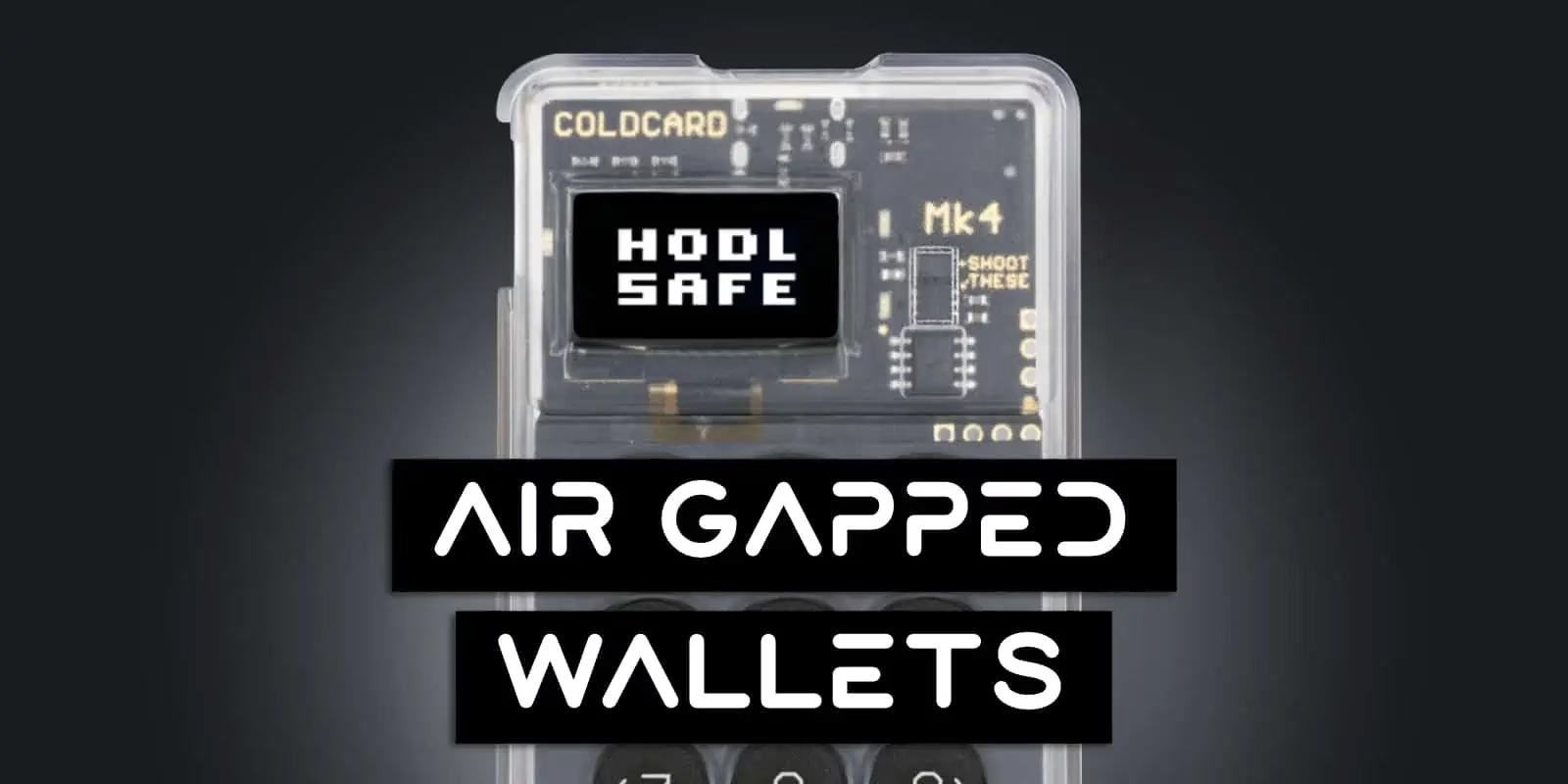
An air-gapped wallet keeps your private keys on a device that has never touched the internet, and for high-value crypto holders, that absolute isolation is becoming the baseline for serious security. Here is how it works and why it matters.
An air-gapped wallet is a cryptocurrency storage solution that operates on a device completely disconnected from the internet.
Unlike hardware wallets that may intermittently connect to online systems, air-gapped setups ensure that private keys never touch a networked environment, eliminating the primary attack vector for remote exploits.
Typically, this involves an offline computer or dedicated device, transaction signing via QR codes or removable media, and strict physical and operational security protocols.
This model aligns closely with traditional “cold storage” but goes further by enforcing absolute network isolation.
The surge in crypto-related exploits, ranging from exchange breaches to wallet-draining malware has reframed how risk is assessed.
The attack surface has expanded, but so has the value at stake. In response, institutions are adopting layered security models where air-gapped wallets serve as the line of defense.
A key driver is the recognition of software vulnerabilities are inevitable, network exposure is the weakest link, and human error compounds digital risk.
By removing connectivity altogether, air-gapped systems sidestep entire categories of threats, including phishing-based signing attacks and remote code execution.
A common misconception is that air-gapped wallets are impractical. In reality, modern implementations have streamlined the process without compromising security.
This separation ensures that the private key remains permanently offline while still enabling full transaction capability.
Air-gapped wallets are not without friction. The very isolation that provides security also introduces complexity.
These complexity includes slower transaction execution, higher setup and maintenance requirements, and greater reliance on operational discipline.
However, for large portfolios, these trade-offs are increasingly seen as non-negotiable. The cost of inconvenience is trivial compared to the cost of compromise.
The U.S. National Institute of Standards and Technology (NIST) outlines broader principles of system isolation in cyber-security:
Air-gapped wallets are not replacing other storage methods, they are redefining the hierarchy.
Hot wallets handle liquidity, hardware wallets manage mid-tier risk, and air-gapped systems secure long-term reserves.
This tiered approach mirrors traditional finance, where vault storage exists alongside transactional accounts.
The difference is that in crypto, the responsibility is decentralized, and mistakes are irreversible.
As threats evolve, the market is converging on a simple truth: true ownership requires true isolation.
Air-gapped wallets, once considered extreme, are now becoming the quiet standard for those who understand that in crypto, security is not a feature—it is the product.



Copyright © 2025 - The Bit Gazette.

