





- Trending
- Comments
- Latest

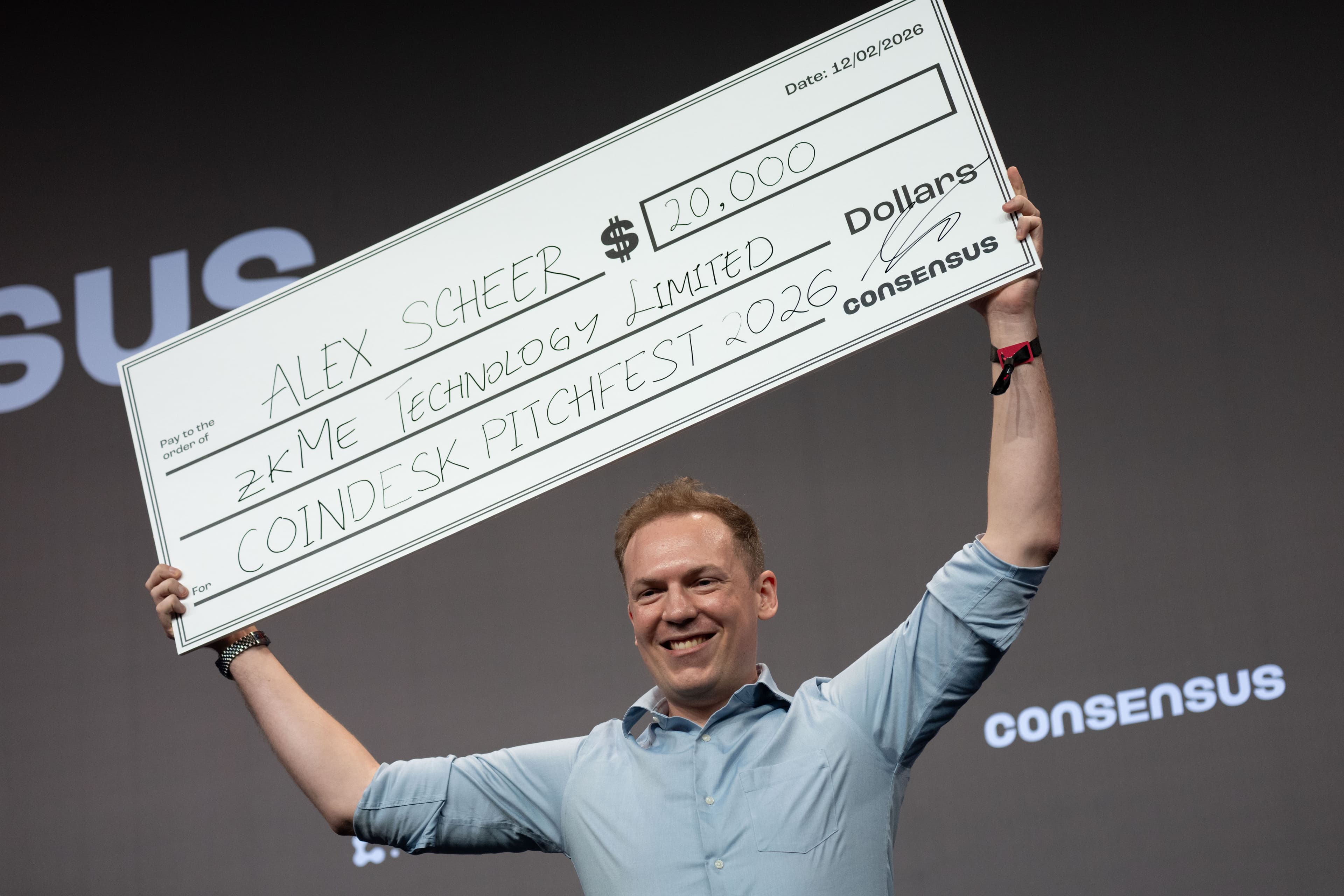
zkME Technology, a Hong Kong-based identity verification startup with 3.5 million users, has won the $20,000 grand prize at Consensus Hong Kong’s PitchFest, beating 11 competitors with a pitch that privacy-preserving identity, not liquidity is the real barrier blocking DeFi’s path to mainstream adoption.
zkME Technology secured the $20,000 award at Consensus Hong Kong, emerging as the judges’ top pick following a two-day pitching marathon that highlighted some of the most ambitious infrastructure projects in digital assets today.
The company’s core focus — decentralized identity verification — struck a chord with judges looking for solutions that could finally bridge the long-standing gap between traditional finance and decentralized finance.
With more than 3.5 million users already onboarded and an active Series A fundraising round underway, zkME arrived at Consensus Hong Kong with traction few early-stage competitors could match.
Founder and CEO David Alexander Scheer positioned zkME’s technology as a foundational layer for mainstream DeFi adoption, arguing that identity — not liquidity — remains the industry’s biggest bottleneck.
“If DeFi really wants to become mainstream, this is the only solution,” Scheer said during his PitchFest presentation at Consensus Hong Kong, emphasizing the need for privacy-preserving verification that satisfies both users and regulators.

zkME’s system allows users to prove attributes about themselves without exposing sensitive personal data, an approach increasingly viewed as essential as global regulators tighten scrutiny around compliance, fraud prevention, and financial crime.
The PitchFest judging panel at Consensus Hong Kong included senior figures from venture capital and institutional crypto investing: Alasdair Foster, CEO of Bullish Capital Management; Augie Ilag, head of Asia at CMT Digital; Richard Muirhead, co-founder of Fabric Ventures; and Ella Zhang, head of YZi Labs.
Their decision underscored a growing investor preference for infrastructure plays over speculative consumer applications — particularly those that can scale across both TradFi and DeFi.
Scheer reports that 2026 will mark a turning point for the industry. “That’s the year the lines between TradFi and DeFi truly converge,” he said on the sidelines of Consensus Hong Kong, adding that despite the win, the team would be “back to work Monday morning.”
zkME beat out 11 other finalists drawn from Europe, Asia, the Middle East, and North America — a reflection of the increasingly global nature of innovation showcased at Consensus Hong Kong.
Runner-up Hubble AI, also based in Hong Kong, drew attention for its platform that allows users to create customized trading strategies using AI prompts. When questioned about transparency and risk, Hubble AI’s CEO clarified the firm’s positioning. “We provide infrastructure, not strategy,” he said during the pitch, emphasizing user control over execution.
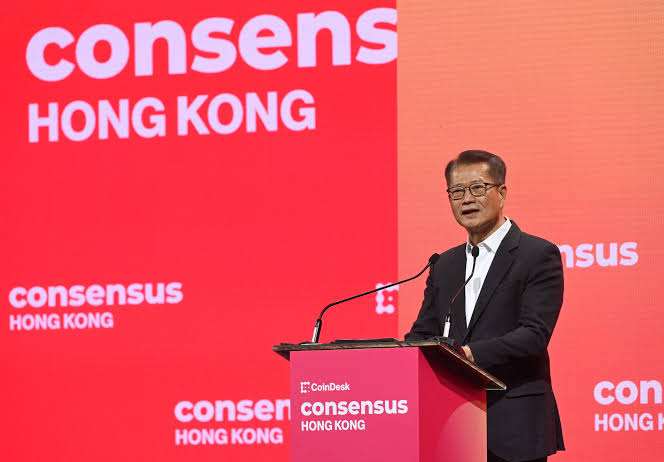
Another finalist, Switzerland-based OnchainLabs, presented Engage — a platform enabling crypto companies to offer tokenized gold products. Co-founder Florian Ehrbar fielded detailed questions from judges about revenue sustainability and user experience, reflecting rising expectations for real-world asset projects at Consensus Hong Kong.
U.S.-based Coinbax also made the final cut. Founder and CEO Peter Glyman explained how the company builds smart contract and compliance infrastructure for crypto firms, with plans to launch its mainnet in the second quarter of this year.
Beyond the finalists, Consensus Hong Kong featured eight semi-finalists spanning multiple sectors of the digital asset economy. These included London-based tokenized asset project Agant, Barcelona-based Brickken, Hong Kong’s Satsume Labs, Singapore-based BetterX and OKcontract Labs, Malaysia’s Morpheus AI, Japan’s PokeSeed, and Dubai-based Synnax Technologies FZCO.
The diversity of projects highlighted how Consensus Hong Kong has evolved into a launchpad not just for crypto startups, but for infrastructure companies seeking institutional relevance.
Judges pointed to zkME’s combination of user scale, regulatory awareness, and technical maturity as key differentiators. Unlike many early-stage DeFi projects pitching abstract roadmaps, zkME arrived at Consensus Hong Kong with a working product, active users, and enterprise-grade ambitions.

Its DePin model — blending decentralized networks with real-world identity use cases — aligned closely with broader industry trends toward compliance-ready decentralization.
As regulatory clarity continues to shape crypto markets globally, solutions like zkME’s may define the next phase of adoption.
For now, its PitchFest victory cements zkME as one of the breakout infrastructure winners from Consensus Hong Kong, and a company investors will be watching closely as TradFi and DeFi move toward long-anticipated convergence.



Copyright © 2025 - The Bit Gazette.

