

- Trending
- Comments
- Latest

Reports from the Wall Street Journal, New York Times, and Fortune allege that Binance maintained roughly 2,000 Iranian-linked accounts and allowed nearly $2 billion in transfers to flow to sanctioned entities despite internal warnings — and then fired the compliance staff who raised those concerns.
The WSJ and NYT specifically reported that $1.7 billion was transferred from Binance-registered Chinese clients to Iran-backed groups, including Yemen’s Houthi militants, through 2024 and 2025.
Two Hong Kong entities, Hexa Whale and Blessed Trust allegedly acted as intermediaries. Blessed Trust was a registered Binance vendor that repeatedly triggered internal compliance alerts. A Binance representative confirmed the exchange canceled both accounts in January around the time of accusations.
The story grows significantly darker when an anonymous blockchain investigator known as Tanuki42 has linked Iran’s $500 million USDT stash directly to North Korean Bybit hack proceeds.
The chain of evidence:
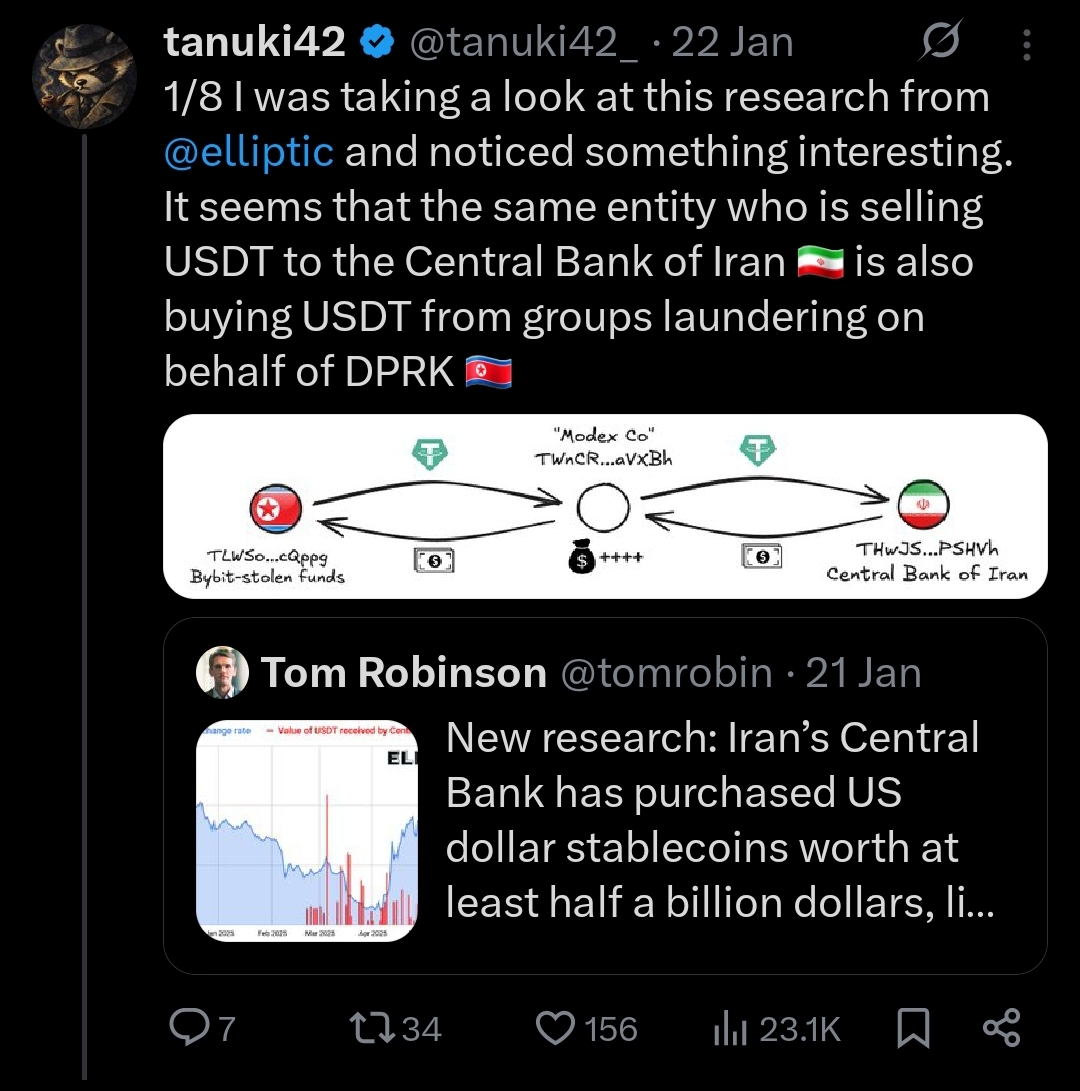
Tanuki42’s conclusion: “The same entity selling USDT to the Central Bank of Iran is also buying USDT from groups laundering on behalf of North Korea.”
Additional laundering mechanics uncovered:
The blockchain money trail: Elliptic leaks, Nobitex transfers and Modex Co. wallets):
North Korea (Lazarus / Bybit hack proceeds)
↓
Modex Co. (UAE-based USDT broker)
↓
Iran’s Central Bank (via Nobitex)
↓
Houthi militants / IRGC / Russian oil sales
At least five internal Binance investigators, several with law enforcement backgrounds, were reportedly fired starting in late 2025 after escalating the Iran findings to top executives.
If accurate, this transforms a compliance failure into a potential obstruction narrative.
Senator Richard Blumenthal (Ranking Member, Senate Subcommittee on Investigations) sent a formal letter to CEO Richard Teng, calling Binance a “repeat offender” and setting a March 6, 2026 deadline to produce:
Key quote:
“Instead of actually preventing illicit use, Binance has sought to evade accountability and influence the White House through lobbying and a financial partnership with World Liberty Financial.”
Much of the financial narrative centers on Sheikh Tahnoon bin Zayed Al Nahyan — UAE national security adviser, brother of the UAE president, and controller of major sovereign wealth funds.
January 16, 2025 — Four days before Trump’s inauguration, Sheikh Tahnoon’s vehicle, Aryam Investment 1, acquired a 49% stake in World Liberty Financial (WLFI) for $500 million. Approximately $187 million reportedly went to Trump family entities.
March 2025 — Sheikh Tahnoon’s firm MGX announced a $2 billion investment in Binance, reportedly settled using USD1, WLFI’s stablecoin.
May 2025 — The U.S. greenlit UAE access to 500,000 advanced Nvidia AI chips, a deal the Biden administration had previously blocked over diversion concerns.
Structural relationship as described by critics:
Sheikh Tahnoon
├──► $500M → WLFI (49% stake) → $187M to Trump family
├──► $2B → Binance (settled in USD1)
│ ├──► Binance holds major USD1 reserves
│ ├──► Binance tied to alleged $2B Iran transfers
│ └──► CZ pardoned by Trump (Oct 2025)
└──► UAE receives 500K Nvidia AI chips (May 2025)
Senators Murphy, Khanna, Warren, and Reed have publicly questioned aspects of these transactions, with Representative Ro Khanna reportedly requesting documents related to potential Emoluments Clause concerns.
During the same week the Senate Iran probe escalated:
The DOJ and FBI are the agencies that would normally investigate sanctions violations, pardon corruption allegations, and potential constitutional breaches. Critics argue that removing investigators during an active political and financial controversy could weaken enforcement capacity.
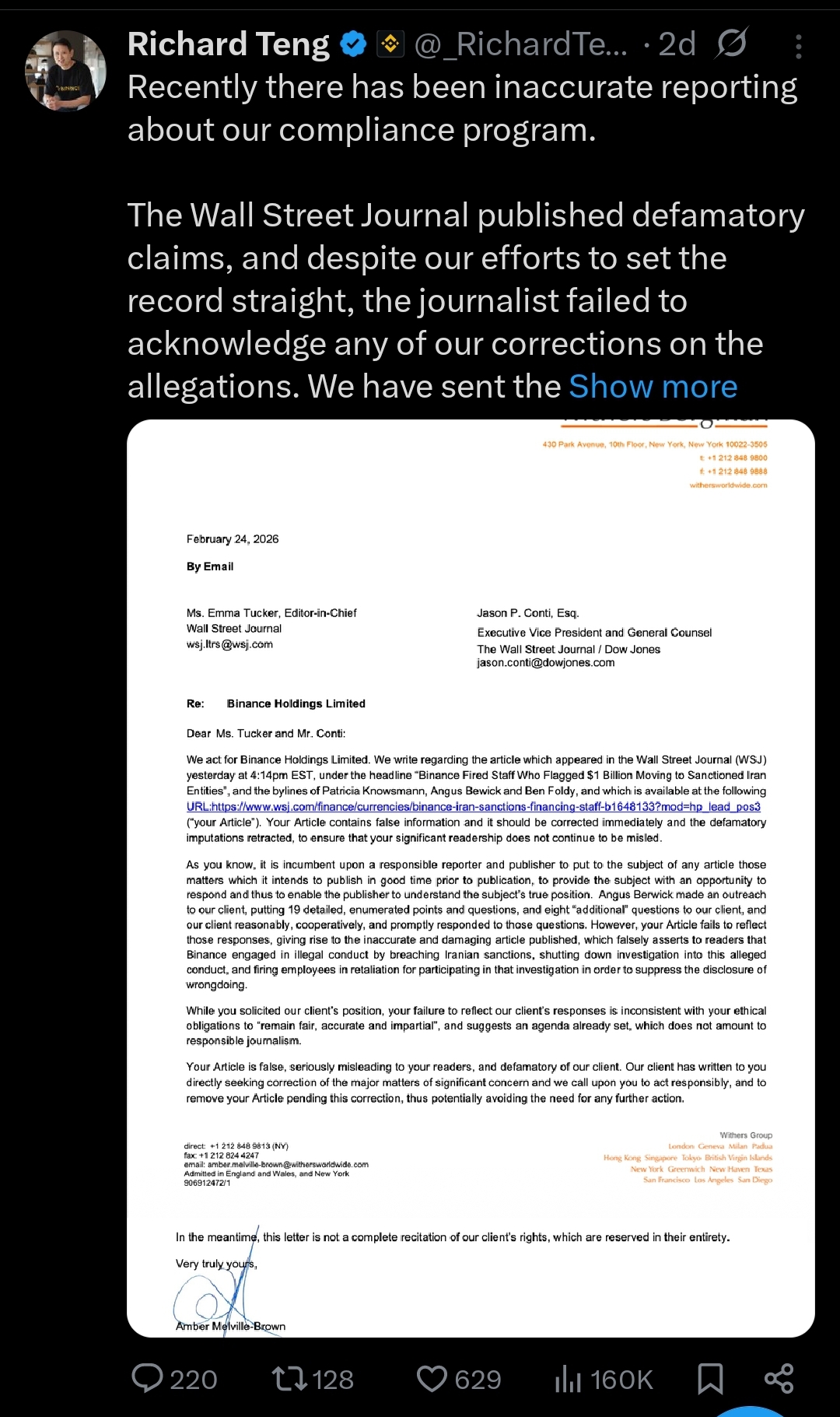
In 2023, Binance pleaded guilty, paid $4.3 billion, and accepted a DOJ compliance monitor through 2027.
If the alleged transfers occurred during or after that agreement, the issue would not simply involve new violations — but a potential breach of an active federal plea deal.
| Date | Event |
|---|---|
| March 6, 2026 | Binance document deadline to Senate |
| Ongoing | DOJ compliance monitor review |
| Ongoing | House document requests |
| TBD | Whether blockchain evidence reaches prosecutors |
| TBD | Whether staffing changes affect enforcement capacity |
A sanctioned nation (Iran) allegedly received laundered proceeds from a North Korean crypto heist, routed through a UAE broker and held on an exchange (Binance) that simultaneously received a $2 billion UAE investment paid in a stablecoin tied to a U.S. president’s family-linked business whose founder was later pardoned by that same president.
Internal investigators were reportedly fired. Senators are pressing for documents. Federal agents tied to related investigations have been dismissed.
Every thread, critics argue, converges within the same financial and political web.



Copyright © 2025 - The Bit Gazette.