- Trending
- Comments
- Latest

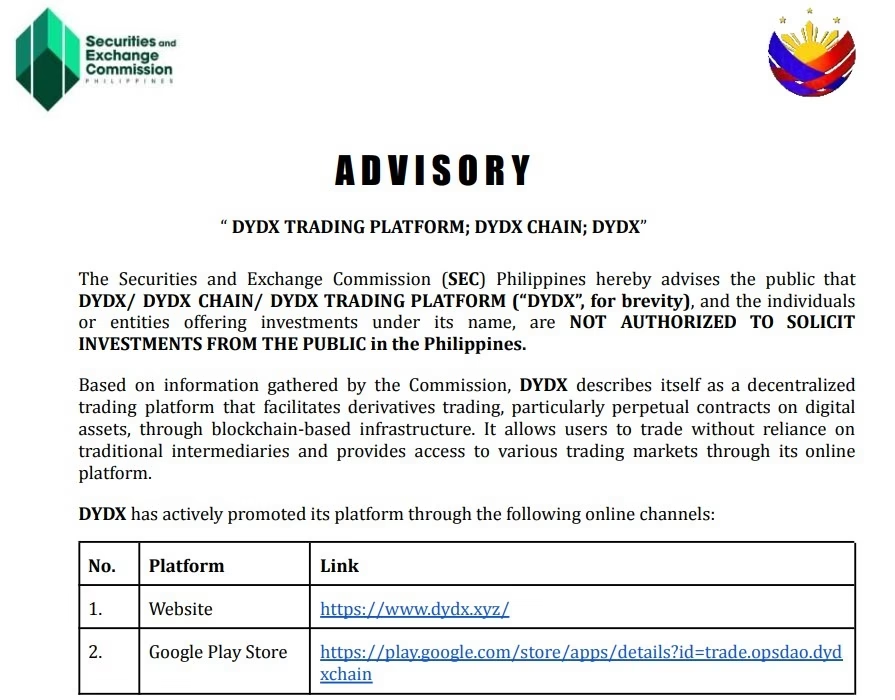
PThe Philippine Securities and Exchange Commission has warned Filipino investors against seven crypto platforms, including dYdX, Deriv, and Aevo, citing unlicensed investment solicitation, with promoters of the services facing fines up to ₱5 million and 21 years in prison.
In a public advisory released via Facebook, the Philippine Securities and Exchange Commission cautioned Filipinos against engaging with platforms including dYdX, Aevo, gTrade, Pacifica, Orderly, Deriv, and Ostium, stating they are not registered or authorized to solicit investments in the country.
The move underscores how Philippines crypto regulation is evolving from passive oversight to active enforcement, with regulators now targeting both platforms and their promoters.
According to the SEC, the listed platforms appear to be offering investment products to the public, often promising returns, profits, or interest activities that fall under securities laws in the Philippines.
However, none of the entities have secured registration or licensing under the country’s crypto-asset service provider (CASP) framework. This framework requires firms operating in the sector to meet strict capital, compliance, and operational standards.

By highlighting these violations, Philippines crypto regulation is drawing a clear line: any platform offering crypto-related financial services must first obtain proper authorization or face consequences.
The warning goes beyond platforms themselves. Individuals promoting these services locally could also face serious legal repercussions under the Securities Regulation Code.
Under Sections 28 and 73 of the law, violators risk fines of up to 5 million Philippine pesos (approximately $89,000), imprisonment of up to 21 years, or both.
This aspect of Philippines crypto regulation reflects a broader effort to clamp down on marketing and influencer-driven promotion, which regulators increasingly see as a gateway for retail investor exposure to unregulated platforms.
The latest advisory is part of a wider enforcement trend. Philippines crypto regulation has shifted noticeably over the past two years from issuing cautionary statements to actively restricting access to non-compliant services.
On Dec. 24, 2025, authorities blocked access to Coinbase and Gemini, citing similar concerns about unlicensed operations. This followed earlier action against Binance, which was restricted after failing to meet a regulatory compliance deadline.
In Binance’s case, regulators went a step further by instructing app stores to remove the platform’s application from devices in the Philippines an indication of how far Philippines crypto regulation is willing to go to enforce compliance.
The crackdown has steadily widened. In August 2025, the SEC issued another advisory naming major exchanges such as OKX, Bybit, KuCoin, and Kraken for operating without proper registration.
These actions show that Philippines crypto regulation is not targeting isolated cases but is instead addressing what regulators see as a systemic issue—foreign platforms offering services to Filipino users without oversight.
By expanding its list of flagged entities, the SEC is reinforcing its stance that compliance is not optional for market access.
Despite the aggressive stance, Philippines crypto regulation is not entirely restrictive. Licensed and compliant players continue to operate and expand within the country.
For instance, PDAX partnered with Toku to enable stablecoin-based salary payments, demonstrating how regulated innovation can still thrive.
Similarly, digital bank GoTyme launched crypto services in partnership with Alpaca, allowing users to buy and hold digital assets within a compliant framework.
These developments highlight a dual approach within Philippines crypto regulation, restrict unauthorized actors while supporting regulated growth.
For Filipino investors, the message is becoming increasingly clear. Philippines crypto regulation is prioritizing investor protection, particularly in a market where cross-border platforms can easily reach retail users.
The SEC’s warnings serve as a reminder that not all global platforms are legally permitted to operate locally, regardless of their international reputation or popularity.
As enforcement tightens, investors may face reduced access to certain platforms but potentially gain stronger safeguards against fraud and systemic risk.
The latest advisory signals a defining moment for Philippines crypto regulation. By combining strict penalties, access restrictions, and ongoing monitoring, regulators are reshaping how crypto businesses engage with the local market.
The crackdown on dYdX and other platforms is not an isolated event it is part of a broader regulatory strategy aimed at formalizing the sector.
As Philippines crypto regulation continues to mature, the divide between compliant and non-compliant operators is likely to widen, forcing platforms to either adapt to local rules or exit the market entirely.



Copyright © 2025 - The Bit Gazette.