- Trending
- Comments
- Latest

Stablecoin transaction volume reached a record $1.8 trillion in February 2026, with USD Coin (USDC) surpassing Tether (USDT) in monthly transfers for the first time despite USDT’s $184 billion market cap advantage.
According to Allium blockchain analytics, USDC accounted for 70% of stablecoin activity, signaling a major shift in the digital asset infrastructure landscape.
One of the most notable developments behind the record stablecoin transaction volume is the dominance of USDC, issued by Circle Internet Group. In February alone, USDC accounted for roughly 70% of total stablecoin transfers, overtaking Tether’s USDT in on-chain activity.
The shift has surprised many observers because USDC’s market capitalization remains significantly smaller than USDT’s. According to market data, USDC currently holds a market cap of about $77.4 billion, compared with $184 billion for USDT.
“USDC has consistently flipped Tether in transfer volume over the last few months,” said Simon Dedic, founder of Moonrock Capital, in a post on X. “It’s surprising considering the huge difference in market cap between the two.”
The surge in USDC activity has played a major role in pushing overall stablecoin transaction volume to unprecedented levels. Analysts say the growth reflects increasing adoption of USDC in decentralized finance (DeFi), payments infrastructure, and institutional trading.
Further evidence of this trend comes from blockchain intelligence platform Arkham Intelligence, which reported that more than $3 billion worth of USDC was minted in early March alone. Meanwhile, USDT supply growth has remained largely flat over the same period.
The rising stablecoin transaction volume also coincides with strong financial performance from Circle. The company reported robust earnings in the fourth quarter of 2025, attributing the results to expanding USDC usage and growth in its payments operations.
Market analysts say the growing stablecoin transaction volume is not just a technical milestone—it also reflects a strengthening foundation for the broader crypto market.
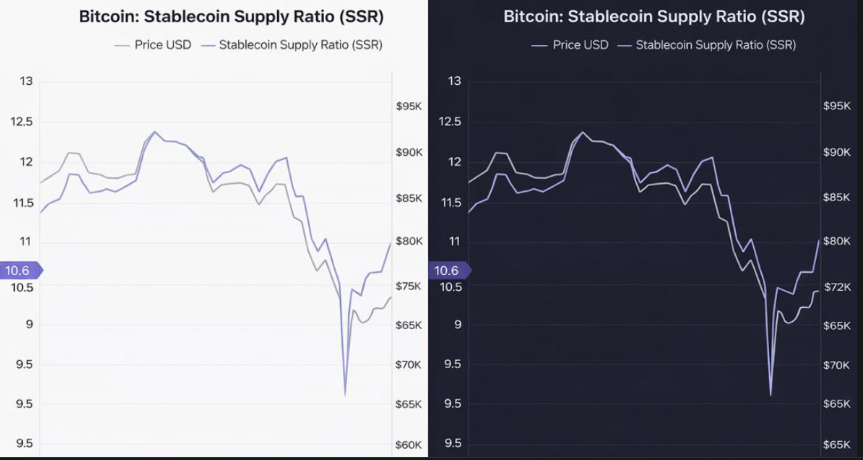
One key indicator closely watched by traders is the Stablecoin Supply Ratio (SSR), which measures the relationship between the market capitalization of Bitcoin and the total stablecoin market value. A declining SSR generally indicates rising buying power in the market because more stablecoins are available to purchase crypto assets.
According to analysis from CryptoQuant, the SSR has been gradually recovering after dropping sharply in February.
CryptoQuant analyst Sunny Mom said the rebound suggests growing capital availability across exchanges.
“The SSR is steadily recovering after crashing earlier in February,” Mom wrote in a Quicktake report, pointing to increasing liquidity in stablecoin markets.
This expanding liquidity has helped drive the latest rally in Bitcoin, which recently pushed toward the $74,000 level.
The rising stablecoin transaction volume therefore signals renewed investor confidence and greater capital flow within the digital asset ecosystem.
Another indicator reinforcing the bullish outlook is the rising amount of stablecoins flowing into cryptocurrency exchanges.
Data shows that the stablecoin transaction volume moving onto exchanges has climbed significantly in recent days. On March 5, nearly $5.14 billion in stablecoins were transferred to exchanges, compared with $1.14 billion on March 1.
At the same time, the total stablecoin balance held on exchanges rose to a three-week high of $66.5 billion.
This increase in exchange reserves has historically served as a catalyst for market rallies because it represents ready capital waiting to buy cryptocurrencies.
Higher stablecoin transaction volume entering trading platforms typically indicates that investors are positioning themselves for potential market opportunities.
Market analysts say that when stablecoin transaction volume rises alongside growing exchange reserves, it often signals an accumulation phase before major price movements.
“More stablecoins on exchanges means more buying power for crypto assets,” market observers frequently note. Historically, the return of sidelined capital to exchanges has preceded several major Bitcoin bull markets.
The sustained increase in stablecoin transaction volume highlights how stablecoins have evolved from simple trading tools into essential financial infrastructure within the crypto economy.
Stablecoins are designed to maintain a consistent value—usually pegged to the U.S. dollar—while enabling rapid transfers across blockchain networks. Their reliability makes them a preferred medium for traders, institutional investors, and decentralized finance applications.
As adoption grows, analysts expect stablecoin transaction volume to continue rising, especially as payment companies and fintech firms explore blockchain-based settlement systems.
With USDC gaining traction and market liquidity increasing, the latest record in stablecoin transaction volume may signal a broader resurgence in digital asset activity.
For traders and analysts alike, the message is clear: when stablecoin transaction volume reaches new highs, it often foreshadows major developments across the cryptocurrency market.



Copyright © 2025 - The Bit Gazette.