







- Trending
- Comments
- Latest

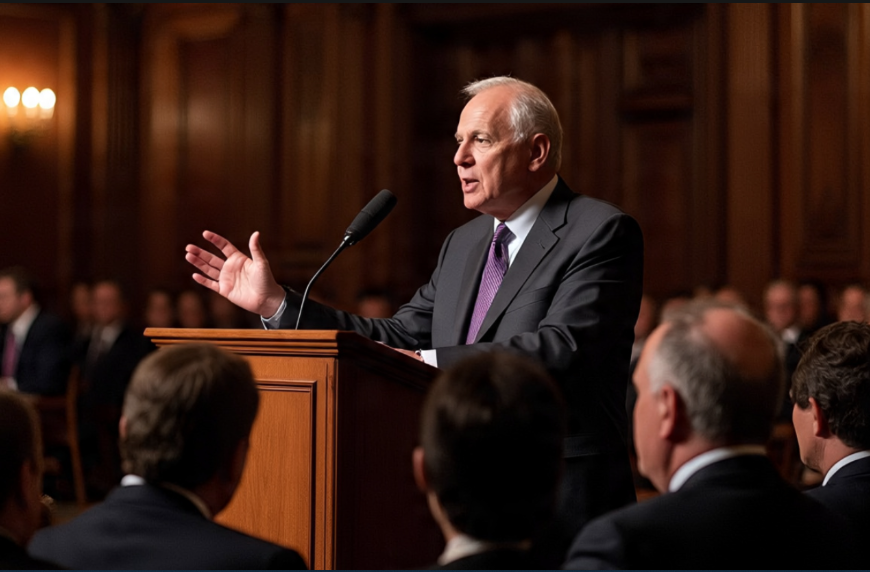
CFTC Chair Michael Selig endorsed blockchain-based prediction markets as ‘truth machines’ at the FIA Global Cleared Markets Conference on Monday in Boca Raton, Florida, signaling federal regulatory support even as Nevada and Massachusetts pursue legal action against platforms like Polymarket and Kalshi.
Selig said prediction markets that back opinions with capital produce more reliable forecasts than traditional polls, while announcing the CFTC will publish guidance clarifying how blockchain prediction markets can operate legally under existing derivatives regulations.
“When participants express views on future events and back those views with capital, they introduce accountability, transparency and meaningful information into the market,” Selig said during the conference. “Well-functioning markets like these can effectively operate as truth machines.”
Prediction markets allow users to buy and sell contracts tied to the probability of specific outcomes, ranging from election results to economic indicators or sports events. When built on distributed ledger technology, blockchain-based prediction markets can offer greater transparency and auditability than traditional platforms.
Selig argued that such systems produce clearer signals about future events because market participants must commit capital to their forecasts. This financial stake can discourage careless speculation and encourage more accurate predictions.
The rise of blockchain-based prediction markets has also coincided with growing skepticism toward traditional polling methods. Selig pointed to recent political developments as evidence that market-based forecasts can sometimes outperform conventional surveys.
“The reality is that prediction market platforms are now viewed by the public as more accurate than political polls,” he said.
Many analysts point to the outcome of the 2024 United States presidential election as an example where market-based probabilities appeared to anticipate the scale of the result more effectively than polling averages.
Advocates argue that blockchain-based prediction markets aggregate the collective knowledge of thousands of participants, producing price signals that can reveal crowd sentiment and probabilities in real time.
Economist Robin Hanson, a long-time proponent of prediction markets, has previously argued that such systems “combine dispersed information better than almost any other institution.”
Supporters say blockchain-based prediction markets extend that principle further by enabling decentralized participation and transparent settlement of contracts on-chain.
Despite the enthusiasm expressed by federal regulators, blockchain-based prediction markets are currently facing mounting legal challenges across several U.S. states.
Authorities in Nevada recently won the ability to continue legal action against prediction market operators, including Polymarket and Kalshi, after two federal court rulings allowed the state’s regulatory pursuit to proceed.
The state argues that certain event-based contracts offered by these platforms resemble unlicensed gambling products rather than regulated financial derivatives.
The dispute escalated earlier this year when Nevada filed a lawsuit against Kalshi following the company’s unsuccessful attempt to block state enforcement related to its sports prediction contracts.
Meanwhile, regulators in Massachusetts have launched their own legal challenge, accusing Kalshi of offering sports-related prediction contracts to residents in violation of local rules.
In addition, financial authorities in Connecticut issued cease-and-desist letters to both Kalshi and the trading platform Robinhood, instructing them to halt certain event contracts tied to sports outcomes.
These enforcement actions underscore the ongoing debate about whether blockchain-based prediction markets should be regulated as derivatives products, gambling platforms, or an entirely new category of financial instrument.
Industry observers say the regulatory uncertainty could shape the future trajectory of blockchain-based prediction markets in the United States.
Against this backdrop, Selig said the CFTC intends to provide more clarity on how blockchain-based prediction markets can operate legally within the existing derivatives framework.
The agency plans to publish guidance outlining the conditions under which event contracts can be listed and traded while remaining compliant with U.S. financial regulations.
According to Selig, the regulator has already instructed its staff to draft policy guidance aimed at establishing clearer boundaries for market operators.
Regulatory clarity could help legitimize blockchain-based prediction markets and encourage broader participation from institutional investors and financial firms that have so far remained cautious.
“Clear rules are essential for innovation to flourish responsibly,” Selig noted, emphasizing that regulatory oversight should protect market integrity without stifling technological progress.
Market participants believe such guidance could accelerate the growth of blockchain-based prediction markets, particularly as decentralized technologies expand into mainstream finance.
Beyond prediction markets, Selig indicated that the CFTC is also working toward a more structured classification system for digital assets.
The proposed framework would clarify how various cryptocurrencies are categorized under U.S. derivatives law and define regulatory expectations for developers working on decentralized infrastructure.
The effort could include guidance for builders of non-custodial software such as digital wallets and decentralized finance applications—two sectors that have rapidly expanded alongside blockchain-based prediction markets.
Industry analysts say clearer regulatory definitions could help reduce uncertainty for developers and investors alike.
While debates over regulation continue, Selig’s endorsement signals that blockchain-based prediction markets are increasingly being viewed not just as speculative tools but as data-driven systems capable of producing meaningful insights.
For supporters of decentralized finance, that recognition could mark a significant step toward integrating blockchain-based prediction markets into the broader financial ecosystem.



Copyright © 2025 - The Bit Gazette.

