




- Trending
- Comments
- Latest

For most of crypto history, Bitcoin has sat comfortably on the throne as the world’s largest cryptocurrency but what if that dominance isn’t permanent?
A concept known as “the Flippening” has sparked years of debate among investors and blockchain enthusiasts.
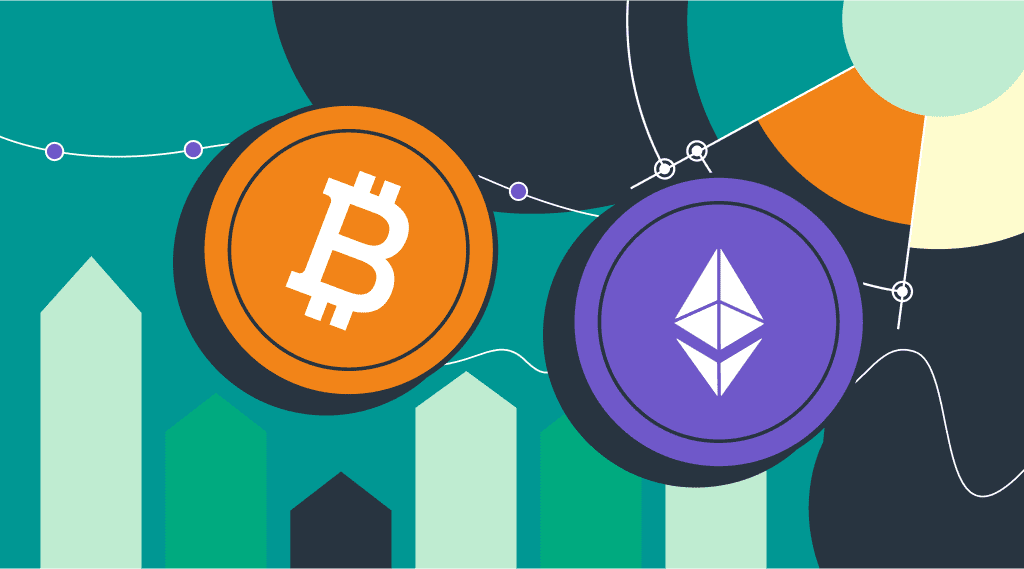
The idea is simple but provocative: a moment when Ethereum surpasses Bitcoin in total market value and becomes the most dominant cryptocurrency on the planet.

While it hasn’t happened yet, the possibility raises important questions about how power in the crypto ecosystem could shift and what ultimately determines value in decentralized networks.
In the simplest terms, the Flippening describes a hypothetical scenario where Ethereum overtakes Bitcoin in market capitalization.
Market capitalization often shortened to market cap is the total value of a cryptocurrency. It is calculated by multiplying the current price of a coin by the total number of coins in circulation.
For example, if a cryptocurrency is priced at $1,000 and there are one million coins in circulation, its market capitalization would be $1 billion.
Because market cap reflects the total value of a crypto asset, it is widely used to compare the relative size and dominance of different cryptocurrencies.
Bitcoin has held the number-one spot by market capitalization since the early days of crypto. The Flippening theory suggests that Ethereum could one day take that position instead.
The debate around the Flippening largely comes down to functionality and use cases.
Bitcoin was designed primarily as a decentralized digital currency and store of value. Many investors now refer to it as “digital gold” because of its limited supply and strong security.
Ethereum, however, was built with a broader purpose. Its blockchain allows developers to create smart contracts and decentralized applications (dApps) programs that run directly on the blockchain without intermediaries.
This capability has helped power major sectors of the crypto industry, including decentralized finance (DeFi), NFT marketplaces, and blockchain-based gaming.
Because Ethereum supports such a wide range of applications, some analysts believe its ecosystem could eventually generate more economic activity than Bitcoin’s network.
For readers who want to explore the technology behind Ethereum, the project’s official website provides an overview of its architecture and ecosystem
Although the Flippening has never actually occurred, there have been moments when Ethereum came surprisingly close.
During the 2017 cryptocurrency bull run, Ethereum’s market capitalization surged dramatically as interest in smart contracts and decentralized applications exploded.
At its peak, Ethereum reached more than 80% of Bitcoin’s market value, sparking widespread speculation that the Flippening might be imminent.
Similar conversations resurfaced during the 2021 bull market when Ethereum adoption accelerated due to the growth of decentralized finance platforms and NFT trading.
Despite these periods of rapid growth, Bitcoin has consistently maintained its lead.
This resilience reflects Bitcoin’s unique position in the crypto ecosystem. It remains the most widely recognized cryptocurrency, with the largest network security and the strongest brand recognition among both institutional and retail investors.
Even if the Flippening never happens, the idea itself reveals something important about the cryptocurrency industry.
It highlights the ongoing debate about what truly drives value in blockchain networks.
Some investors believe scarcity and security qualities associated with Bitcoin are the most important factors.
Others argue that utility and developer activity areas where Ethereum excels will ultimately determine long-term dominance.
In reality, the two networks may continue serving different roles. Bitcoin increasingly functions as a long-term store of value, while Ethereum operates as a platform for decentralized applications and financial infrastructure.
Still, the very existence of the Flippening debate shows how quickly the crypto landscape can evolve.
As blockchain technology continues to mature and new innovations emerge, the balance of power among leading networks could shift in ways that few people initially expected.
For now, Bitcoin remains firmly on top but the conversation about the Flippening is unlikely to disappear anytime soon.



Copyright © 2025 - The Bit Gazette.