

- Trending
- Comments
- Latest

Utah’s HB243, titled ‘Gambling Revisions,’ passed both chambers of the state legislature (House on Feb. 10, Senate on Feb. 27, 2026) and awaits Governor Spencer Cox’s signature.
The legislation would reclassify ‘proposition betting’ on prediction markets like Kalshi and Polymarket as gambling, potentially banning these platforms from operating in Utah.
The bill has triggered federal lawsuits from Kalshi and a broader jurisdictional dispute between the CFTC (which claims regulatory authority) and state gambling regulators.
At the heart of Utah HB243 is the classification of “proposition betting” as gambling. Proposition bets typically involve wagers on specific events within a game — such as an athlete’s performance or whether a team achieves a certain statistic — rather than the overall outcome.
Under Utah-HB243, these activities would fall under strict gambling regulations, preventing companies from offering sports-related prediction markets in Utah even if they brand themselves as financial forecasting platforms rather than sportsbooks.
The legislation reflects growing concern among state officials that prediction market platforms could blur the line between financial derivatives and traditional sports betting.
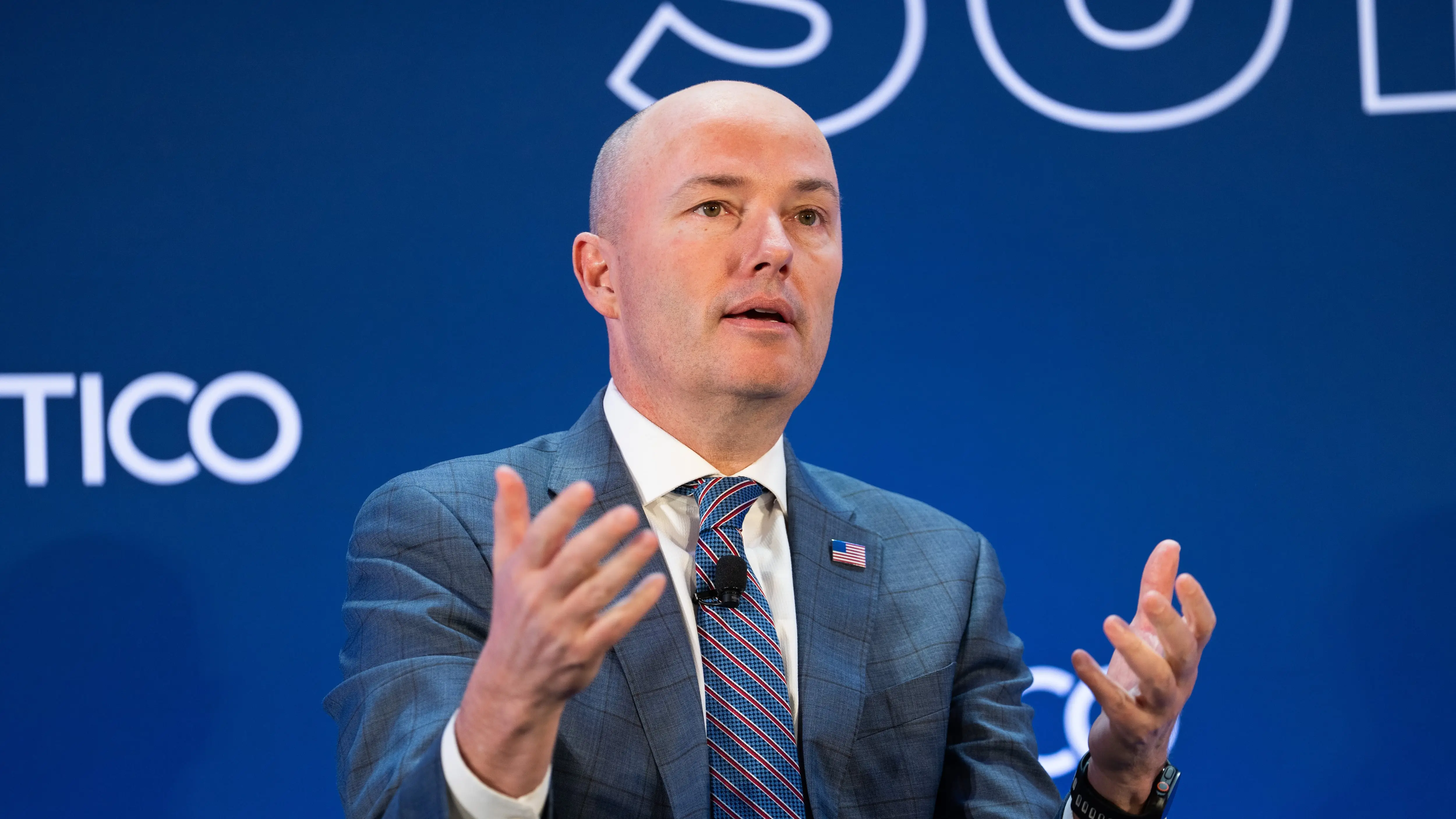
Governor Spencer Cox has been outspoken about the risks associated with such platforms.
“We are putting a casino in the pocket of every single American, and they are targeting especially young people,” Cox reportedly said, according to the Associated Press. “It is really awful what they are doing, and we are going to make sure this doesn’t happen in our state.”
His comments underscore why Utah-HB243 is gaining national attention as states increasingly scrutinize prediction markets.
The passage of Utah HB243 has already triggered legal action from prediction market operator Kalshi.
In February, Kalshi filed a lawsuit against Utah after the state Senate Business and Labor Committee unanimously approved Utah-HB243.
The company asked a federal judge to block the state from enforcing its gambling restrictions against the platform.
Kalshi maintains that its event contracts are not gambling products but federally regulated derivatives.
According to the company, the Commodity Futures Trading Commission (CFTC) has exclusive oversight of such markets under the Commodity Exchange Act.
This argument sits at the core of the growing legal dispute surrounding Utah-HB243 and similar state-level actions.
Kalshi has also expanded its legal battle beyond Utah. On Wednesday, the company filed a lawsuit against Iowa, arguing that there was a risk of imminent enforcement action against its platform.
However, Kalshi recently faced a setback when an Ohio federal judge denied the firm’s request to block state regulators from enforcing gambling laws against its sports event contracts.
The debate over Utah HB243 is rapidly evolving into a larger jurisdictional battle between state regulators and federal authorities.
The CFTC has repeatedly asserted that prediction markets fall under its regulatory authority.
According to the agency, event-based derivatives — including many prediction market contracts — should be governed by federal commodities law rather than state gambling regulations.
CFTC Chair Michael Selig has taken a firm stance on the issue.
“To those who seek to challenge our authority in this space, let me be clear, we will see you in court,” Selig warned during recent remarks.
The agency’s position suggests that Utah-HB243 could trigger a broader legal showdown over who ultimately controls the rapidly growing prediction market sector.
Despite the regulatory backlash represented by Utah HB243, supporters of prediction markets argue that these platforms serve an important economic and informational role.
Speaking at an industry conference in Florida, Selig described prediction markets as powerful tools for forecasting real-world events.
“Well-functioning prediction markets are truth machines,” he said.
According to Selig, when participants are required to stake money on their predictions, the resulting markets can generate signals that may be more reliable than traditional opinion polls.
Still, critics argue that the same mechanisms make these platforms dangerously similar to sports betting, which explains why lawmakers introduced Utah HB243 in the first place.
As Utah HB243 awaits the governor’s signature, the outcome could have far-reaching consequences for the prediction market industry.
If implemented, the legislation may encourage other states to adopt similar restrictions, intensifying regulatory pressure on platforms like Kalshi and Polymarket.
At the same time, the growing clash between state authorities and the CFTC could ultimately be resolved in federal court, potentially reshaping the regulatory landscape for prediction markets across the United States.
For now, Utah-HB243 stands as one of the most aggressive state efforts yet to redefine how these emerging platforms operate



Copyright © 2025 - The Bit Gazette.