


- Trending
- Comments
- Latest

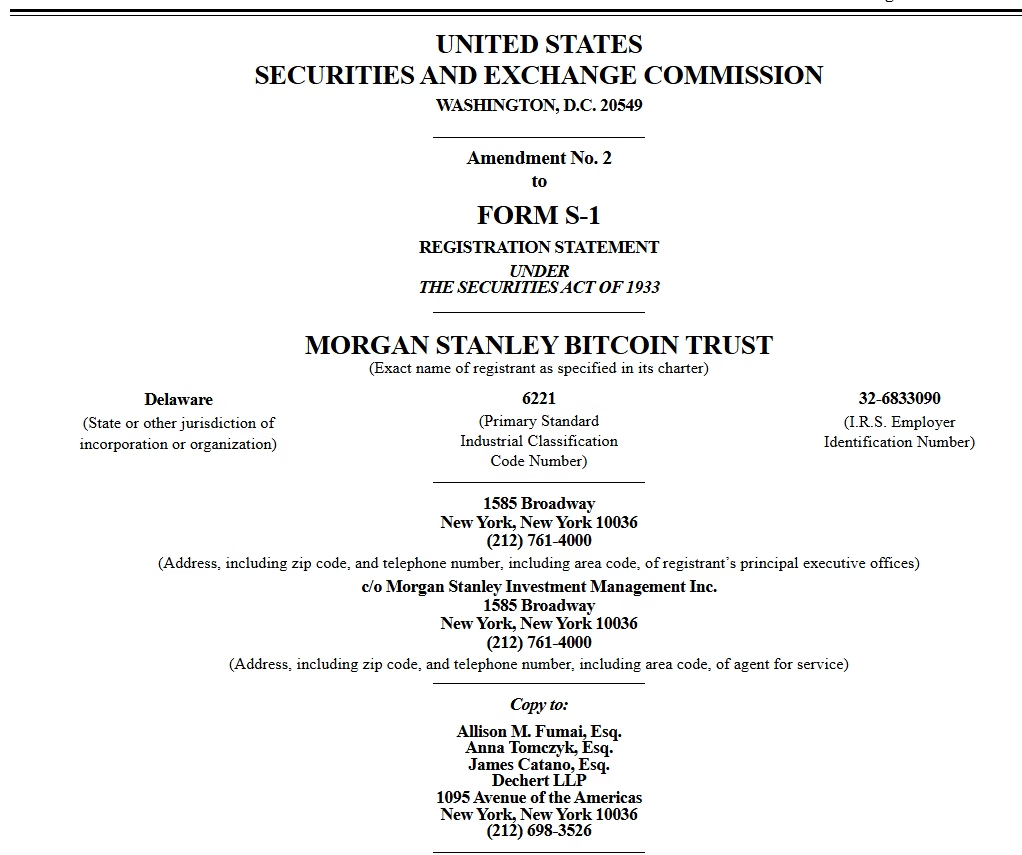
Morgan Stanley filed a second amended S-1 registration for its Bitcoin ETF, revealing a $1 million seed raise and naming Jane Street, Virtu Americas, and Macquarie Capital as authorized participants—signaling the bank’s shift from distributing BlackRock’s Bitcoin product to issuing its own.
The move positions the bank closer to offering direct Bitcoin exposure through a regulated exchange-traded fund, pending regulatory approval.
The updated filing reveals that the Morgan Stanley MSBT Bitcoin ETF plans to raise $1 million by issuing 50,000 seed shares to its delegated sponsor before listing on NYSE Arca.
Proceeds will be used to purchase Bitcoin, aligning the fund’s value directly with the underlying asset. The product will trade under the ticker MSBT, marking a notable shift from distribution to product ownership for the bank.
The Morgan Stanley MSBT Bitcoin ETF will rely on established market participants to ensure pricing efficiency. Jane Street, Virtu Americas, and Macquarie Capital have been named as authorized participants. These firms will create and redeem ETF shares, arbitraging price differences between Bitcoin and the ETF to maintain alignment.
This mechanism is central to how the Morgan Stanley MSBT Bitcoin ETF will function, ensuring that investors receive exposure that closely tracks Bitcoin’s market price. By leveraging experienced liquidity providers, the bank aims to minimize tracking errors and enhance institutional confidence in the product.
The Morgan Stanley MSBT Bitcoin ETF reflects a broader strategic pivot. Previously, the bank focused on distributing third-party products such as iShares Bitcoin Trust (IBIT). Now, it is moving to issue its own ETF, capturing management fees directly.
“Morgan Stanley is moving from distributing BlackRock’s IBIT to issuing its own product, capturing management fees directly rather than earning distribution commissions,” — Marcin Kazmierczak, Co-founder, RedStone.
The shift underscores how major financial institutions are increasingly internalizing crypto offerings as demand grows among retail and institutional investors.
The Morgan Stanley MSBT Bitcoin ETF also aligns with the bank’s earlier guidance recommending a 2% to 4% crypto allocation for diversified portfolios.
The launch of the Morgan Stanley MSBT Bitcoin ETF comes amid a wave of institutional activity in the crypto sector.
Bank of America recently allowed wealth management advisers to recommend Bitcoin ETFs to clients, expanding access beyond request-only services.
Similarly, Vanguard reversed its earlier reluctance by enabling crypto ETF trading for clients, signaling a shift in traditional finance’s stance on digital assets.
Meanwhile, BlackRock has already recommended up to a 2% Bitcoin allocation for investors, reinforcing the asset’s growing role in mainstream portfolios.
These developments highlight the increasing legitimacy of products like the Morgan Stanley MSBT Bitcoin ETF, which aims to provide regulated and accessible exposure to Bitcoin without requiring investors to manage wallets or private keys.
Despite the progress, the Morgan Stanley MSBT Bitcoin ETF remains subject to regulatory approval before trading can begin.
U.S. regulators have historically taken a cautious approach to crypto products, though recent approvals of spot Bitcoin ETFs suggest a more accommodating stance.
The introduction of the Morgan Stanley MSBT Bitcoin ETF could further deepen liquidity in Bitcoin markets and expand participation among traditional investors.
Analysts expect that Morgan Stanley’s network of approximately 15,000 financial advisers will play a crucial role in distributing the product to a broad client base.
“The bank’s advisor network represents real distribution muscle for the ETF,” — Marcin Kazmierczak, Co-founder, RedStone.
If approved, the Morgan Stanley MSBT Bitcoin ETF would mark another milestone in the convergence of traditional finance and digital assets.
By offering a familiar investment vehicle backed by a major institution, the ETF could accelerate adoption among conservative investors who have remained cautious about direct crypto exposure.
In conclusion, the Morgan Stanley MSBT Bitcoin ETF signals a decisive step by Wall Street into the crypto space.
With detailed plans for funding, trading infrastructure, and distribution, the product reflects both growing demand and increasing institutional confidence in Bitcoin as an asset class.
As regulatory decisions approach, the ETF’s launch could further solidify crypto’s position within mainstream financial markets.



Copyright © 2025 - The Bit Gazette.