


- Trending
- Comments
- Latest

The Beacon Chain is the system that allowed Ethereum to do something most blockchains can’t: shift to an entirely new consensus mechanism without shutting down.
Launched in 2020 but fully activated during the September 2022 “Merge,” it replaced energy-intensive mining with staking, cutting Ethereum’s power consumption by over 99%.
This explainer breaks down how the Beacon Chain works, why this upgrade matters, and what it means for the future of blockchain technology.
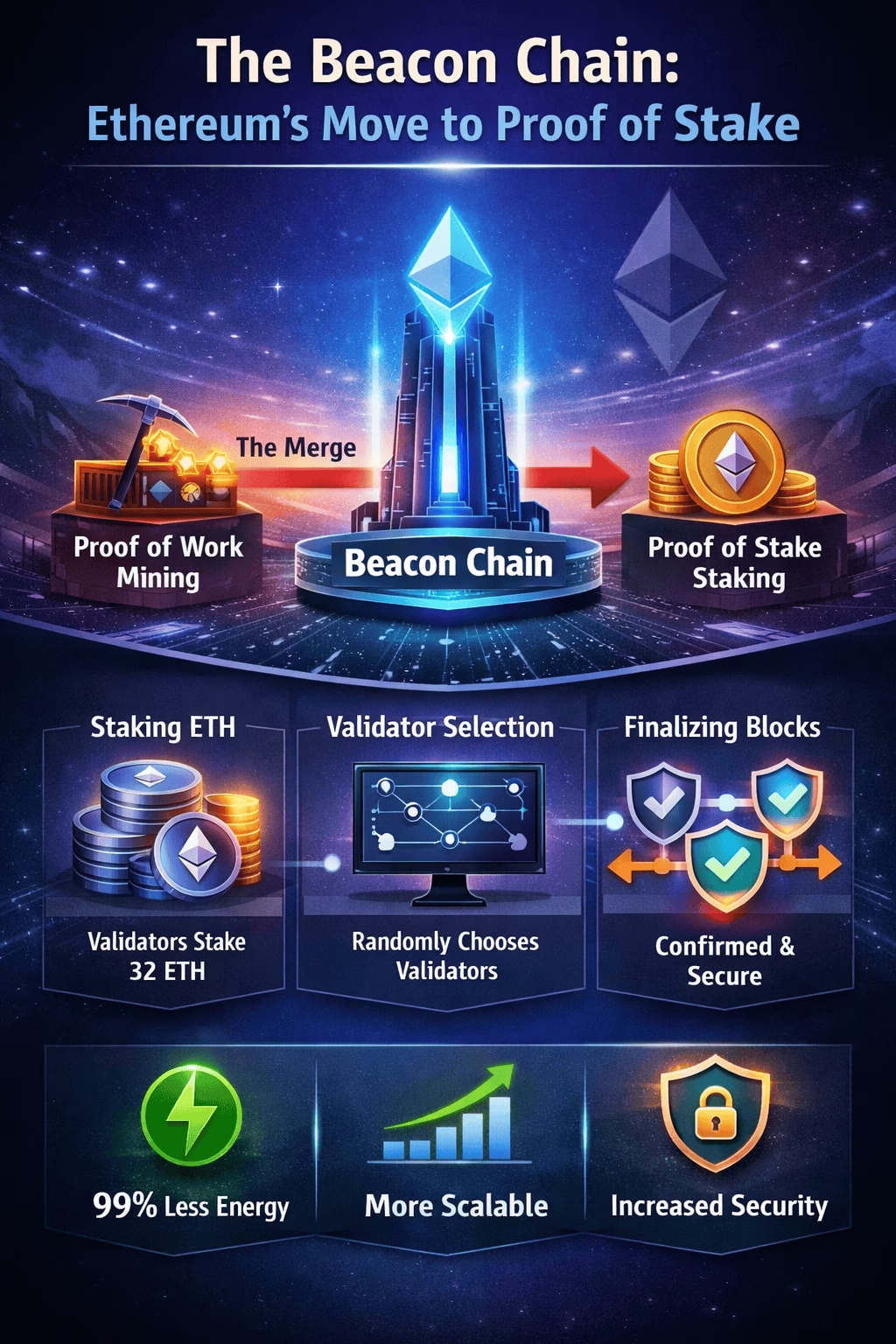
This explainer breaks down what the Beacon Chain is, how it works, and why it has become one of the most important upgrades in blockchain history.
At a basic level, the Beacon Chain replaces miners with validators. These validators are responsible for proposing new blocks and confirming transactions.
Here’s how it works in practice:
This process is designed to be both secure and energy-efficient, removing the need for competitive mining.
The biggest impact of the Beacon Chain is its shift to Proof of Stake (PoS), which changes how trust is built on the network.
According to Vitalik Buterin, “Proof-of-Stake reduces energy use while keeping the network secure through economic incentives.”
This change has had three major effects:
For everyday users and investors, this makes Ethereum more practical and sustainable long-term.
The Beacon Chain didn’t replace Ethereum immediately. It first launched in 2020 and ran alongside the original network.
Everything changed in September 2022 during The Merge, when Ethereum fully transitioned to Proof of Stake. After this:
Mining was completely removed and the Beacon Chain became the main consensus system. Ethereum became significantly more energy-efficient due to this.
This was one of the most important upgrades ever executed on a live blockchain network.
Here’s the niche most explainers skip: the Beacon Chain is not just about staking as it’s about coordination.
It organizes:
Without this coordination layer, Proof of Stake wouldn’t work at scale. Think of it as the “control system” quietly keeping everything in sync behind the scenes.
Despite its advantages, the Beacon Chain isn’t perfect.
Some concerns include:
These issues continue to spark debate within the crypto space.
The Beacon Chain is the backbone of Ethereum’s modern system. By replacing mining with staking and introducing a coordinated validator network, it has reshaped how blockchains can operate.
More importantly, it shows that major networks can evolve without shutting down which is something that could influence the future of the entire crypto industry.



Copyright © 2025 - The Bit Gazette.