

- Trending
- Comments
- Latest

Blockchain transactions are public by design, anyone can trace where funds came from and where they went. Mixer protocols were built to change that, and now the US government is treating their use as a potential federal crime.
A mixer protocol, also known as a crypto mixer or tumbler, is a privacy tool designed to obscure the origin and destination of cryptocurrency transactions.
It works by pooling funds from multiple users and redistributing them, making it difficult to trace specific transactions on public blockchains like Bitcoin or Ethereum.
In simple terms, mixer protocols break the transparent transaction trail that blockchains are known for.
Chainalysis reports that Mixer protocols exist because blockchains are transparent by design, and not all users want their financial history publicly visible.
Mixer protocols function by aggregating crypto deposits from different users into a shared pool. After mixing, the funds are redistributed to new addresses, effectively scrambling the transaction history.
There are two primary types:
Centralized mixers: Operated by third parties that control the mixing process. Users must trust the operator not to steal funds or log transaction data.
Decentralized mixers: Smart contract-based systems that automate the process without intermediaries.
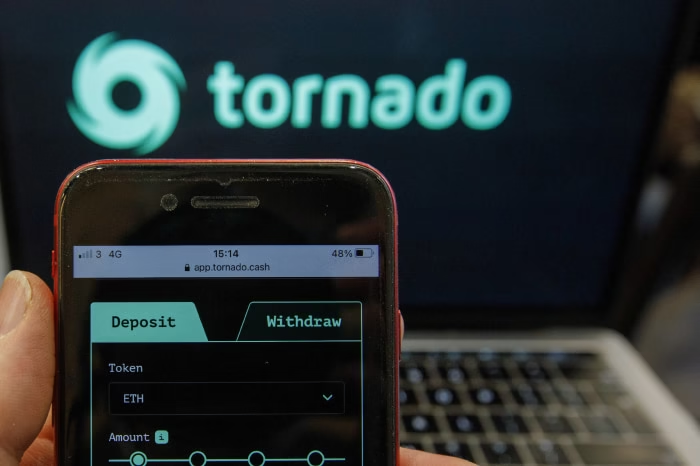
One of the most well-known decentralized mixers was Tornado Cash, which used smart contracts on Ethereum to anonymize transactions.
Here’s a simplified process:
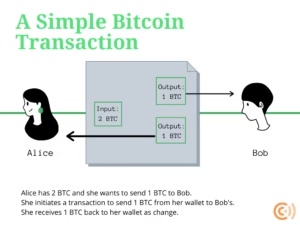
Mixer protocols have become a focal point for regulators worldwide due to their alleged role in enabling illicit financial activities, including money laundering and cybercrime.
In 2022, the U.S. Department of the Treasury sanctioned Tornado Cash, marking one of the most aggressive actions against a crypto privacy tool.
Authorities claimed the protocol had been used to launder billions of dollars, including funds linked to hacking groups.
U.S. treasury statement says, Tornado Cash has been used to launder more than $7 billion worth of virtual currency since its creation.
Similarly, blockchain intelligence firms like Elliptic have repeatedly flagged mixers as high-risk services.
This regulatory pressure introduces new risks such as assets linked to mixers could be flagged or frozen, exchanges may block deposits originating from mixers, and increased scrutiny on wallet activity.
The debate over mixer protocols is deeply divided. On one side are privacy advocates who argue that financial anonymity is a fundamental right. On the other are regulators seeking to prevent criminal misuse.
Supporters of mixers point out that traditional financial systems also allow forms of privacy, and crypto should not be held to a different standard.
Electronic Frontier Foundation claims that privacy is not a crime. It is a basic human right, and tools that protect it should not be outlawed
However, critics argue that the scale and speed of crypto transactions make mixers uniquely vulnerable to abuse.
As governments tighten oversight, mixer protocols are likely to remain under pressure. Some possible developments include:
For investors operating in markets like Nigeria and globally, understanding these tools is essential not just from a technical standpoint, but from a risk management perspective.
Mixer protocols sit at the intersection of innovation and regulation. For investors, understanding how they work, and the risks they carry can make the difference between opportunity and exposure.



Copyright © 2025 - The Bit Gazette.