






- Trending
- Comments
- Latest


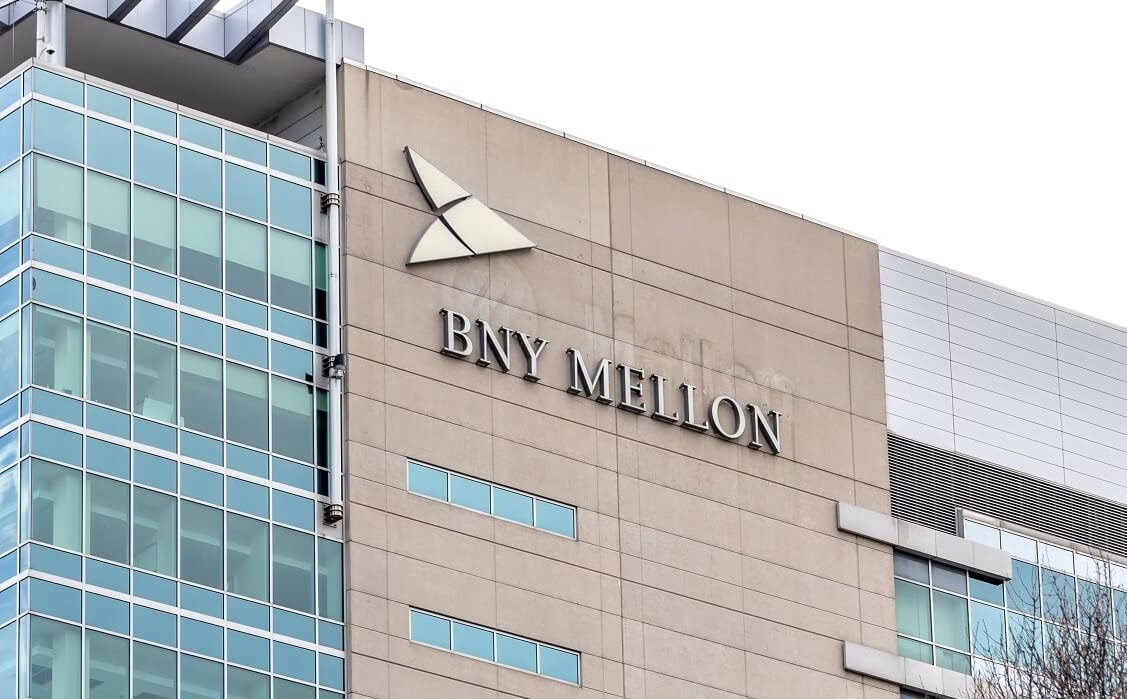
BNY Mellon is preparing to launch cryptocurrency custody services in Abu Dhabi covering Bitcoin and Ethereum, according to reports, in a move that would bring one of the world’s largest custodian banks, which oversees nearly $59 trillion in assets, directly into the Middle East’s growing digital asset infrastructure.
BNY Mellon, widely regarded as the world’s largest custodian bank, oversees nearly $59 trillion in assets under custody and administration. Its entry into regulated cryptocurrency infrastructure is being viewed by analysts as another sign that traditional finance is steadily embracing blockchain-based assets.
The bank’s planned offering is expected to initially support custody services for Bitcoin and Ethereum, the two cryptocurrencies that continue attracting the strongest institutional demand.
The expansion comes during a period of renewed strength for crypto investment products after digital asset markets rebounded sharply in April and early May.
Bitcoin recovered above major technical levels near the low $80,000 range after earlier weakness, while Ethereum stabilized following months of underperformance. Across the broader market, traders also returned to infrastructure projects, meme coins, and privacy-focused assets as risk appetite improved.
The improving market environment has helped fuel fresh institutional interest in crypto investment products, particularly among firms seeking regulated exposure to digital assets.
Analysts say the timing of BNY Mellon’s expansion into Abu Dhabi is significant because it demonstrates that institutional players are becoming increasingly comfortable with crypto infrastructure during periods of market recovery rather than waiting for full regulatory certainty.
“This is about long-term infrastructure, not short-term speculation,” said Robin Vince in previous comments discussing the bank’s digital asset strategy.
The continued development of crypto investment products suggests the industry is gradually moving from experimental adoption toward deeper integration with mainstream financial systems.
One of the biggest obstacles preventing wider institutional participation in crypto investment products has been custody infrastructure.
Large asset managers, pension funds, sovereign wealth funds, and family offices require highly regulated systems for storing digital assets before deploying significant capital into the market.
Without secure custody solutions, operational oversight, and compliance frameworks, many institutional investors remain unable to participate fully in cryptocurrency markets.
By offering institutional-grade custody for Bitcoin and Ethereum, the bank provides large investors with a familiar and regulated gateway into crypto investment products.
Industry participants say trusted custodians reduce operational risk while improving confidence among institutions still cautious about entering the sector.
“Custody is foundational for institutional adoption,” said Michael Saylor during prior discussions about institutional Bitcoin infrastructure. “Large-scale capital requires secure and compliant systems before it enters any market.”
The growth of crypto investment products increasingly depends on this type of institutional infrastructure rather than speculative retail demand alone.
BNY Mellon’s reported focus on Abu Dhabi also highlights the Middle East’s rising influence in digital asset finance.
The United Arab Emirates has spent the past several years positioning itself as a global center for blockchain innovation, crypto regulation, and financial technology development. Abu Dhabi and Dubai have both introduced licensing frameworks designed to attract major crypto companies and institutional investors.
That environment has helped transform the region into a growing hub for crypto investment products and digital asset infrastructure.
Several major exchanges, custodians, and blockchain firms have already expanded operations into the UAE as competition intensifies among jurisdictions seeking leadership in the digital asset economy.
BNY Mellon’s planned entry adds another layer of institutional credibility to Abu Dhabi’s ambitions.
Analysts believe the region’s regulatory clarity and pro-innovation stance are becoming increasingly attractive to traditional financial firms exploring crypto investment products.
The rise of crypto investment products is reshaping the relationship between banks and blockchain technology.
Only a few years ago, many global financial institutions openly questioned the long-term viability of cryptocurrencies. Today, several of the world’s largest firms are actively building digital asset services, including tokenization systems, blockchain settlements, custody platforms, and trading infrastructure.
BNY Mellon joins a growing list of major institutions expanding deeper into crypto investment products as client demand continues increasing.
Firms such as BlackRock, Fidelity, and JPMorgan have all expanded digital asset initiatives over the past two years as competition for institutional crypto business accelerates.
“Tokenization and digital assets are transforming capital markets,” said Larry Fink in previous remarks discussing blockchain adoption within global finance.
The growth of crypto investment products increasingly reflects a convergence between traditional banking systems and decentralized financial infrastructure.
Despite growing interest in alternative digital assets, Bitcoin and Ethereum remain the dominant focus for institutional crypto investment products.
Bitcoin is still viewed by many institutions as a digital store of value and macroeconomic hedge, while Ethereum’s role in decentralized finance and tokenized applications continues attracting long-term interest.
BNY Mellon’s decision to prioritize those assets reflects broader institutional market behavior.
The expansion also strengthens the broader narrative that crypto investment products are becoming a permanent part of mainstream finance rather than a temporary speculative trend.
Short-term volatility is expected to remain a feature of cryptocurrency markets, particularly after recent rallies. However, institutional developments such as BNY Mellon’s custody expansion continue reinforcing long-term confidence in crypto investment products and the broader digital asset ecosystem.
As more traditional financial institutions enter the sector, crypto investment products are increasingly evolving from niche instruments into globally integrated financial services.



Copyright © 2025 - The Bit Gazette.

