







- Trending
- Comments
- Latest

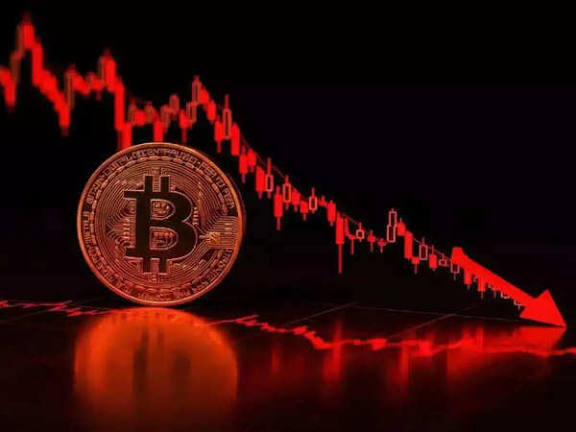
On May 4, 2026, Bitcoin finally broke above $80,000 for the first time since January. The rally looked like the start of a major breakout. Institutional inflows were accelerating, whale wallets were accumulating aggressively, and markets believed the worst phase of the US-Iran conflict was fading.
Two weeks later, the breakout was gone.
On May 18, Bitcoin plunged to $76,711, triggering roughly $550 million in long liquidations within hours and wiping out most of the gains from the May rally. Spot Bitcoin ETFs also recorded more than $1 billion in weekly outflows as traders rushed to reduce exposure to risk assets.
The reason behind the collapse was not crypto-specific. It was geopolitical.
The same US-Iran conflict that pressured global markets throughout Q1 2026 has once again become the dominant force controlling Bitcoin’s direction.
Bitcoin’s move above $80,000 was driven by a wave of optimism in April and early May.
Markets reacted positively after reports emerged that Washington and Tehran were moving closer to a ceasefire agreement. Oil prices dropped, inflation fears eased slightly, and traders began rotating back into risk assets like crypto.
Momentum strengthened further when President Donald Trump announced “Project Freedom” on May 4, a military operation designed to escort merchant ships through the Strait of Hormuz.
The announcement temporarily reassured investors that global energy supply routes could stabilize. Bitcoin surged above $80,000 while ETF inflows crossed $2.4 billion over a nine-day period.
Whale wallets holding more than 1,000 BTC accumulated heavily during the rally, while exchange reserves fell to multi-year lows.
For a brief moment, it looked like Bitcoin had finally escaped the range that trapped it throughout most of Q1.
Then ceasefire negotiations stalled.
Trump warned that the “clock is ticking” for Iran to reach a deal, while tensions around the Strait of Hormuz intensified again. Markets quickly shifted back into risk-off mode, sending Bitcoin below key support levels and triggering cascading liquidations across crypto derivatives markets.
The Strait of Hormuz is not just a geopolitical flashpoint. It is the world’s most important oil chokepoint, handling roughly 20% of global oil supply.
As tensions escalated this year, disruptions around the strait pushed Brent crude toward $126 per barrel. That created a chain reaction across financial markets:
Bitcoin, despite its “digital gold” reputation, still trades largely as a liquidity-sensitive risk asset.
When oil prices spike and macro uncertainty rises, institutional traders reduce exposure to speculative markets. That includes crypto.
This is the core reason Bitcoin’s breakout failed.
The rally above $80,000 depended heavily on expectations that geopolitical risks were fading. Once markets realized the conflict was becoming more entrenched, sentiment reversed sharply.
Iran’s launch of “Hormuz Safe” on May 16 added another layer of fear to the market.
The state-backed maritime insurance platform accepts Bitcoin, USDT, and Chinese yuan for shipping settlements linked to the Strait of Hormuz. The platform bypasses the SWIFT network entirely and is part of Iran’s broader attempt to build alternative financial rails under sanctions pressure.
While some crypto supporters viewed the development as bullish for Bitcoin adoption, markets interpreted it differently.
Investors saw Hormuz Safe as evidence that Iran was preparing for a prolonged confrontation with the West rather than moving toward de-escalation.
That perception damaged market confidence immediately.
The launch reinforced fears that the Strait of Hormuz could remain unstable for months, keeping oil prices elevated and forcing central banks to remain hawkish longer than expected.
The US-Iran conflict is also reshaping expectations for monetary policy.
Before the latest escalation, many traders expected the Federal Reserve to begin cutting interest rates later in 2026. Rising oil prices and renewed inflation fears have now weakened those expectations significantly.
Markets increasingly believe rates could stay higher for longer if energy prices continue rising.
That is bad news for Bitcoin.
Crypto bull markets historically thrive during periods of easy liquidity and lower interest rates. Tight monetary policy reduces speculative appetite and makes risk assets more vulnerable to macro shocks.
The current environment combines both geopolitical uncertainty and tighter liquidity conditions — one of the worst combinations possible for a sustained crypto breakout.
Bitcoin has actually held up relatively well compared to some traditional assets during parts of the Iran conflict. Earlier this year, it outperformed equities and even gold during several volatile trading sessions.
But resilience is not the same as bullish momentum.
The problem for Bitcoin is that prolonged geopolitical crises create inflationary pressure that limits central bank flexibility. As long as oil prices remain elevated and tensions around Hormuz continue, liquidity conditions are unlikely to improve meaningfully.
That creates a ceiling for crypto markets.
Bitcoin may still benefit from long-term trends like de-dollarization, sanctions fragmentation, and distrust in traditional financial systems. But in the short term, traders are focused on inflation, oil, and geopolitical risk.
That is why the breakout above $80,000 failed so quickly.
Bitcoin’s long-term fundamentals remain strong. Institutional adoption continues growing, ETF demand remains significant over the long run, and global interest in alternative financial systems is increasing.
But macroeconomics is overpowering crypto narratives right now.
As long as the Strait of Hormuz remains unstable, oil prices remain elevated, and US-Iran tensions continue escalating, Bitcoin is likely to remain trapped between bullish long-term fundamentals and bearish short-term macro pressure.
The breakout above $80,000 was supposed to signal the start of a new rally.
Instead, it became another reminder that in 2026, geopolitics not crypto is controlling the market.



Copyright © 2025 - The Bit Gazette.

