







- Trending
- Comments
- Latest

Onchain investigator ZachXBT has accused BlockDAG and affiliated projects of moving at least $25 million in retail presale funds into influencer payment addresses tied to Spartans.com, an online casino venture linked to BlockDAG-connected entrepreneur Gurhan Kiziloz.
The latest claims have intensified scrutiny around the BlockDAG Network, a controversial crypto presale project that has reportedly raised hundreds of millions of dollars from retail investors over the past two years. According to ZachXBT, wallets tied to the BlockDAG Network and another project called ZKP allegedly transferred funds that were later used to pay influencers promoting Spartans.com, an online casino venture connected to Kiziloz.
The new wave of BlockDAG allegations arrives at a time when investor concerns over crypto presales, influencer marketing, and operational transparency are already dominating discussions across the digital asset industry.
In a series of posts published on X, ZachXBT claimed blockchain data showed evidence of commingling between presale wallets associated with BlockDAG and ZKP and payment addresses allegedly tied to influencer campaigns for Spartans.com.
“I have not seen any disclosure in the original BlockDAG Network or ZKP presale materials indicating that funds would be used to promote a separate venture,” ZachXBT wrote.
The investigator further alleged that retail investors were still publicly reporting problems tied to the projects, describing the latest discovery as “another red flag” surrounding the ecosystem.
The BlockDAG allegations quickly spread across crypto social media, with several traders and analysts debating whether the claims point to deeper governance and transparency problems within the project.
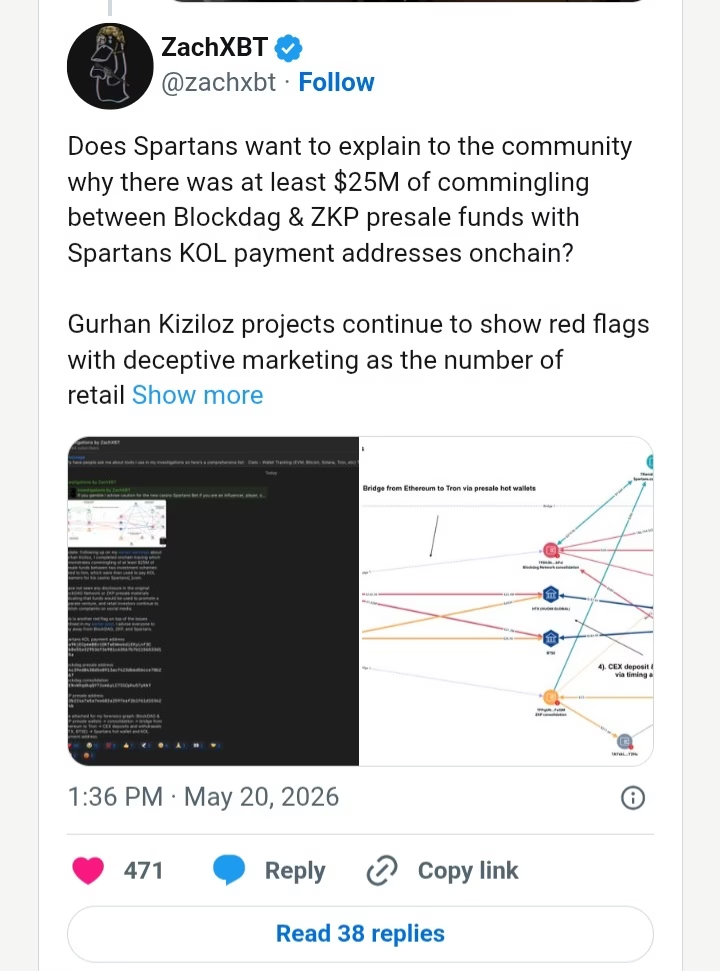
ZachXBT also accused Spartans.com of blocking him on X after he publicly questioned the alleged movement of funds.
“Does Spartans want to explain to the community why there was at least $25 million of commingling between BlockDAG and ZKP presale funds with Spartans’ KOL payment addresses on-chain?” he asked.
As of publication, neither Spartans.com nor BlockDAG had publicly issued a detailed response to the specific allegations involving the $25 million figure.
The newest BlockDAG allegations build on months of criticism surrounding the project and its leadership.
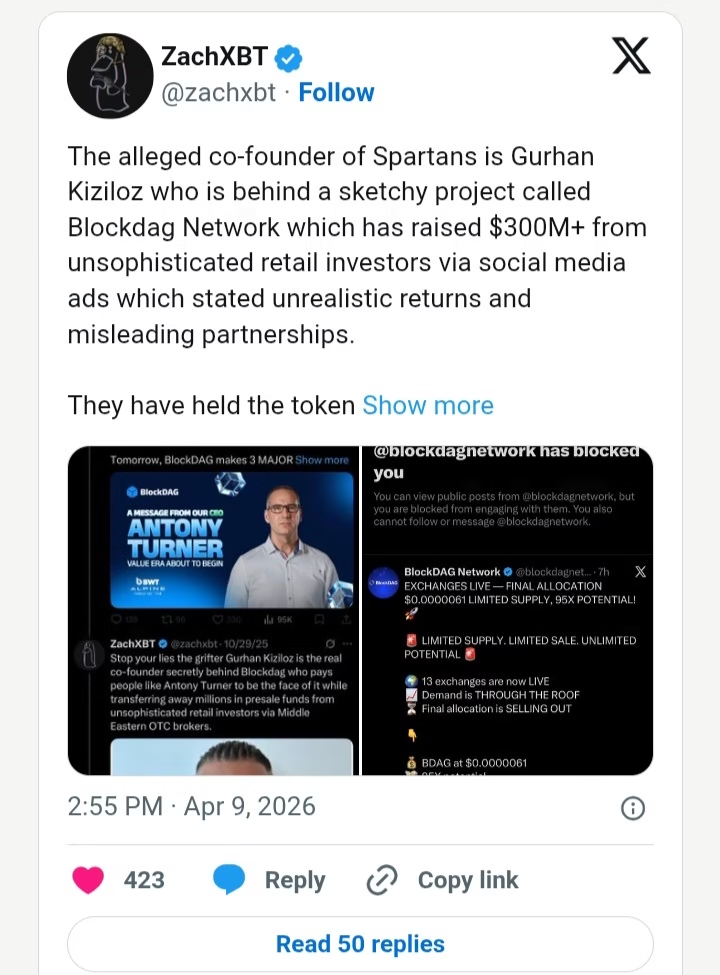
Back in April, ZachXBT claimed that BlockDAG had raised more than $300 million from “unsophisticated retail investors” through aggressive marketing campaigns that allegedly promoted unrealistic investment returns.
He further alleged that the token sale continued for an unusually long period while funds were reportedly being moved through over-the-counter brokers in the Middle East.
“At the same time Gurhan was spending very lavishly on luxury cars, real estate, watches, giveaways, etc.,” ZachXBT previously wrote.
Those earlier BlockDAG allegations gained significant traction because they coincided with growing complaints from investors who claimed they had not received promised mining hardware or expected token allocations.
The investigator also argued that online search results connected to Kiziloz were dominated by sponsored PR articles, making it difficult for investors to locate independent reporting or criticism tied to the project.
The controversy surrounding the BlockDAG allegations expanded further after a previous investigation published by DL News highlighted operational complaints tied to the company.
According to the report, some investors claimed promised exchange listings never materialized, while others said their token allocations had been diluted over time.
Former employees also alleged unpaid wages and operational confusion within the organization. One former executive assistant reportedly claimed that dozens of workers were still owed compensation for completed work.
DL News stated that it could not independently verify all claims, but the investigation nevertheless added momentum to broader concerns surrounding BlockDAG allegations and project transparency.
The publication also reported that at least two football clubs allegedly withdrew from sponsorship agreements after payment-related issues emerged.
That development raised further questions about how presale capital was being managed and whether the project’s rapid marketing expansion outpaced its operational structure.
The latest BlockDAG allegations are also reigniting a broader industry debate about the risks associated with large-scale crypto presales marketed heavily through influencers and social media campaigns.
During the last bull cycle, regulators around the world warned investors about projects promising outsized returns without sufficient disclosures. Several crypto enforcement cases since 2022 have focused on token promotions, undisclosed compensation deals, and misleading advertising.
Blockchain analytics firms have increasingly played a central role in uncovering wallet movements tied to disputed crypto projects. Investigators like ZachXBT have built large online audiences by tracing transactions publicly visible on blockchain networks.
While the BlockDAG allegations remain claims rather than court-proven findings, the visibility of onchain data has made it significantly harder for crypto projects to avoid scrutiny once questions emerge around fund flows.
That shift is reshaping how retail investors evaluate projects, especially as many traders become more cautious after years of collapses involving centralized exchanges, DeFi protocols, and token presales.
The continued circulation of BlockDAG allegations could create additional challenges for the project as it attempts to maintain investor confidence in an increasingly skeptical crypto market.
Trust remains one of the most valuable assets in digital finance, particularly for projects that rely heavily on community participation and long-term token support.
Although BlockDAG executives have previously defended the company’s operations, critics argue that the project now faces growing pressure to provide clearer disclosures around treasury management, token economics, and intercompany fund movements.
BlockDAG CEO Nic Van Den Bergh previously told DL News that the company had raised more than $200 million but declined extensive public interviews during what he described as a “critical execution phase.”



Copyright © 2025 - The Bit Gazette.

