




- Trending
- Comments
- Latest

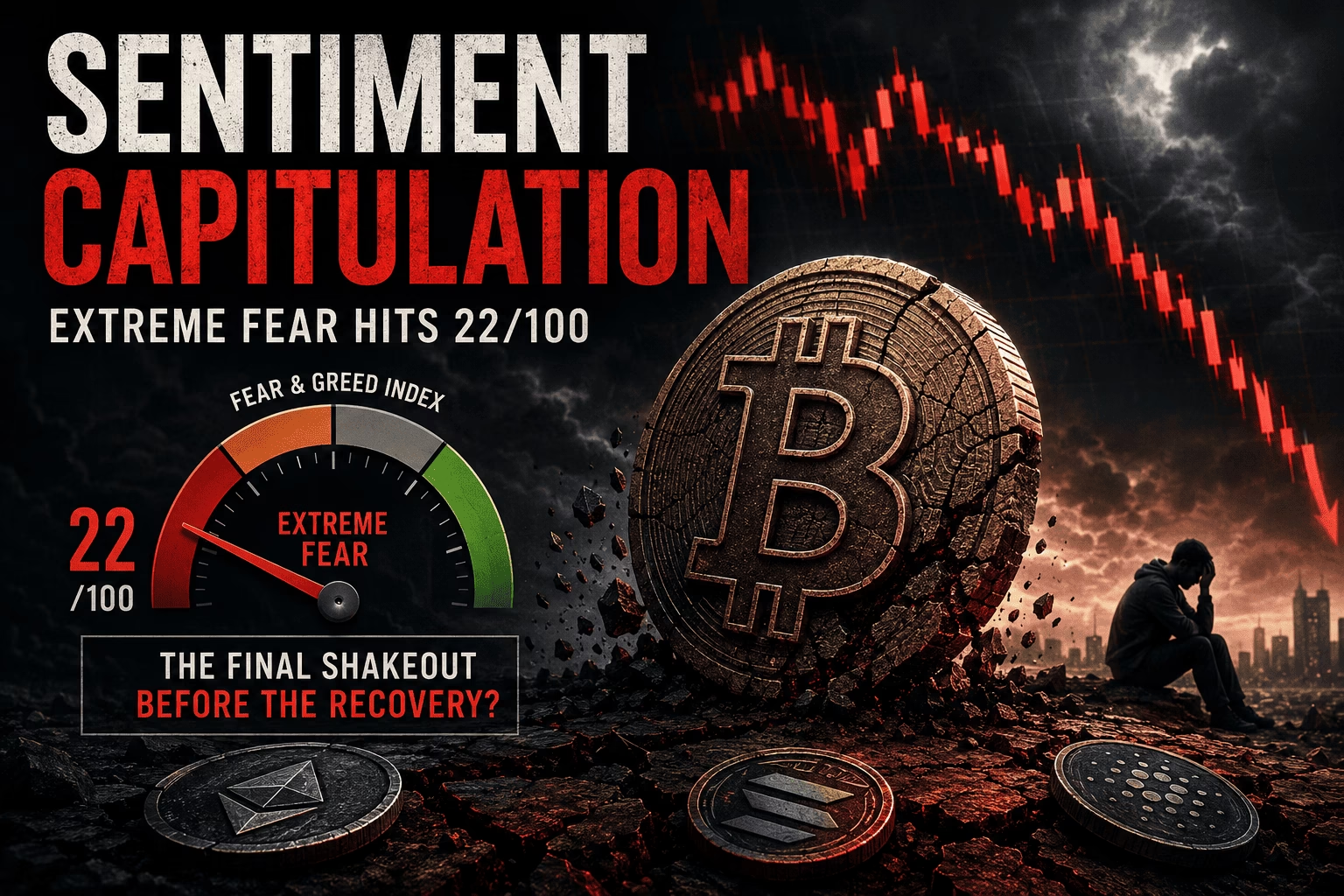
The Crypto Fear & Greed Index fell to 22 out of 100 this Thursday, its lowest reading in months, as selling pressure across Bitcoin and major altcoins pushed market sentiment into what analysts classify as extreme fear territory.
Historically, readings at this level have appeared near local market bottoms rather than the start of prolonged declines — though analysts caution that extreme fear can persist for weeks before conditions stabilise.
For many veteran participants, the latest collapse in sentiment resembles previous moments of maximum pessimism that eventually gave birth to major market recoveries.
Investor psychology has become the dominant force driving short-term price action in crypto markets. Fear, not fundamentals, now appears to be dictating trading behavior as market participants rush to protect capital amid growing uncertainty.
The Crypto Fear & Greed Index reading of 22 reflects what analysts classify as “Extreme Fear,” a condition that has historically emerged near local market bottoms rather than the beginning of prolonged collapses.
“This kind of emotional capitulation tends to happen late in corrective phases,” said market analyst Michaël van de Poppe in previous commentary surrounding crypto market cycles. “Retail participants often sell after the majority of downside damage has already occurred.”
The current Sentiment Capitulation Fund phase mirrors several historic crypto drawdowns, including the March 2020 pandemic crash, the June 2022 deleveraging event following the collapse of major crypto firms, and periods of sharp fear during late 2023 volatility.
In each instance, widespread pessimism ultimately gave way to aggressive rebounds once selling pressure faded and liquidity conditions stabilized.
What makes the present environment especially significant is the scale of psychological fatigue spreading across the market. Social media discussions that once focused on bullish price targets have shifted toward fears of prolonged stagnation, collapsing liquidity, and the possibility of another extended bear market.
That emotional reversal is precisely what contrarian investors monitor most closely.
Several macroeconomic and industry-specific concerns are intensifying the current panic cycle.
Persistent uncertainty surrounding global interest rates, concerns over weakening ETF inflows, slowing momentum across alternative cryptocurrencies, and fears tied to global liquidity conditions have all contributed to deteriorating market confidence.
At the same time, traders remain highly sensitive to signals from the U.S. Federal Reserve and broader risk markets. Elevated borrowing costs and tightening financial conditions continue pressuring speculative assets, particularly cryptocurrencies.
According to data from on-chain analytics firms, however, the market’s emotional reaction may currently exceed the actual structural deterioration taking place beneath the surface.
The latest Sentiment Capitulation Fund environment has triggered aggressive short-term selling, but long-term holders appear relatively stable compared to previous cycle breakdowns. Bitcoin exchange reserves have continued trending lower over longer periods, suggesting many investors still prefer holding assets off exchanges despite current volatility.
On-chain researcher Willy Woo has repeatedly argued that long-term investor conviction remains one of Bitcoin’s strongest indicators during periods of market stress.
“When weak hands exit, stronger hands accumulate,” Woo previously noted while discussing Bitcoin cycle behavior.
That divergence between emotional panic and underlying positioning is becoming increasingly important for institutional investors attempting to identify potential recovery zones.
Historically, institutional capital rarely enters markets during periods of optimism. Instead, sophisticated investors tend to accumulate assets when fear dominates headlines and retail confidence collapses.
That dynamic is central to understanding the current Sentiment Capitulation Fund phase unfolding across crypto markets.
While retail traders often wait for bullish confirmation before re-entering positions, larger investors frequently begin accumulating long before sentiment visibly improves.
Recent blockchain activity suggests several large wallet addresses continue selectively increasing exposure despite the broader atmosphere of fear. Stablecoin liquidity also remains elevated, indicating that significant capital still sits on the sidelines waiting for favorable entry conditions.
“The best opportunities often emerge when sentiment reaches maximum pessimism,” legendary investor Warren Buffett famously said, advising investors to remain “fearful when others are greedy and greedy when others are fearful.”
Crypto markets tend to amplify that principle dramatically because of their volatility and reflexive structure. Panic selling accelerates liquidations, but those same liquidations can create the conditions necessary for rapid upside reversals once sellers become exhausted.
Analysts say the current Sentiment Capitulation Fund setup reflects exactly that type of environment.
Short positions have become increasingly crowded, retail participation has weakened sharply, and many traders now appear positioned defensively by default. Once bearish positioning reaches saturation, even modest positive catalysts can trigger violent rebounds as traders rush to reposition.
Despite growing pessimism, some market observers believe the current downturn resembles exhaustion rather than systemic collapse.
The distinction matters.
In previous crypto cycles, true structural breakdowns were often accompanied by large-scale exits from long-term holders and severe deterioration in core network activity. Current on-chain trends, however, suggest much of the panic remains concentrated among short-term speculative traders rather than deeply convicted investors.
That has fueled speculation that the latest Sentiment Capitulation Fund phase could represent the market’s final cleansing event before renewed capital rotation into risk assets.
Importantly, analysts caution that extreme fear does not guarantee an immediate reversal. Sentiment can remain negative for extended periods, and volatility may continue dominating near-term trading conditions.
Still, history suggests periods of maximum pessimism have often created powerful long-term accumulation opportunities.
As fear becomes consensus, the market gradually runs out of willing sellers. Once that process completes, liquidity dynamics can shift rapidly in the opposite direction.
The current 22/100 fear reading may ultimately prove less significant as a warning sign and more important as a psychological marker of capitulation.
For now, uncertainty continues gripping crypto markets. But beneath the surface, experienced investors are closely watching whether this latest Sentiment Capitulation Fund event becomes the final shakeout before the next major recovery cycle begins.



Copyright © 2025 - The Bit Gazette.