- Trending
- Comments
- Latest

There is a 21-mile-wide corridor between Iran and the Arabian Peninsula that has become, in 2026, the single most dangerous variable in global asset markets. Not inflation data. Not Fed guidance. Not earnings season. A strip of water through which roughly one-fifth of the world’s daily oil supply moves — and which, for the past several months, has been the stage for an escalating military confrontation that crypto traders are learning to fear in real time.
The Strait of Hormuz is no longer just an oil story. It is a liquidation trigger.
The crisis has built in waves. Operation Epic Fury launched in February 2026 with coordinated US strikes on Iranian military infrastructure missile batteries, naval facilities, assets described as threats to US forces and international shipping. Later that month, joint US-Israel strikes hit Iranian nuclear sites. A ceasefire was eventually brokered in April, but it held the way ceasefires in this region tend to hold: briefly and symbolically.
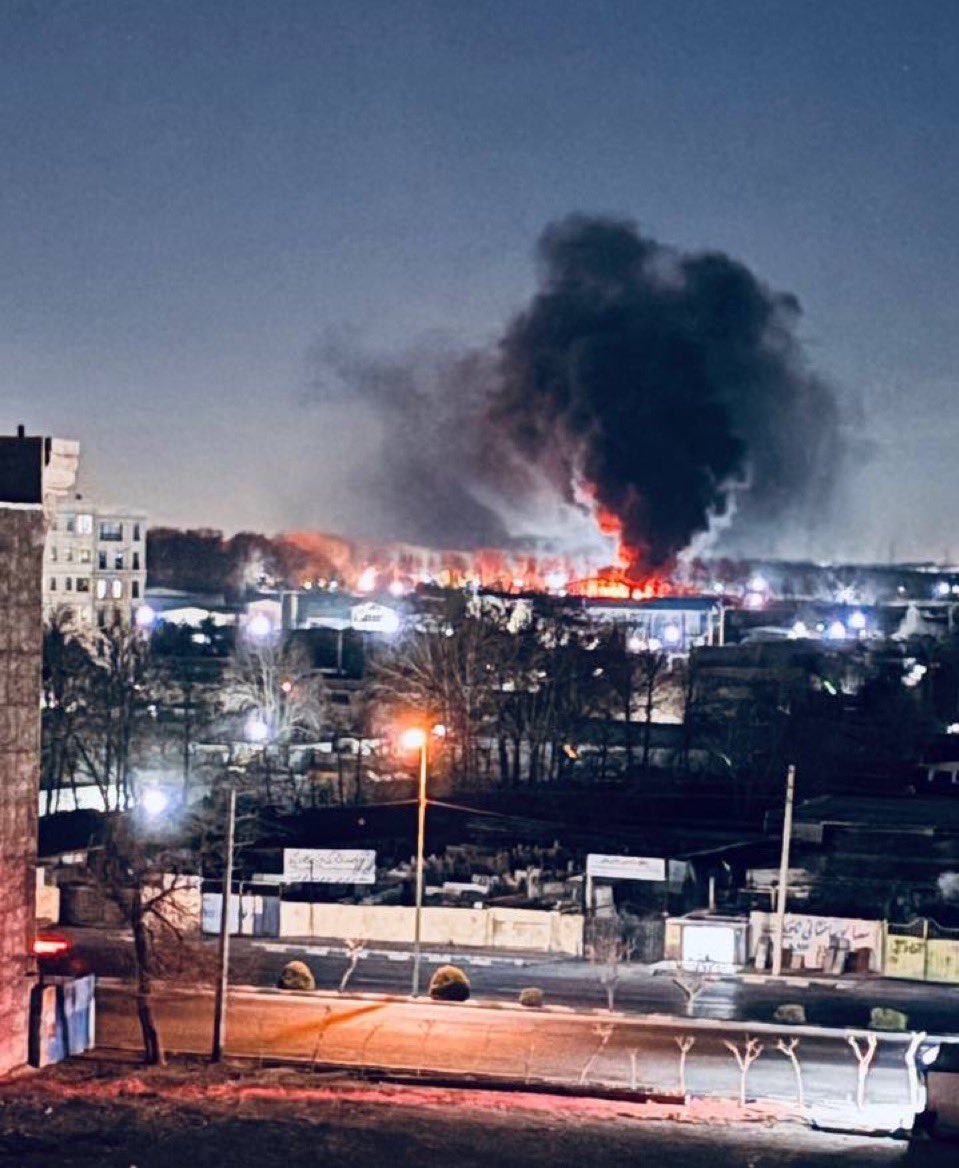
The latest chapter came in early June. Iran launched four one-way attack drones toward the Strait of Hormuz. All four were intercepted. On the same day, Iran fired ballistic missiles at Kuwait and Bahrain. The US response was swift strikes against Iranian coastal surveillance radar installations in Goruk and on Qeshm Island. Then a US Apache helicopter was downed over the strait. The ceasefire, already fragile, shattered. Fresh American strikes followed.
Each of these events, in isolation, would register as a serious regional escalation. Sequenced together across four months, they have created a persistent geopolitical risk premium that is sitting on every risk asset on the planet including, and especially, crypto.
The mechanics are straightforward and brutal. When credible disruption risk rises at Hormuz, oil surges. When oil surges, the dollar strengthens into safe-haven demand. When the dollar strengthens and bonds catch a bid, liquidity drains from speculative assets. Higher oil plus stronger dollar plus Treasury inflows is the classic risk-off trifecta and at the end of that chain, crypto gets sold.
This is not unique to 2026. Previous US-Iran flare-ups have produced the same pattern: Bitcoin drops to multi-week lows, altcoins fall harder, leveraged long positions get wiped, and the “digital gold” narrative quietly retreats until the news cycle moves on.
What is different in 2026 is the frequency and the size of the liquidation events.
The May 2026 strikes triggered a Bitcoin move below $73,000. Liquidations across crypto assets ran between $958 million and $1 billion in the aftermath. The total crypto market lost roughly $80 billion in value. Ethereum, Solana, and XRP each fell between 2% and 4%. This was not a Bitcoin-specific event it was a broad de-risking across the asset class.
June was grimmer in some respects. Iranian strikes on Kuwait’s international airport, combined with intensifying Hormuz conflict, sent risk assets into freefall. More than $700 million in leveraged long positions were forcibly closed in a 12-hour window. Total crypto market cap fell to $2.31 trillion.
The derivatives picture was telling. Ether open interest hit a record even as the token fell below $2,000 — a divergence that, in options market terms, signals traders loading shorts rather than buying the dip. The put-call skew remained elevated throughout, meaning sophisticated money was still paying for downside protection even as volatility gauges showed headline numbers near yearly lows. That is not a market that believes the worst is over. That is a market bracing.
Every genuine macroeconomic stress event in recent years has exposed the same thing: when institutions need to de-risk quickly, crypto is among the first assets sold. Not gold. Not the yen. Crypto.
The “digital gold” argument has been a fixture of crypto marketing since at least 2017. The idea is that Bitcoin, with its fixed supply and decentralised structure, should behave like a store of value in times of uncertainty appreciating or at least holding steady when traditional risk assets fall. The data from 2026’s Hormuz episodes does not support this thesis. Bitcoin tracks equities down in risk-off environments. It has done so consistently. The gap between the narrative and the actual correlation is where billions in liquidated longs go to die.
This is not an argument that Bitcoin has no long-term value proposition. It is an argument that the “safe haven” framing is misleading to anyone managing real risk exposure in a conflict environment.
There is a sub-plot to this story that does not get enough attention. Iran has reportedly been soliciting cryptocurrency payments from ships traversing the Strait of Hormuz effectively running a digital toll system for maritime passage while evading the international sanctions architecture designed to isolate its economy. US authorities have responded by sanctioning Iran-linked wallets and freezing digital assets associated with Iranian entities, with confiscated values estimated somewhere between $344 million and $500 million.
Iran reportedly holds around $7.7 billion in digital assets in total a deliberate sanctions-circumvention strategy that has been building for years. The implication is uncomfortable but worth stating plainly: the same asset class being liquidated by Western institutional traders every time Iran fires a missile is also being used by Iran to fund the operations that trigger those liquidations. Crypto’s neutrality cuts in both directions.
The geopolitical risk premium hanging over crypto is not abstract. It is priced into every elevated put-call skew, every record short position opened into a price rally, every liquidation cascade that follows a Pentagon press conference. Until there is genuine and durable de-escalation at Hormuz not another symbolic ceasefire, but a structural reduction in the probability of strait disruption that premium does not leave the market.
The pattern from 2026 is now well-established enough to be nearly algorithmic: escalation news breaks, leveraged longs get flushed, altcoins fall harder than Bitcoin, derivatives traders load protective puts, and the market waits for the next headline. Rinse and repeat.
Traders who have not priced Hormuz risk into their position sizing are not taking a view on crypto fundamentals. They are taking a view on Middle Eastern geopolitics and doing so without acknowledging it.
Oil traders have understood the Hormuz risk premium for decades. Equity traders have increasingly priced it in. Crypto markets, despite their 24/7 global nature and their theoretical independence from traditional macro forces, have shown in 2026 that they are just as exposed and, given the leverage that characterises the space, potentially more so.
Every new strike, every downed aircraft, every ballistic missile trajectory toward a Gulf airport lands twice. Once on the radar screens of military commanders in the region. And once in the liquidation engines of derivatives exchanges, where over-leveraged traders learn, again, that there is no asset class that floats above the weight of a world on edge.
The strait is 21 miles wide. The blast radius, in portfolio terms, is considerably larger.



Copyright © 2025 - The Bit Gazette.