


- Trending
- Comments
- Latest

For Long, Bitcoin has dominated the headlines as “digital gold,” but Ethereum, launched in 2015 by then-teenager Vitalik Buterin, has quietly evolved into the backbone of decentralized finance (DeFi), non-fungible tokens (NFTs), and real-world asset tokenization. Unlike Bitcoin’s primary function as a store of value, Ethereum introduced smart contracts—self-executing, programmable agreements—that expanded blockchain use cases far beyond simple transactions.
Ethereum’s early years saw challenges such as the highly publicized 2016 DAO hack, which resulted in a contentious split into Ethereum and Ethereum Classic. Yet, the platform’s resilience grew stronger, and by 2020–2021, Ethereum emerged as the financial engine of the crypto space, powering decentralized exchanges, lending protocols, and stablecoins locking up tens of billions in value.
The watershed moment came in September 2022 with the Merge, when Ethereum transitioned from energy-intensive proof-of-work mining to proof-of-stake validation. This shift cut Ethereum’s carbon footprint by about 99.98%, directly appealing to institutions with environmental, social, and governance (ESG) mandates.
It also introduced staking, allowing ETH holders to earn returns, offering an advantage Bitcoin cannot match. This evolution positioned Ethereum not just as a digital asset but as sustainable digital infrastructure ready for institutional adoption.
The year 2025 marks a significant milestone in Ethereum institutional adoption. According to Nate Geraci, CEO of The ETF Store, Ethereum-holding firms and spot ETFs have collectively acquired approximately $19 billion worth of ETH to date. This includes about $7 billion purchased by dedicated Ethereum ETFs and roughly $12 billion acquired directly by companies.
The combination of staking yields, Ethereum’s programmability, and adherence to ESG principles entices these firms and others like Ether Machine, ETHZilla, Fundamental Global, Intchains Group Limited, and Exodus Movement, Inc. This growing commitment underscores Ethereum’s emergence as an institutional favorite and a foundation for the digital economy.
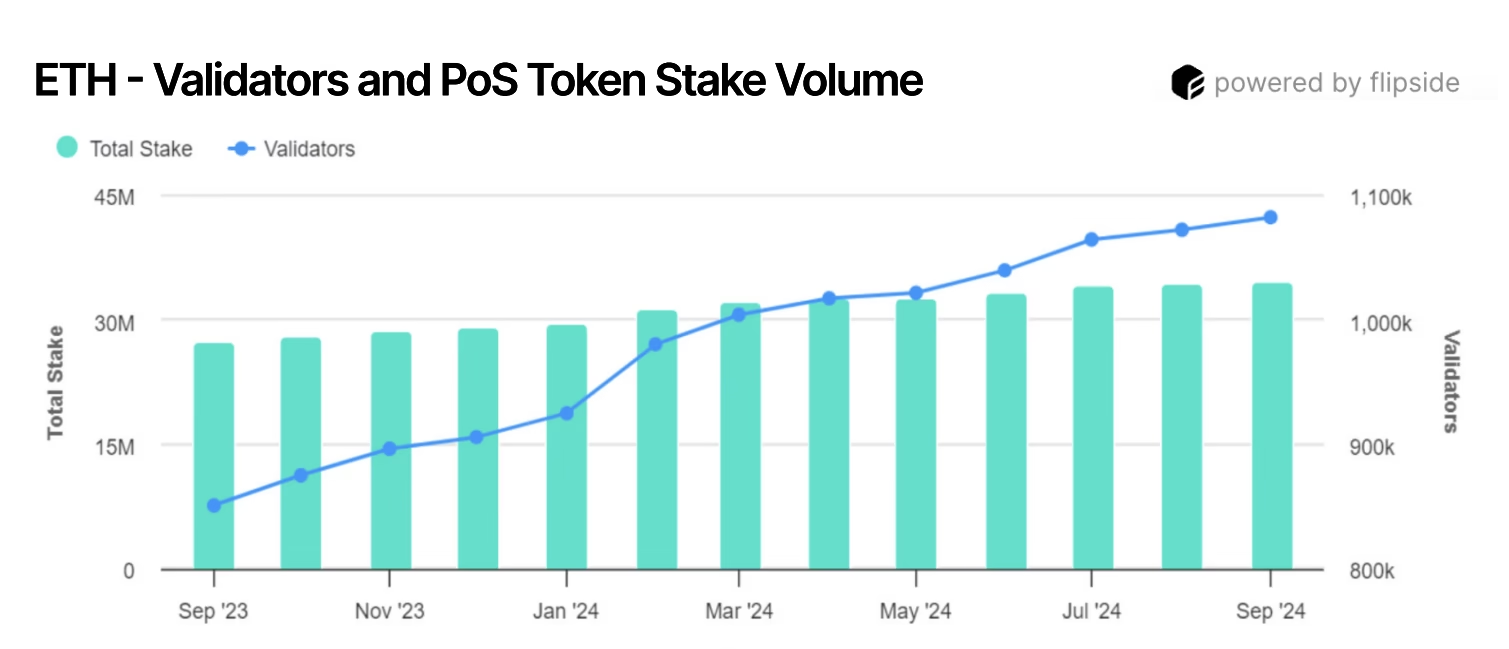
Several compelling reasons drive this accelerating Ethereum institutional adoption:
Matthew Sigel, global head of research at VanEck, emphasizes, “Ethereum is no longer just a ‘crypto’ asset—it’s the foundational infrastructure for programmable finance and stablecoin settlements.” The institution-led adoption exhibits a strategic move beyond speculation, adopting Ethereum as essential digital infrastructure.

Ethereum’s growing institutional adoption is reshaping the financial landscape in ways Bitcoin alone cannot. Decentralized finance on Ethereum currently commands approximately 59% of total value locked in DeFi protocols—about $170 billion—with lending, borrowing, and exchanges thriving on its platform.
Stablecoins on Ethereum provide banks, fintech, and corporate clients with swift, low-cost settlement alternatives, fostering a new era of digital payments. Public companies adding ETH to their treasuries mark a shift toward digital asset diversification, reflecting a maturing market that transcends Bitcoin’s traditional store-of-value narrative.
Challenges remain, however: Ethereum continues to face high gas (transaction) fees on its mainnet, though expansion of Layer-2 solutions like Arbitrum and Optimism helps ease congestion and lower costs.
Competitive blockchains such as Solana and Avalanche tout faster transactions and lower fees but Ethereum’s vast ecosystem and network effects sustain its market leadership. Centralization concerns about large staking pools controlling significant validator shares persist and regulators worldwide continue scrutinizing staking and token tokenization practices.

The rapid rise in Ethereum institutional adoption in 2025 signals a critical turning point. As ongoing scalability upgrades and enterprise-ready solutions roll out, Ethereum’s role as foundational digital infrastructure will only deepen.
For institutional investors, Ethereum presents an asset class that is not only programmable and yield-generating but also aligned with sustainability frameworks—offering a holistic investment and operational platform. For individual investors, the influx of institutional capital provides an additional layer of market support and legitimacy, which could reduce volatility over time
As more corporations integrate Ethereum-based stablecoin settlements, treasury holdings, and business applications, Ethereum’s influence on the future financial ecosystem grows. Its programmable blockchain is poised to redefine commerce, finance, and digital ownership much like the internet revolutionized communication, positioning Ethereum as an indispensable cornerstone in the evolving digital economy.
This transformation in Ethereum institutional adoption marks the emergence of a new era, beyond the Bitcoin-centric narrative, towards a diversified, programmable, sustainable, and institutionally embraced crypto landscape.



Copyright © 2025 - The Bit Gazette.