


- Trending
- Comments
- Latest

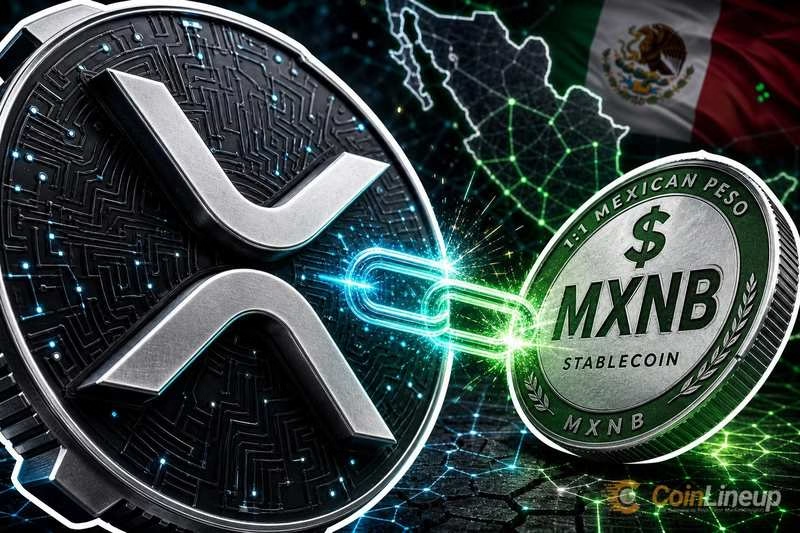
Ripple and Mexican crypto exchange Bitso have launched MXNB, a Mexican peso stablecoin issued natively on the XRP Ledger, pairing it with Ripple’s dollar-backed RLUSD to create a fully on-chain settlement corridor for institutional cross-border payments between the United States and Mexico.
According to information released by the companies, the peso stablecoin, known as MXNB, will be issued natively on the XRP Ledger and integrated into Ripple’s decentralized exchange-powered payment ecosystem.
The peso stablecoin is fully backed one-to-one by the Mexican peso and has been developed specifically for institutional settlement use cases. Through its integration with Ripple’s payment architecture, the asset will operate alongside RLUSD, Ripple’s U.S. dollar-backed stablecoin, enabling seamless on-chain liquidity between the two currencies.
The introduction of the peso stablecoin represents a significant expansion of Ripple and Bitso’s collaboration, which has already facilitated billions of dollars in payment flows throughout Latin America.
Industry analysts view the launch as a major step toward creating more efficient blockchain-powered financial infrastructure for international payments.
The payment corridor between the United States and Mexico is among the largest in the world, driven by trade activity, remittances, and business transactions.

However, traditional cross-border payment systems often rely on correspondent banking networks that involve multiple intermediaries. These processes can increase costs, slow down settlement times, and create liquidity inefficiencies for financial institutions.
Ripple believes the peso stablecoin can help solve these issues. By combining RLUSD and the peso stablecoin within a blockchain-based settlement environment, institutions can access both dollar and peso liquidity directly on-chain, reducing the need for multiple intermediaries.
The result is expected to be faster transaction processing, improved transparency, and more efficient capital management for businesses operating across borders.
Unlike many stablecoins designed primarily for retail users, the peso stablecoin was created with corporate and institutional clients in mind.
The asset is intended to provide businesses with direct access to peso-denominated liquidity through blockchain networks, allowing them to streamline settlement operations and reduce friction in payment processes.
Ben Reid, Head of Stablecoins at Bitso Business, emphasized the importance of building financial tools tailored to enterprise users.
According to Reid, the peso stablecoin was specifically engineered to support institutional settlement requirements and provide businesses with a more efficient method of accessing local currency liquidity on-chain.
As demand for blockchain-based financial infrastructure continues to grow, the peso stablecoin could become an important tool for companies conducting international transactions.
A major component of the initiative is its focus on regulatory compliance. Ripple has positioned the peso stablecoin within XRPL’s Permissioned DEX framework, an environment designed for validated counterparties and regulated financial activity.
Unlike traditional decentralized finance platforms that allow open participation, the Permissioned DEX provides a controlled setting where approved institutions can securely access on-chain liquidity while meeting regulatory requirements.
Silvio Pegado, Ripple’s Managing Director for Latin America, highlighted the significance of combining RLUSD with the peso stablecoin to create compliant and efficient liquidity solutions for cross-border payments.
He noted that institutional demand for regulated blockchain-based settlement tools continues to rise as businesses seek alternatives to legacy financial infrastructure.
The compliance-first approach may also help accelerate adoption of the peso stablecoin among financial institutions that have historically been cautious about entering the digital asset market.
The success of the peso stablecoin could be significantly enhanced by Bitso’s extensive presence across Latin America.
Bitso serves more than 10 million users throughout the region and has become one of the largest cryptocurrency trading and payment platforms in Latin America. Through its Bitso Business division, the company processes substantial volumes of corporate payment transactions every year.
By leveraging its established network and customer base, Bitso is well positioned to drive adoption of the peso stablecoin among businesses looking for faster and more efficient settlement options.
Analysts believe the combination of Ripple’s payment technology and Bitso’s regional expertise creates a strong foundation for expanding blockchain-based financial services throughout the region.
The launch of the peso stablecoin comes at a time when stablecoins are attracting increasing attention from both traditional finance and the digital asset industry.
Major payment companies, banks, and fintech firms are exploring how stablecoins can be used to improve settlement efficiency and reduce transaction costs. Mastercard, for example, has recently expanded its stablecoin initiatives and partnerships involving blockchain-powered payment infrastructure.
Against this backdrop, the peso stablecoin enters a rapidly growing market where demand for regulated, localized digital currencies is expected to increase.

Industry observers believe that region-specific stablecoins could become an important component of future payment networks, particularly in high-volume corridors such as the United States and Mexico.
The introduction of the peso stablecoin represents more than a new digital asset launch. It reflects a broader shift toward using blockchain technology to modernize global financial infrastructure.
For Ripple, the initiative strengthens its position in the cross-border payments sector while expanding the utility of the XRP Ledger ecosystem. For Bitso, it provides an opportunity to offer businesses enhanced access to peso liquidity and faster settlement solutions.
As institutional adoption of digital assets continues to grow, the peso stablecoin may become an increasingly important tool for facilitating cross-border transactions between two of the most active economic markets in the Americas.
With regulatory-focused infrastructure, strong regional support, and integration into Ripple’s expanding payment ecosystem, the peso stablecoin could play a significant role in shaping the future of international payments and blockchain-based settlement networks.



Copyright © 2025 - The Bit Gazette.