

• Trending
  • Comments
  • Latest
The Louvre needed police escorts to move crypto attendees: Decentralised money just decentralised the danger

The Louvre needed police escorts to move crypto attendees: Decentralised money just decentralised the danger

04/18/2026 - Updated on 05/25/2026
AI People joins Dubai’s innovation one — Declares war on the forgetting of humanity

AI People joins Dubai’s Innovation One program: Declares war on the forgetting of humanity

07/22/2025 - Updated on 07/23/2025
XRP community

Ripple CEO reassures community after SWIFT selects rival blockchain for pilot

02/10/2026
Polygon Discord Channel Hacked, Throws Crypto Community in Turmoil

Polygon Discord Channel Hacked, Throws Crypto Community in Turmoil

2
Bitcoin reclaims $107,000 as Iran-Israel ceasefire cools market tensions

Bitcoin reclaims $107,000 as Iran-Israel ceasefire cools market tensions

2

Hello world!

1
Dash Philippines expansion

Dash explores Philippine market entry for crypto payments but sets no launch timeline

06/22/2026
OCC unveils stablecoin rules under Genius Act implementation

FinCEN’s $3,000 stablecoin surveillance rule signals the end of crypto’s privacy era

06/22/2026
Thorchain exploit

Attackers exploit infinite mint bug in Secret Network bridge, drain $4.67 million in cross-chain assets

06/22/2026
  • Trending
  • Comments
  • Latest
The Louvre needed police escorts to move crypto attendees: Decentralised money just decentralised the danger

The Louvre needed police escorts to move crypto attendees: Decentralised money just decentralised the danger

04/18/2026 - Updated on 05/25/2026
AI People joins Dubai’s innovation one — Declares war on the forgetting of humanity

AI People joins Dubai’s Innovation One program: Declares war on the forgetting of humanity

07/22/2025 - Updated on 07/23/2025
XRP community

Ripple CEO reassures community after SWIFT selects rival blockchain for pilot

02/10/2026
Polygon Discord Channel Hacked, Throws Crypto Community in Turmoil

Polygon Discord Channel Hacked, Throws Crypto Community in Turmoil

2
Bitcoin reclaims $107,000 as Iran-Israel ceasefire cools market tensions

Bitcoin reclaims $107,000 as Iran-Israel ceasefire cools market tensions

2

Hello world!

1
Dash Philippines expansion

Dash explores Philippine market entry for crypto payments but sets no launch timeline

06/22/2026
OCC unveils stablecoin rules under Genius Act implementation

FinCEN’s $3,000 stablecoin surveillance rule signals the end of crypto’s privacy era

06/22/2026
Thorchain exploit

Attackers exploit infinite mint bug in Secret Network bridge, drain $4.67 million in cross-chain assets

06/22/2026
Monday, June 22, 2026
  • Login
The Bit Gazette
  • Home
  • Crypto News
  • Expert Analysis
  • Finance
  • Tech
  • Sponsored
  • Press Release
  • Opinion
No Result
View All Result
The Bit Gazette
No Result
View All Result
Home Crypto News

FinCEN’s $3,000 stablecoin surveillance rule signals the end of crypto’s privacy era

As digital dollars move closer to traditional banking standards, the privacy promise that once defined crypto faces its greatest test.

by Moses Edozie
2 hours ago
in Crypto News
Reading Time: 3 mins read
0
OCC unveils stablecoin rules under Genius Act implementation

OCC proposes stablecoin rules under GENIUS Act, setting reserve and redemption standards for US issuers

Share on FacebookShare on Twitter

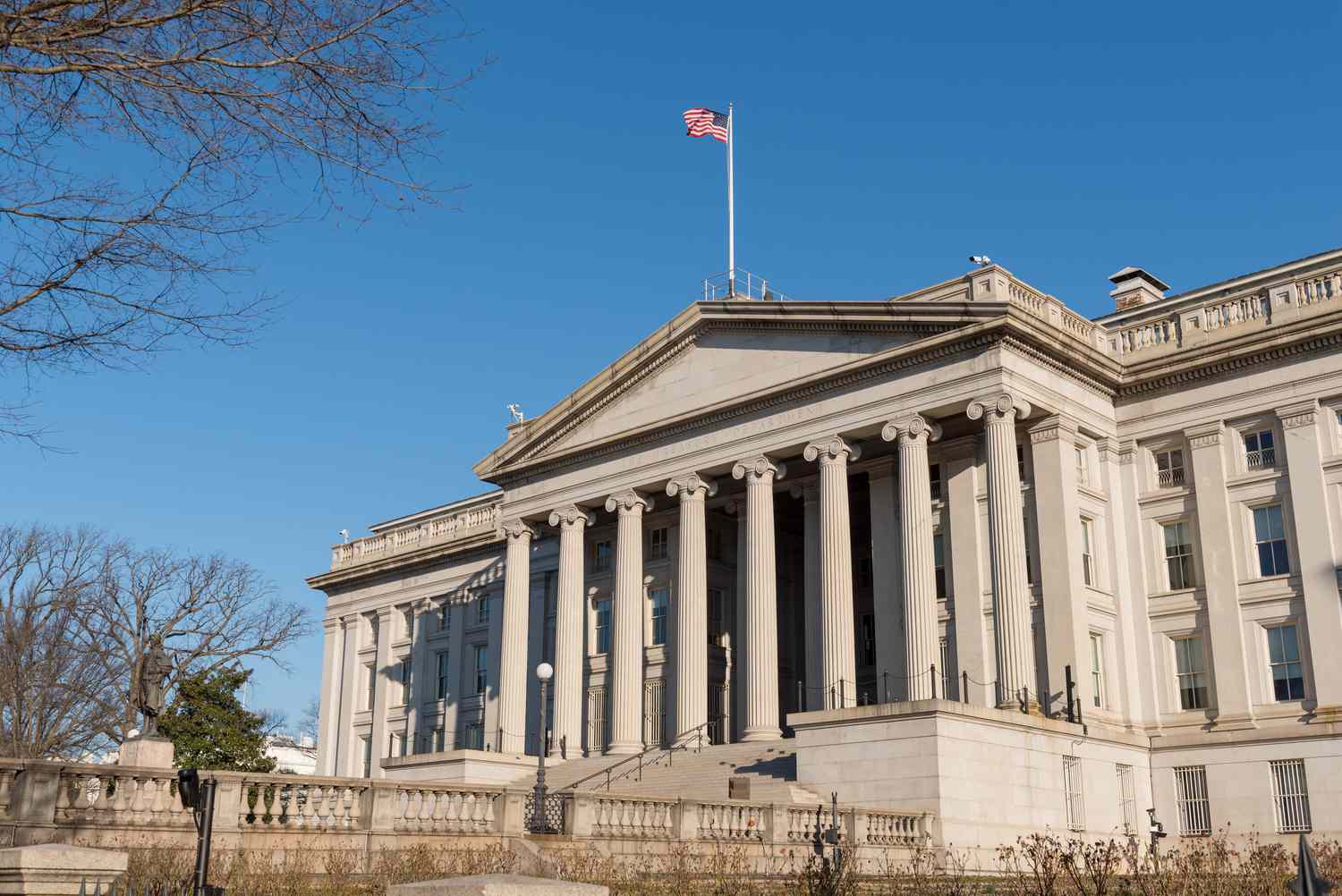
On June 12, 2026, the U.S. Treasury’s Financial Crimes Enforcement Network (FinCEN) introduced a sweeping mandate requiring stablecoin issuers and service providers to collect and share personally identifiable information for transactions exceeding $3,000.

Beginning in phases from October 2026, the rules apply not only to U.S.-based issuers such as Circle but also to foreign issuers whose tokens are used by Americans, effectively bringing USDT, USDC and most major dollar-pegged assets under the same framework.

The practical consequence is simple: significant stablecoin transactions are increasingly being treated like traditional bank transfers. What was once viewed as an alternative financial rail is becoming part of the established surveillance and compliance architecture.

How stablecoins became part of the compliance system

The FinCEN mandate did not emerge in isolation. It represents the culmination of years of regulatory developments.

The FATF Travel Rule introduced in 2019 required virtual asset service providers to exchange information on senders and recipients. Later, the sanctions imposed on Tornado Cash demonstrated regulators’ willingness to target privacy-enhancing technologies when they were perceived to facilitate illicit activity. At the same time, stablecoin issuers increasingly cooperated with law enforcement by freezing wallets linked to sanctions violations and criminal investigations.

The new mandate brings these developments together. Transactions above the $3,000 threshold require the collection of sender and receiver information, while larger transfers may require beneficial ownership details. Firms are expected to maintain records for at least five years, report suspicious activity and screen transactions against sanctions lists. Failure to comply can lead to substantial civil and criminal penalties.

Perhaps most significantly, the rules extend beyond U.S. borders. Because dollar-backed stablecoins operate globally and maintain links to the American financial system, foreign issuers are unlikely to avoid the new standards.

The challenge for self-custody

One of the most difficult issues involves self-hosted wallets. Transactions between regulated institutions and non-custodial wallets create identification gaps that regulators have struggled to address for years.

FinCEN’s guidance pushes issuers to collect as much information as possible even when one side of the transaction is an unhosted wallet. Although enforcement remains uncertain, the direction is clear: regulators are attempting to extend oversight beyond centralized exchanges and into broader on-chain activity.

This development highlights a growing tension between the ideals of self-sovereignty and the realities of financial regulation.

Circle, Tether and the market response

For Circle, the transition is relatively straightforward. The company has long embraced a compliance-first strategy and has invested heavily in systems designed to satisfy regulators. Its approach increasingly resembles that of traditional financial institutions.

Tether faces a more complicated challenge. As the issuer of the world’s largest stablecoin, it has historically maintained a less transparent compliance posture. Yet its deep integration into the dollar ecosystem leaves little room to resist evolving regulatory expectations.

The announcement also triggered renewed interest in privacy-focused assets such as Monero and Zcash. Investors interpreted the rules as another indication that surveillance standards are expanding across the crypto industry. However, the same concerns that drove demand for privacy-oriented assets may also attract greater regulatory scrutiny, raising questions about the long-term sustainability of that trend.

What the rules reveal

Several broader lessons emerge from the FinCEN mandate.

First, scale comes with obligations. Stablecoins became crypto’s most successful application, but widespread adoption inevitably attracted regulatory attention. Compliance increasingly appears to be the price of mainstream acceptance.

Second, the idea that code alone can shield financial systems from legal accountability has weakened considerably. Regulators have demonstrated that if identifiable actors exist and possess the ability to comply, they are expected to do so.

Third, stablecoins are becoming instruments of dollar power rather than alternatives to it. Their growth has strengthened the global reach of the U.S. currency while simultaneously extending anti-money laundering and sanctions frameworks into digital markets.

Finally, the debate over privacy in crypto is evolving. Rather than asking whether digital assets should remain outside regulatory systems, policymakers and industry participants are now debating how much privacy can survive within those systems.

Conclusion

The FinCEN stablecoin mandate marks another step in the convergence between crypto and traditional finance. Stablecoins that once promised a more open and private alternative to conventional payment networks are increasingly operating under the same compliance expectations as banks.

For supporters of mainstream adoption, this evolution may represent maturity. For advocates of financial privacy, it signals the gradual disappearance of one of crypto’s original ideals.

The larger question is no longer whether digital dollars will be regulated. That debate has largely been settled. The question now is whether meaningful privacy can coexist with a financial system built on transparency, identity verification and continuous oversight.

That may prove to be the defining challenge of the next phase of digital finance.

Tags: AML rules cryptoblockchain surveillancedigital dollar surveillanceFATF travel ruleFinCENprivacy cryptoStablecoin regulationstablecoinsUSDT sanctions
Share197Tweet123
Moses Edozie

Moses Edozie

Moses Edozie is a writer and storyteller with a deep interest in cryptocurrency, blockchain innovation, and Web3 culture. Passionate about DeFi, NFTs, and the societal impact of decentralized systems, he creates clear, engaging narratives that connect complex technologies to everyday life.

  • Trending
  • Comments
  • Latest
The Louvre needed police escorts to move crypto attendees: Decentralised money just decentralised the danger

The Louvre needed police escorts to move crypto attendees: Decentralised money just decentralised the danger

04/18/2026 - Updated on 05/25/2026
AI People joins Dubai’s innovation one — Declares war on the forgetting of humanity

AI People joins Dubai’s Innovation One program: Declares war on the forgetting of humanity

07/22/2025 - Updated on 07/23/2025
XRP community

Ripple CEO reassures community after SWIFT selects rival blockchain for pilot

02/10/2026
Polygon Discord Channel Hacked, Throws Crypto Community in Turmoil

Polygon Discord Channel Hacked, Throws Crypto Community in Turmoil

2
Bitcoin reclaims $107,000 as Iran-Israel ceasefire cools market tensions

Bitcoin reclaims $107,000 as Iran-Israel ceasefire cools market tensions

2

Hello world!

1
Dash Philippines expansion

Dash explores Philippine market entry for crypto payments but sets no launch timeline

06/22/2026
OCC unveils stablecoin rules under Genius Act implementation

FinCEN’s $3,000 stablecoin surveillance rule signals the end of crypto’s privacy era

06/22/2026
Thorchain exploit

Attackers exploit infinite mint bug in Secret Network bridge, drain $4.67 million in cross-chain assets

06/22/2026
The Bit Gazette

Copyright © 2025 - The Bit Gazette.

Navigate Site

  • About
  • Advertise
  • Privacy & Policy
  • Contact

Follow Us

Welcome Back!

Login to your account below

Forgotten Password?

Retrieve your password

Please enter your username or email address to reset your password.

Log In
No Result
View All Result
  • Home
  • Crypto News
  • Expert Analysis
  • Finance
  • Tech
  • Sponsored
  • Press Release
  • Opinion

Copyright © 2025 - The Bit Gazette.