

- Trending
- Comments
- Latest

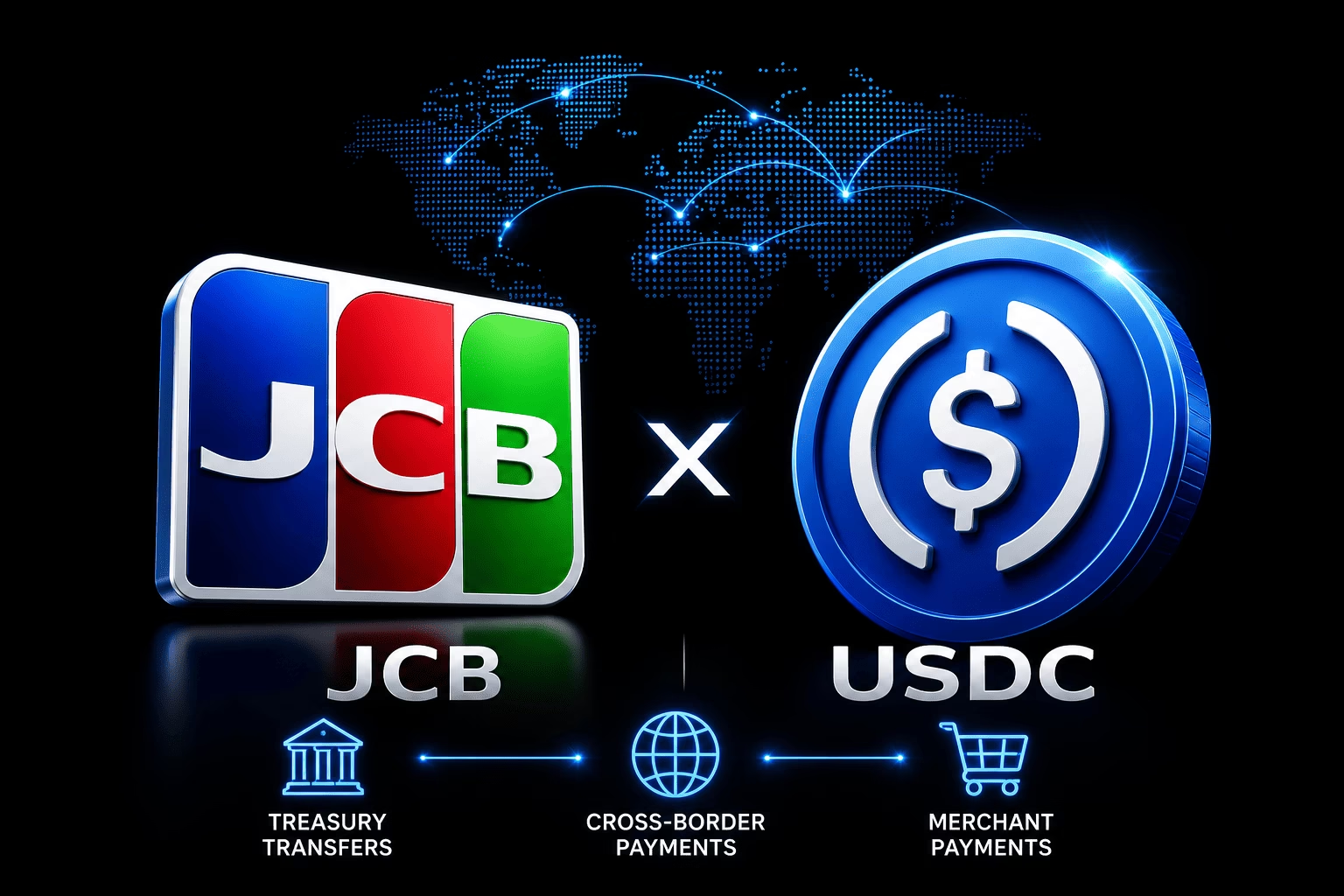
JCB has signed a memorandum of understanding with an affiliate of Circle Internet Group to explore using USDC for cross-border treasury operations and, eventually, merchant payments in Japan. The companies announced the deal July 14, with initial work focused on a proof-of-concept for JCB’s internal fund transfers before expanding to consumer- and merchant-facing use cases.
Japan’s leading payment network is taking another step toward integrating digital assets into mainstream finance after announcing a strategic collaboration with stablecoin issuer Circle.
The first phase of the JCB Circle USDC pilot is designed to validate the use of USDC for JCB’s internal cross-border treasury transfers. By leveraging blockchain-based settlement, the companies aim to determine whether stablecoins can streamline corporate fund movements, reduce settlement times, and improve operational efficiency compared to conventional banking rails.
After evaluating treasury operations, both organizations intend to extend the pilot to merchant payment scenarios. This includes enabling retailers across Japan to accept USDC payments from both domestic customers and international tourists.
The companies also plan to examine additional financial services that combine Circle’s stablecoins infrastructure with JCB’s extensive merchant acceptance network. Such services could create new payment options for businesses while simplifying international transactions for consumers.
Circle has consistently argued that regulated stablecoins can modernize global payments.
“Our mission is to raise global economic prosperity through the frictionless exchange of value,” Circle Co-founder and CEO Jeremy Allaire has repeatedly said when discussing the company’s payment strategy, emphasizing that programmable digital dollars can significantly improve cross-border commerce.
If successful, the pilot could become an important example of how established payment companies integrate blockchain technology without requiring consumers to understand the complexities behind digital assets.
The JCB Circle USDC pilot comes shortly after Circle secured one of its most significant regulatory achievements to date.
Earlier this month, the U.S. Office of the Comptroller of the Currency (OCC) granted final approval for Circle National Trust, giving the company a federally supervised national trust bank.
Initially, Circle National Trust will provide fiduciary digital asset custody services for Circle and its affiliated businesses. Over time, the company has indicated that it may also oversee reserves backing USDC, although no official timeline has been announced.
The regulatory approval strengthens Circle’s position as one of the world’s most heavily regulated stablecoin issuers and reinforces institutional confidence in its digital dollar infrastructure.
Beyond the United States, Circle has continued expanding relationships with major financial institutions.
Recently, Standard Chartered introduced a service through its Dubai International Financial Centre operations that allows eligible institutional clients to mint and redeem USDC directly through the bank. Meanwhile, BNY has integrated USDC into its digital asset custody platform, enabling institutional customers to mint and redeem the stablecoin using the bank’s infrastructure.
These developments demonstrate Circle’s strategy of embedding USDC into traditional financial systems rather than operating outside them.
The JCB Circle USDC pilot also highlights Circle’s increasing emphasis on Asia, where regulators and financial institutions are actively exploring digital asset adoption.
Later this month, Circle will host its invitation-only Current Seoul event, bringing together leaders from banks, cryptocurrency exchanges, payment providers, and technology companies. Discussions are expected to focus on digital asset regulation, cross-border payment infrastructure, and new opportunities for industry collaboration.
Circle has already laid significant groundwork in South Korea.
During a visit to the country in April, Jeremy Allaire met executives from KB Kookmin Bank, Shinhan Bank, Hana Bank, Upbit, Bithumb, and several payment companies to discuss potential cooperation through the Circle Payments Network for international settlement.
The company’s growing presence across Asia reflects increasing demand for blockchain-based payment infrastructure as businesses look for more efficient methods of moving money across borders.
Japan, with its mature financial system and evolving digital asset regulations, provides an attractive market for testing enterprise-grade stablecoin applications.
While the JCB Circle USDC pilot strengthens Circle’s position, competition within the stablecoin market continues to grow rapidly.
Recently, Open USD introduced a new dollar-backed stablecoin model featuring a revenue-sharing framework that distributes reserve income among participating members. The initiative attracted industry attention by positioning itself as an alternative institutional stablecoin ecosystem.
However, reports from South Korean media later indicated that several companies listed as consortium participants—including Samsung Electronics, Dunamu, Shinhan Financial Group, and K Bank—stated they had not formally committed to joining the initiative.
Despite rising competition, Circle continues to distinguish itself by prioritizing regulatory compliance and partnerships with globally recognized financial institutions.
Industry observers increasingly view stablecoins as a key component of next-generation payment infrastructure, particularly for cross-border business transactions where settlement speed, transparency, and lower costs provide clear advantages over legacy payment systems.
The JCB Circle USDC pilot represents another milestone in that transition. Rather than targeting cryptocurrency trading, the initiative focuses on practical financial applications that could reshape treasury operations, merchant payments, and international commerce.
As governments continue developing digital asset regulations and financial institutions deepen their blockchain strategies, collaborations like this may play a pivotal role in determining how stablecoins become integrated into the global payments ecosystem. The success of the JCB Circle USDC pilot could provide valuable insights for payment providers and financial institutions seeking to bridge traditional finance with blockchain-powered settlement solutions.



Copyright © 2025 - The Bit Gazette.