

- Trending
- Comments
- Latest

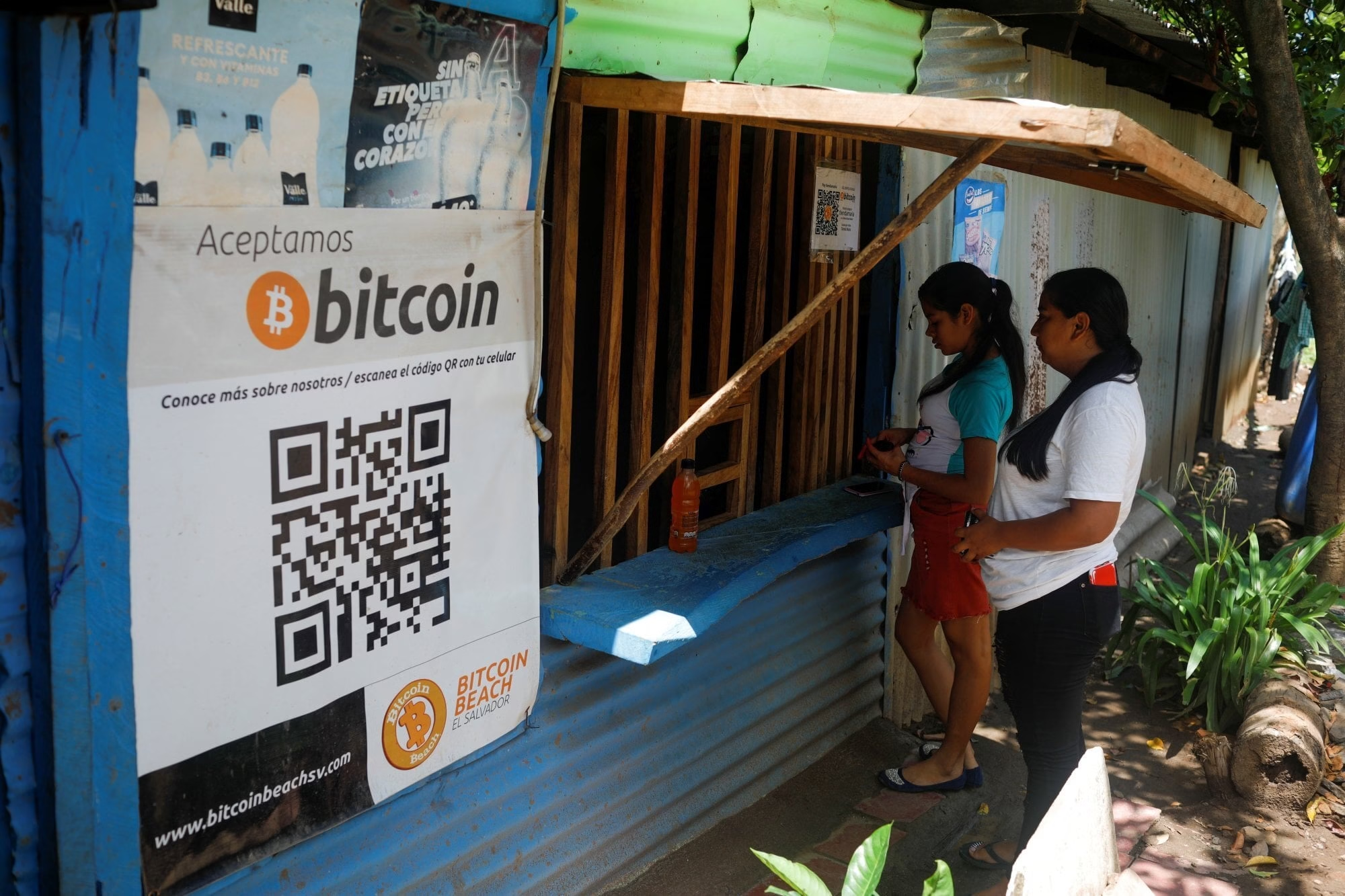
Jon Atack, a Bitcoin Core contributor who’s lived in El Salvador since 2022, posted something small on X on Aug. 24 about Bitcoin payments in El Salvador, that turned into a bigger story than a lunch receipt usually gets. He’d paid for a meal in Bitcoin at a restaurant in El Zonte, the surf town nicknamed “Bitcoin Beach” that inspired the country’s entire legal-tender experiment, and staff told him it was the business’s only Bitcoin payment all month.
A payment method that used to be routine there, he was told, had become “practically non-existent.” One employee turned down a satoshi tip outright, because she’d forgotten how to use her own Bitcoin wallet. Atack called it “pretty depressing,” though a follow-up post softened that, calling El Salvador a “pioneering frontier” still ahead of most countries on adoption, according to Bitcoin.com.
It’s a striking image precisely because of where it happened. But the more useful question isn’t whether one restaurant had a slow month, it’s whether El Salvador’s own policy shift set that Bitcoin payments slowdown in motion years before Atack ever ordered lunch.
For its first several years as legal tender, Bitcoin wasn’t optional for Salvadoran merchants. The original 2021 law generally obligated any business with the necessary technology to accept it, with the government backstopping conversions through the Chivo wallet and a companion trust. That mandate is gone. As El Salvador negotiated a 40-month, $1.4 billion Extended Fund Facility with the IMF, approved in February 2025, the government agreed to make private-sector Bitcoin acceptance voluntary and require taxes to be paid in dollars. A restaurant that once had to keep a Bitcoin option running now simply doesn’t, if the demand isn’t there.
That policy shift alone would predict fewer places accepting Bitcoin payments over time, and fewer customers bothering to figure out a wallet app for a purchase they can just as easily make with a card. Atack’s restaurant story fits that prediction. So does the harder data.
Salvadorans have been telling pollsters the same thing for years, at national scale. Universidad Centroamericana’s annual survey put Bitcoin usage for purchases at just 8.1% in 2024, a figure first reported locally, down from 25.7% in the law’s first year, 2021, sliding through 21% in 2022 and 12% in 2023. That 2024 figure comes from 1,266 respondents, a 95% confidence level, and a margin of error of 2.75 points. A second, independent poll from Universidad Francisco Gavidia landed in the same territory: 92% of respondents said they hadn’t used Bitcoin for any transaction that year.
Self-reported survey answers aren’t the same thing as verified transaction counts at the register, so treat the exact percentages as directional rather than precise. What they establish reliably is a trend line, and it’s been pointing the same direction as Atack’s restaurant story, Bitcoin payments in El Salvador have declined in every year survey takers have asked, since the subsidy-driven early enthusiasm of 2021 wore off. Whether that’s mostly people choosing to hold Bitcoin as an investment rather than spend it, price volatility scaring off routine purchases, or wallet friction nobody bothered to relearn, no single survey pins down the dominant cause.
Here’s the part of the story that complicates a simple “Bitcoin is dying in El Salvador” headline: while regular Salvadorans have been spending less Bitcoin, the government hasn’t been spending less on Bitcoin. On-chain trackers keep showing additions to the state’s holdings even as the IMF maintains that the government’s aggregate Bitcoin position has stayed flat under the program, the Fund’s explanation is that apparent growth reflects transfers between government-controlled wallets rather than new purchases. Multiple outlets covering the IMF’s most recent program review reported that talks to offload the state-run Chivo wallet were “well advanced,” though no sale has been confirmed to have closed, and El Salvador’s Bitcoin Office has kept logging daily purchases despite earlier IMF language meant to stop exactly that.
It’s an odd split-screen: retail Bitcoin use fading fast enough that a flagship restaurant went a month between payments, while the treasury side of the experiment keeps growing regardless. That’s arguably the more interesting story sitting underneath the viral lunch bill, El Salvador’s Bitcoin law was sold as a bet on everyday spending, and the spending is what’s disappearing first.
None of this is airtight without complications, either. Not every account from El Zonte matches Atack’s. One visitor responding to his post said she’d paid with Bitcoin there recently without any trouble and had noticed signage still advertising Bitcoin acceptance nearby, a reminder that merchant experience isn’t uniform even within one small town, let alone across a country, and that no comprehensive August transaction count exists to settle exactly how bad this month was in El Zonte specifically. A single restaurant’s slow month, read against years of declining survey data and a government that keeps buying anyway, tells a real story about where El Salvador’s Bitcoin experiment stands, just not a complete one.



Copyright © 2025 - The Bit Gazette.