




- Trending
- Comments
- Latest

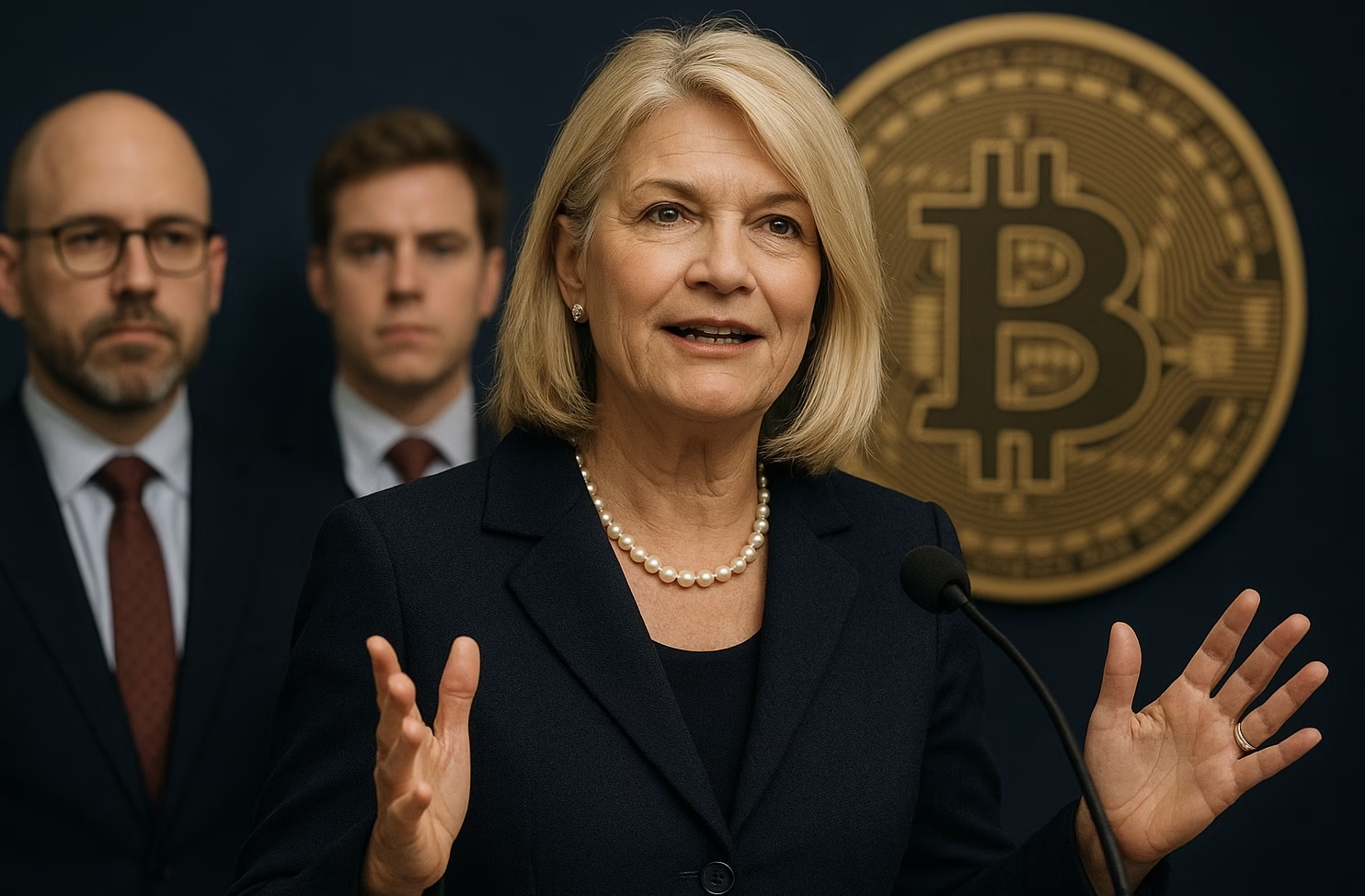
U.S. Senator Cynthia Lummis warned that the Clarity Act could face a delay until 2030 if lawmakers fail to advance the cryptocurrency market structure bill before the current congressional session ends. The warning comes ahead of a Senate procedural vote scheduled for September 15, 2026, more than a year after the legislation cleared the House of Representatives.
Lummis said the failure to advance the legislation during the current Congress could mean that lawmakers will have to wait years for another realistic opportunity to establish a comprehensive regulatory framework for digital assets.
The Clarity Act passed through the House in July 2025 but has remained stalled in the Senate for more than 13 months as lawmakers negotiate unresolved provisions and attempt to secure enough support for a final vote.
The Senate’s September 15 procedural motion is expected to represent an important test for the bill. However, the vote would not itself enact the legislation. Instead, it would determine whether Senate deliberations can move toward completion and whether the measure can advance through the legislative process.
The upcoming procedural vote places the Clarity Act at one of its most important stages since the House approved the measure.
Republican Congressman French Hill, who has been involved in discussions surrounding cryptocurrency legislation, recently indicated that negotiations have made progress.
“Negotiations have progressed to a meaningful stage,” — French Hill, Republican congressman.
Despite that progress, significant disagreements remain between lawmakers, particularly over provisions demanded by Democrats before they are prepared to support the legislation.
The prolonged Senate negotiations have become a central obstacle to the bill’s passage. While proponents of the legislation argue that clearer rules are needed for digital-asset markets, lawmakers have yet to reach a final compromise capable of securing sufficient bipartisan support.
The timeline is also becoming increasingly difficult.
According to reporting cited by CoinDesk, completing the legislation before November’s midterm elections is considered practically impossible. The House is expected to hold its final vote shortly after Senate action if the bill clears the upper chamber, leaving lawmakers with a narrow window before the electoral deadline.
One of the most significant unresolved issues surrounding the Clarity Act involves ethics standards.
Democratic lawmakers have pushed for ethics-related provisions to be incorporated into the legislation before providing the support necessary for the bill to move forward. Those demands remain part of ongoing negotiations.
The disagreement illustrates the broader political challenge facing the bill. Although cryptocurrency regulation has attracted support from lawmakers across party lines in some areas, disagreements over the precise structure and safeguards of the proposed framework continue to complicate the legislative process.
The Senate’s procedural vote therefore represents more than a routine step. It could determine whether lawmakers have enough momentum to continue working toward a final agreement during the current congressional session.
If the Clarity Act fails to pass before Congress adjourns, the legislative process would effectively have to begin again.
The warning from Lummis is rooted in the structure of the U.S. legislative calendar.
Members of Congress serve two-year terms. If the Clarity Act does not become law during the current Congress, lawmakers in the next Congress would have to reintroduce the legislation and work through the legislative process again.
That would require the bill to navigate committees, negotiations, procedural votes and approval by both chambers once more.
Lummis, one of the Senate’s most prominent cryptocurrency supporters, has repeatedly advocated for greater recognition of digital assets within U.S. financial policy. She has previously proposed establishing Bitcoin as part of America’s strategic asset reserves.
Her latest warning underscores the potential significance of the current legislative window.
“Failure to pass the CLARITY Act this Congress could delay the next opportunity until 2030,” — Cynthia Lummis, U.S. senator.
The possibility of such a delay would not necessarily mean an immediate disruption for cryptocurrency markets. Several market observers cited in the original report argue that postponement could have limited short-term consequences because institutional investment in digital assets has continued following the approval of spot Bitcoin exchange-traded funds.
Stablecoin legislation is also progressing through separate legislative channels, meaning some areas of cryptocurrency regulation could continue advancing even if broader market structure legislation stalls.
The political uncertainty surrounding the Clarity Act comes as cryptocurrency markets continue to show relatively strong sentiment.
Bitcoin was trading near $79,000 on September 7, recording a marginal 0.03% decline over the previous 24 hours while remaining up 3.01% over seven days.
Ethereum was trading at approximately $2,506, representing a 0.39% increase over the same period. XRP, meanwhile, was changing hands at around $1.41 after falling 0.47%.
Market sentiment remained firmly positive. The Crypto Fear and Greed Index stood at 75, placing investor sentiment within the “greed” category.
Regional pricing also showed continued market activity. Bitcoin exchanges in South Korea were recording a 1.48% premium compared with international platforms, indicating that Bitcoin was trading slightly higher domestically.
The central question now is whether Senate negotiators can resolve their remaining disagreements quickly enough to keep the Clarity Act alive during the current Congress.
With the September 15 procedural vote approaching and the midterm elections narrowing the legislative window, the coming weeks could determine whether the bill becomes a landmark piece of U.S. crypto legislation or faces another lengthy wait.



Copyright © 2025 - The Bit Gazette.