






- Trending
- Comments
- Latest

A San Diego City Council committee voted unanimously Wednesday 16th September 2026, to advance an ordinance requiring crypto ATM operators to post scam warnings and direct customers to fraud-prevention resources, sending the measure toward a full Council vote.
“Stopping scams before they take place is critical,” — Joe LaCava, San Diego City Council President.
LaCava said money lost through these schemes can be particularly damaging because victims often struggle to recover the funds after they have been transferred.
“In many cases, funds lost to these criminal activities are difficult to recover and can prevent individuals from putting food on the table, making rent and purchasing needed medication,” LaCava said.
The proposed warnings would direct customers toward a city website containing fraud-prevention information and resources for reporting scams.
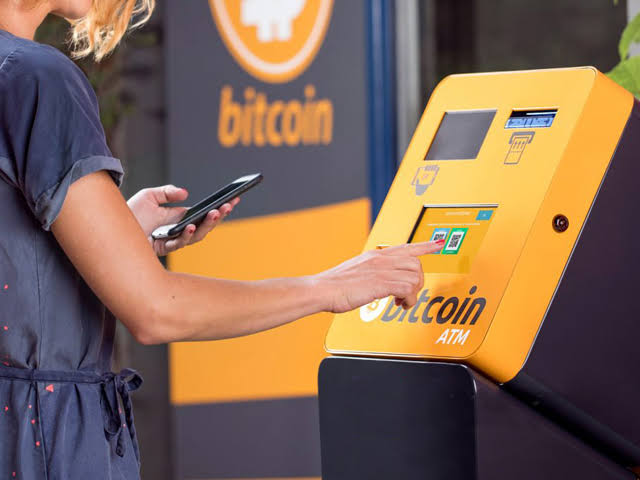
Cryptocurrency ATMs are widespread across San Diego and San Diego County, although determining exactly how many machines operate within the city remains difficult.
State data cited by LaCava identify 111 cryptocurrency ATMs across 75 San Diego locations. Of those machines, 55 are reportedly located at 24 Safeway and Albertsons stores, which are under the same parent company.
However, the available figures may not provide a complete picture of the city’s Crypto ATM network.
A Times of San Diego visit to a College Area location listed in the state dataset found no cryptocurrency ATM at the site. At the same time, a basic internet search identified several machines operating at locations that were not included in the state data.
The discrepancy means the actual number of cryptocurrency ATMs in San Diego could be higher than the 111 machines identified in the state records cited by LaCava.
The uncertainty surrounding the number of machines also illustrates the challenge facing officials as they attempt to establish rules for an industry operating across grocery stores, convenience stores, smoke shops and other businesses.
The proposed Crypto ATM warnings have received support from AARP California and San Diego’s Senior Affairs Advisory Board, whose representatives joined LaCava ahead of the committee hearing.
Supporters argue that a warning displayed directly on the machine could provide victims with an opportunity to reconsider a transaction before sending money to scammers.
Gwenmarie Hilleary, chair of the Senior Affairs Advisory Board, described a typical scam scenario in which fraudsters establish contact with an older person and create a sense of urgency.
“Imagine for a moment that you are a senior,” — Gwenmarie Hilleary, chair of the Senior Affairs Advisory Board.
“You answer the phone when it rings. There is a friendly voice. You are told your bank account is compromised, or maybe you won a prize,” Hilleary said.
According to Hilleary, scammers can spend considerable time building trust before eventually instructing victims to use a Crypto ATM to deposit cash.
She said the period immediately before the machine is used represents an important opportunity for intervention.
“There is a moment before the crypto machine is used,” Hilleary said. “If we put a bright warning sign on the machine, cautioning folks to stop and think before they act, we can prevent some heartache.”
The proposed ordinance would therefore place the warning at what supporters describe as the final stage of a scam, rather than relying solely on broader public-awareness campaigns.
Israel Hernandez, associate state director for advocacy and community engagement at AARP California, said adults aged 60 and older accounted for approximately two-thirds of the $389 million reportedly lost through cryptocurrency ATM scams nationwide last year.
That would amount to roughly $259 million in reported losses among older adults.
Hernandez said the timing of the warning is particularly important because victims may have already been persuaded by scammers before reaching a Crypto ATM.
“The signs matter because it’s the final point of the transaction,” — Israel Hernandez, associate state director for advocacy and community engagement, AARP California.
“By the time someone gets to the crypto kiosk, they’ve already been in conversations, and they’ve already been falling prey to the scammer,” Hernandez said.
LaCava said San Diego’s proposal was partly modeled on a similar initiative in Omaha, Nebraska. According to LaCava, local officials and AARP reported a significant reduction in scam-related losses after warning signs and public education efforts were introduced there.
If ultimately adopted, San Diego’s ordinance would establish requirements for Crypto ATM operators while making fraud warnings visible at the locations where customers conduct cryptocurrency transactions.
For city officials and consumer advocates supporting the measure, the central objective is to give potential victims one final opportunity to recognize a scam before their money leaves their hands.



Copyright © 2025 - The Bit Gazette.

