
- Trending
- Comments
- Latest

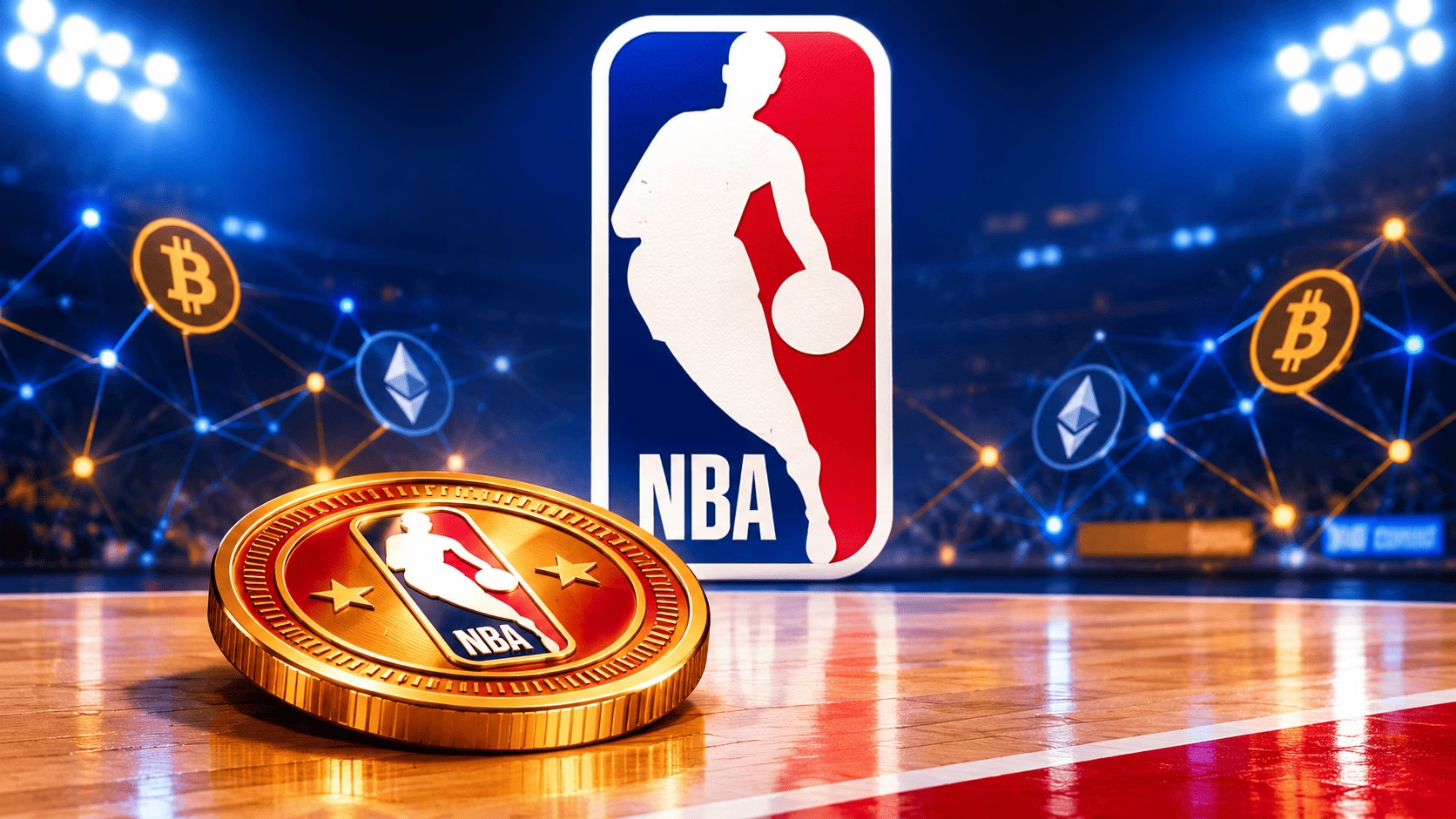
The NBA’s official Instagram account reportedly promoted $NBA Coin, a Solana memecoin, on October 14 before the post was deleted and comments were disabled, prompting suspicion that the account was compromised.
The league has not confirmed a breach. A near-identical promotion hit the NBA’s X account in March 2025 and was confirmed as a hack.
The token was reportedly created through Pump.fun, a platform commonly used to launch tokens on Solana. On October 14, 2026, its market capitalization was reported at approximately $3,500, indicating a very small project by that measure.
That figure should not be confused with the amount invested in the token or the money its creators may have earned. Market capitalization is generally calculated by multiplying a token’s price by its circulating supply, and it can fluctuate sharply in thinly traded markets.
Nevertheless, the apparent size of the project contrasts with the global recognition of the NBA brand used in its promotion. If the post was unauthorized, some fans may have purchased the token believing the league had endorsed it.
The NBA coin scam allegations also illustrate why investors should not rely solely on social media posts when assessing a cryptocurrency. A contract address can help identify a token, but it does not prove that a project is legitimate, officially licensed or safe to trade.
If the token’s price declines, buyers could lose money, particularly if liquidity is limited and they cannot sell their holdings at the displayed price. In the absence of verified confirmation from the league, the reported promotion should not be treated as evidence of an official NBA digital asset.
The available figures also do not establish how many people bought the token, whether anyone profited from the promotion or whether the suspected account compromise resulted in financial losses.
The latest episode bears a striking resemblance to an incident in March 2025, when hackers took control of the NBA’s official X account and several regional accounts to advertise a supposedly official $NBA Coin.
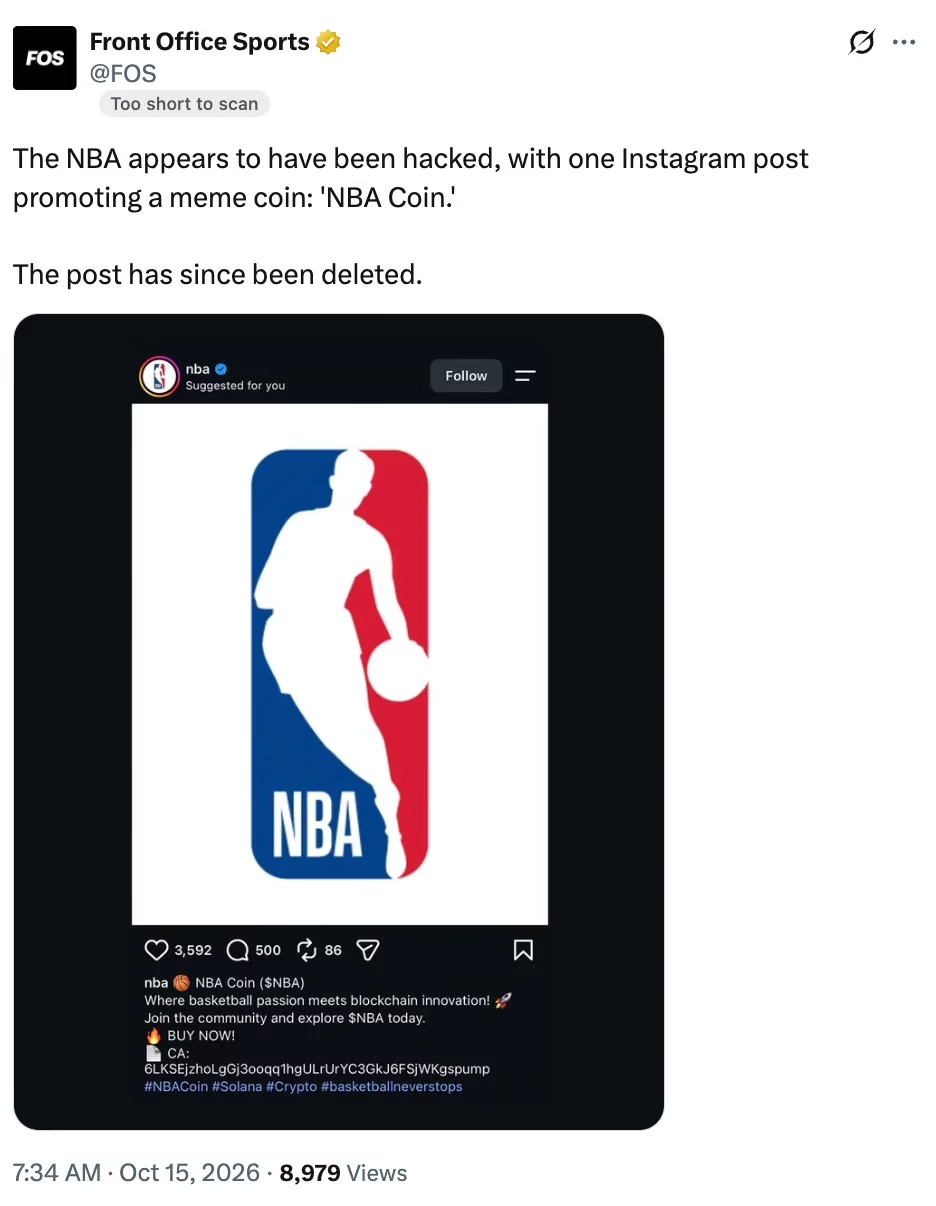
According to Front Office Sports, the posts falsely described the token as a digital asset intended to improve fan engagement and transactions across the basketball ecosystem. The messages were removed within minutes, and an NBA public relations representative confirmed that the accounts had been hacked.
The report also documented similar activity involving NASCAR’s official X account, which was used to promote a separate cryptocurrency. The incidents demonstrated how attackers could exploit the reputations and extensive audiences of major sports organizations to give questionable crypto projects an appearance of legitimacy. (Front Office Sports)
The recurrence of a similar promotion in October 2026 raises questions about the security of high-profile social media accounts and the potential consequences for followers who act before verifying an announcement.
However, the two episodes should not automatically be treated as the same attack. The earlier X account breach was confirmed, while the latest Instagram incident remained a suspected compromise in the reports available at the time.
For investors, the NBA coin scam serves as a reminder that even a post published through a legitimate account can be misleading when account access has been compromised. A familiar logo, an established audience and professional-looking promotional language are not substitutes for independent verification.
The concerns extend beyond basketball. Cryptocurrency fraudsters continue to exploit rapid token launches, online personalities and investors’ fear of missing out, commonly known as FOMO.
A September 2026 investigation by blockchain analytics firm Bitquery identified 56 memecoin launches on Robinhood Chain linked to a single suspected operation. The firm estimated that the group extracted approximately $15.5 million between July 10 and September 23. Of the 55 tokens that traded against ETH, 53 lost at least 90% of their value from their respective peaks. (Bitquery)
According to the investigation, wallets funded by the same operation bought tokens early and sold into demand from later participants. The findings illustrate how coordinated trading can leave ordinary buyers exposed to severe losses after prices rise sharply and then collapse.
Another reported case emerged in September, when hackers compromised the X account of Shivon Zilis, a Neuralink executive. A post from the account helped draw attention to the SLINK memecoin after Elon Musk reacted to the content. The token reportedly surged beyond an $80 million market capitalization before losing more than 95% of its value, according to AMBCrypto’s account of the incident. (AMBCrypto)
These cases demonstrate different ways fraudulent or potentially manipulative token promotions can spread. Some rely on coordinated buying and selling, while others exploit compromised accounts and the credibility of prominent figures.
For anyone assessing the NBA coin scam, the practical lesson is straightforward: verify endorsements through independently accessible official channels, examine a token’s liquidity and trading history, and avoid making purchases based solely on urgent social media appeals.
Until the NBA confirms otherwise through an authoritative announcement, investors should not assume that $NBA Coin is an officially endorsed league cryptocurrency.
The central concern surrounding the NBA coin scam is not simply whether another token will disappear from the market. It is whether fans can distinguish a legitimate announcement from a fraudulent promotion published through an account they have every reason to trust.



Copyright © 2025 - The Bit Gazette.