- Trending
- Comments
- Latest

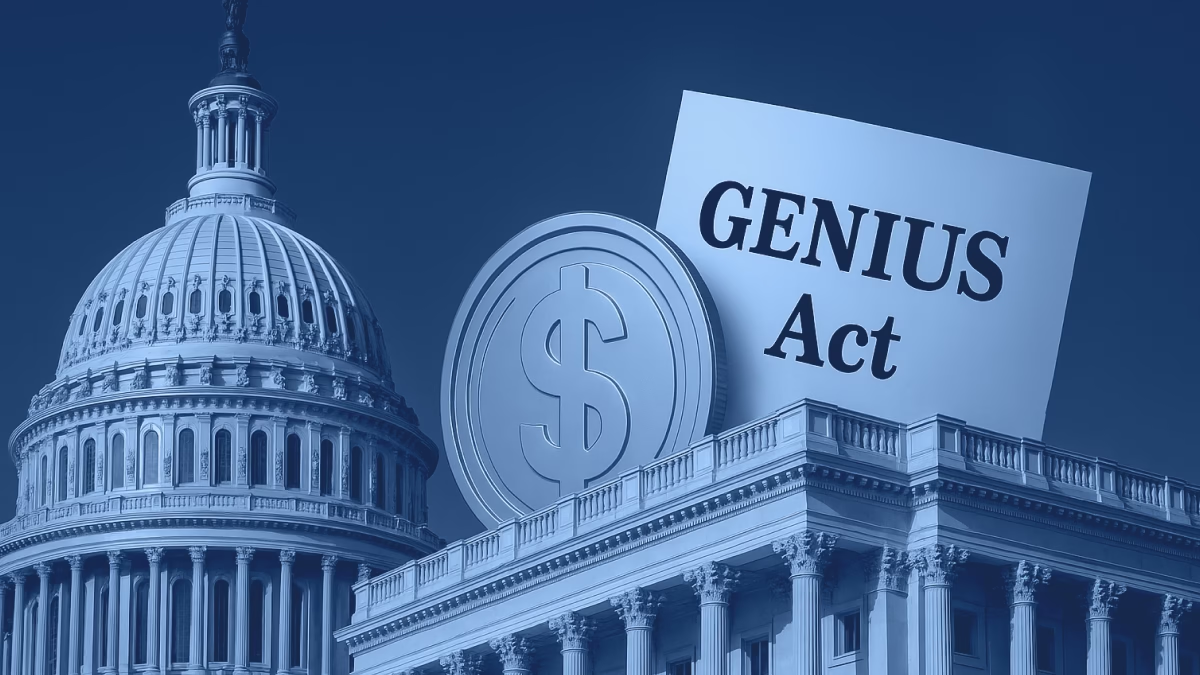
The Blockchain Association is asking Treasury to make sure the Genius Act’s stablecoin rules don’t sweep in defi developers, exchanges and ordinary traders. In an October 19 comment letter, the group warned that vague definitions could turn routine secondary-market activity into unlawful stablecoin issuance, an offence that carries potential criminal penalties.
One of the Blockchain Association’s main concerns is how regulators define digital asset service providers. These businesses can include companies offering cryptocurrency exchange, custody and transfer services.
However, the association wants officials to distinguish between customer-facing intermediaries and businesses that operate blockchain infrastructure or trade digital assets using their own funds.
Under the Genius Act, certain blockchain activities and self-custody arrangements receive statutory exclusions.
The association argues that implementing regulations should preserve these distinctions rather than inadvertently extending intermediary obligations to developers, software providers or participants whose activities fall outside the intended scope of the law.
The group stated in its October 19 announcement that its submission sought clearer boundaries for the final regulations:
“We applaud Treasury’s implementation efforts. Our letter seeks clearer lines so the final rule matches what…” — Blockchain Association, in its October 19, 2026, statement on X.
The statement was published as part of the association’s announcement about its comments on the proposed rules.
The association also wants Treasury officials to clarify when a third party could face liability for knowingly participating in unauthorized stablecoin issuance.
Its concern is that ordinary secondary-market transactions could be interpreted too broadly. Buying, selling or providing liquidity for an existing stablecoin is not necessarily the same as helping an issuer distribute a newly created token unlawfully.
The Blockchain Association is therefore advocating a narrower interpretation of knowing participation. It argues that regulators should consider whether a party actually knew about the unlawful activity and provided substantial assistance coordinated with the issuer.
The Genius Act establishes restrictions on unauthorized payment stablecoin issuance, with potential criminal penalties for certain violations.
According to the published account of the association’s submission, the group wants the final rules to make clear that routine independent trading should not, by itself, establish liability for unlawful issuance.
Such clarification could help firms assess legal exposure and determine which compliance procedures are necessary. It could also reduce uncertainty for investors who depend on exchanges and liquidity providers to access dollar-pegged tokens.
Nevertheless, the association’s recommendations are requests for regulatory clarification, not adopted exemptions. The final legal position will depend on the legislation and the rules ultimately issued by the relevant authorities.
Foreign-issued payment stablecoins represent another major issue in the debate. Under the proposed framework, certain foreign issuers must satisfy applicable statutory conditions before their tokens can be offered to US customers through covered service providers.
The Blockchain Association argues that platforms should be able to rely on relevant official regulatory records when assessing whether a foreign issuer meets the necessary requirements.
It says exchanges may lack direct contractual relationships with issuers and may not have access to the technical information needed to independently verify every compliance claim.
The group is seeking a more practical approach that would allow platforms to consult records maintained by the US Treasury and the Office of the Comptroller of the Currency, while accounting for circumstances in which a business has actual knowledge of noncompliance.
The Genius Act could therefore affect stablecoin availability depending on the issuer, the applicable regulatory pathway and the obligations imposed on the platform distributing the token. Investors should not interpret the proposed rules as an immediate blanket ban on every foreign stablecoin.
Instead, the final framework will determine which issuers qualify, what verification procedures are required and how exchanges must respond when a token fails to meet the applicable standards.
The association has also raised concerns about determining whether a stablecoin recipient is located in the United States. Public blockchain transactions frequently reveal wallet addresses without identifying the people behind them or establishing their physical location.
The group argues that businesses should not be expected to build entirely new identity-verification and geolocation systems simply because an unidentified wallet can interact with a permissionless protocol.
It favors an approach that considers information reasonably available to a business, existing customer relationships and actual knowledge of a recipient’s location.
At the same time, these arguments do not amount to a proposal to protect companies that deliberately target US customers while ignoring information already available to them. The Genius Act also raises consumer-protection questions as the regulatory framework takes shape.
The National Cryptocurrency Association separately submitted recommendations concerning the treatment of stablecoin holders when an issuer’s regulatory status changes. Its proposals included allowing users time to redeem, sell or convert their holdings before restrictions affect them.
The Treasury’s consultation deadline was October 19, 2026, and the proposed rules remain subject to regulatory review. The framework is expected to take effect on January 18, 2027, while certain general distribution restrictions are scheduled for July 18, 2028, according to the published reporting on the proposal.
The Genius Act is an important development in the regulation of payment stablecoins, but its practical impact will depend on how regulators balance consumer safeguards, market integrity and the technical realities of decentralized networks.



Copyright © 2025 - The Bit Gazette.