

- Trending
- Comments
- Latest

Heatbit has unveiled Bitwater, a $899 Bitcoin miner that replaces the lower heating element in an electric water tank and uses chip heat to warm the water. The catch: it draws up to 600 watts, and the company’s own $1.35-a-day earnings estimate ignores electricity costs.
Announced on October 26, 2026, the device combines two functions in one unit: heating water for everyday use and mining Bitcoin through a built-in computing system. Heatbit says the product can fit compatible electric water heaters commonly sold across North America, allowing users to install the device, connect it to Wi-Fi and begin mining without purchasing a separate mining rig.
The company plans to sell its first batch for $899, with shipments expected to begin in the first quarter of 2027. Later batches are expected to cost $1,299.
However, while the concept offers an alternative way to reuse the heat generated by cryptocurrency mining, questions remain about its profitability. Potential buyers will need to consider electricity consumption, Bitcoin mining rewards and the substantial price difference between Bitwater and conventional water-heating components.
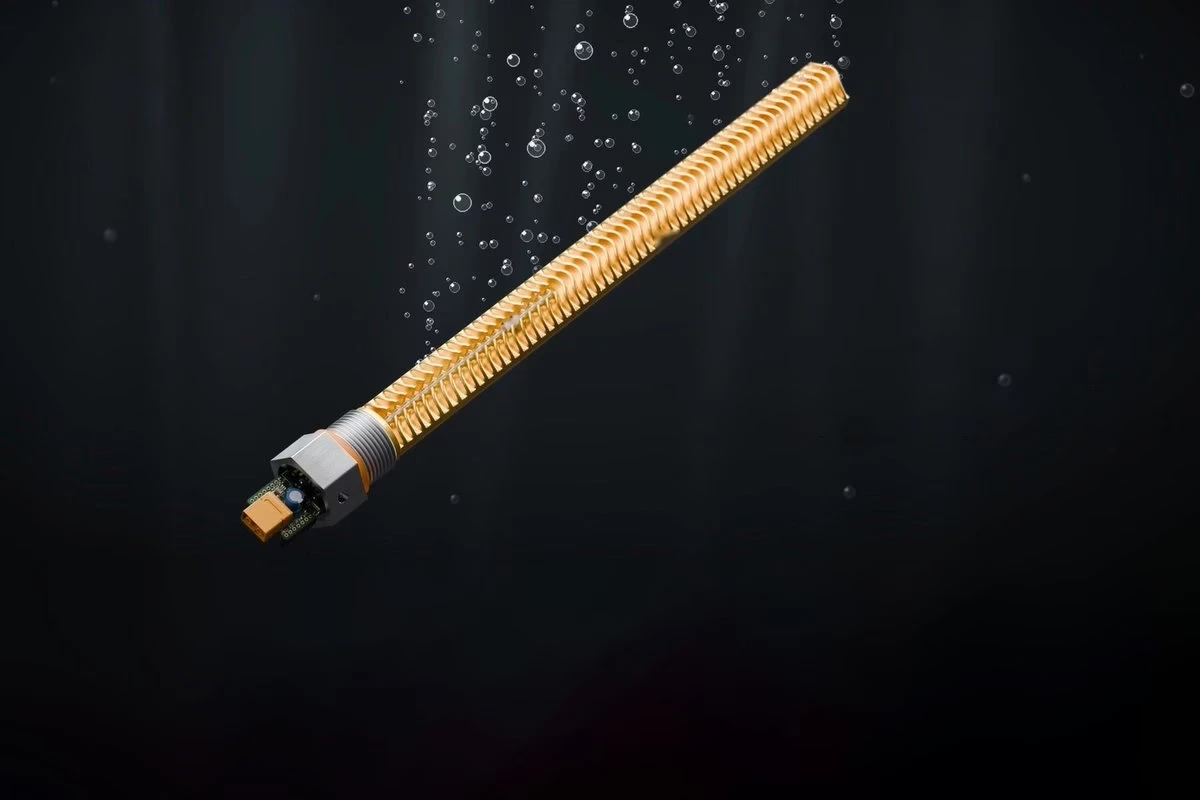
The Bitwater replaces the lower heating element in a compatible electric water tank. Although its external design resembles a conventional rod-shaped heating element, it contains a complete Bitcoin mining system that operates while heating water.
According to Heatbit, the device uses 20 BM1370 application-specific integrated circuit (ASIC) mining chips. These processors are designed specifically for cryptocurrency mining and collectively consume up to 600 watts of power.
The system has a peak hashrate of 34 terahashes per second (TH/s), meaning it can perform approximately 34 trillion hash calculations per second. Hashrate measures a miner’s computational capacity and is one of the factors that determine its potential contribution to the Bitcoin network.
Bitcoin mining involves specialised computers performing repeated calculations to compete for the right to add new blocks to the blockchain. Successful miners can receive Bitcoin rewards and transaction fees, although individual earnings depend on several variables, including network difficulty, mining pool arrangements and the amount of computing power contributed.

The Bitcoin-mining smart rod uses the heat generated by its processors to warm the water inside the tank rather than allowing that energy to escape into the surrounding air.
Heatbit says the mining chips are enclosed in welded Eco Brass heatsinks, which are designed to transfer heat efficiently to the water while resisting corrosion.
The water also serves as a cooling medium for the processors. Because water can carry heat away from electronic components more effectively than air in many applications, the arrangement allows the device to use the same energy output for both computing and household heating.
However, the system must withstand the operating conditions inside a hot-water tank. Water temperatures of approximately 55°C to 60°C present a demanding environment for electronics, making effective waterproofing, thermal management and long-term reliability important considerations.
The product’s actual durability will become clearer once commercially available units have been installed and tested over time.
Beyond its mining capabilities, Bitwater incorporates features intended to make it function like a modern household appliance.
Heatbit says installation can be completed in under an hour, although compatibility with an existing water heater and the user’s plumbing setup will influence the process. The company designed the device to fit a standard one-inch screw-in heating-element port used in compatible electric tanks.
After installation, users can connect the device to a mobile application to monitor water temperature, mining performance and earnings.
The application also allows users to select a Bitcoin mining pool, direct their rewards to a preferred cryptocurrency wallet and receive notifications about the device’s activity.
Another feature is its ability to learn when a household typically uses hot water. Based on these patterns, the system is designed to prepare the tank ahead of expected demand.

This scheduling function could help households maintain access to hot water while allowing the mining system to operate around their daily routines.
The Bitcoin-mining smart rod also incorporates a powered titanium anode rod intended to protect the steel water tank against corrosion. Unlike conventional sacrificial magnesium anode rods, which gradually dissolve as they protect the tank, the powered design uses a small electrical current to provide corrosion protection.
Heatbit says its titanium rod works in hard-water conditions, avoids the odours sometimes associated with magnesium rods and does not require the same routine replacement.
These features could make the product appealing to consumers interested in combining household equipment with cryptocurrency technology. Nevertheless, the convenience of integrating two functions into one device does not necessarily establish that the additional purchase cost will be recovered through mining rewards.
The financial case for Bitwater is less straightforward than its engineering concept.
Heatbit has pointed to an artificial intelligence-generated estimate suggesting the device could generate approximately $1.35 per day in Bitcoin mining earnings. However, the figure does not account for electricity costs, making it an incomplete measure of potential profitability.
At that estimated rate, gross mining revenue would amount to approximately $40.50 over 30 days or $492.75 over a 365-day period, assuming the daily figure remained constant.
Those calculations represent hypothetical revenue, not guaranteed earnings or net profit. Actual results could vary as Bitcoin’s price, network difficulty, mining rewards and the user’s mining pool performance change.
Electricity prices will also play a significant role in determining whether the device makes financial sense. The mining system draws up to 600 watts, although its actual consumption will depend on operating conditions and usage.
For example, continuous operation at the full 600-watt rating would consume 14.4 kilowatt-hours of electricity per day. At an electricity rate of $0.15 per kilowatt-hour, that would cost approximately $2.16 daily if the device operated at full power around the clock.
That illustrative electricity cost would exceed the reported $1.35 daily mining estimate. However, the comparison does not establish the device’s actual net operating cost because the estimate may use different assumptions, and some of the electricity consumed by the mining chips contributes to heating water that the household would otherwise need to heat.
A fair assessment would therefore need to account for the home’s existing water-heating costs, the device’s actual power consumption, its mining revenue and the performance of a conventional heating element under comparable conditions.
The purchase price presents another challenge.
Heatbit intends to sell its first units for $899 before raising the price to $1,299 for subsequent batches. By comparison, a conventional water-heater element equipped with a powered anode rod was reported to cost approximately $180 on Amazon.
That difference leaves buyers paying substantially more for the integrated mining capability. Whether the extra expense can be recovered will depend on the device’s real-world earnings, energy efficiency, useful lifespan and maintenance requirements.
Bitwater is part of Heatbit’s broader effort to combine cryptocurrency mining with appliances that already serve a purpose in the home.
The company also produces air purifiers and space heaters that use heat generated by mining hardware. Its wall-mounted Canvas product similarly combines a heating function with a surface that users can draw on with markers.
Bitwater could provide an unconventional way to participate in Bitcoin mining without setting up a dedicated mining rig. For households primarily concerned with affordable hot water, the additional cost may be harder to justify.
The Bitcoin-mining smart rod is scheduled to reach its first customers in early 2027, giving prospective buyers time to evaluate its specifications and wait for independent performance assessments.
Source: Heatbit, as reported by New Atlas on October 26, 2026.



Copyright © 2025 - The Bit Gazette.