






- Trending
- Comments
- Latest

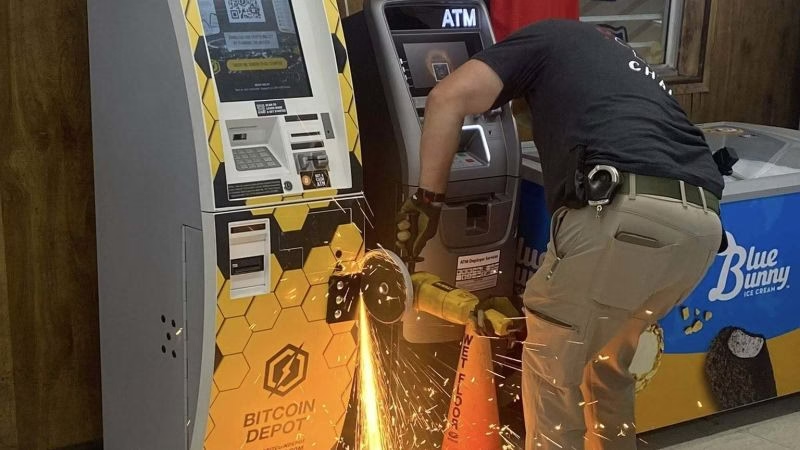
Arizona Attorney General Kris Mayes issued a statewide fraud alert this week warning that crypto ATM scams cost state residents more than $177 million in 2024, as federal data shows complaints tied to the kiosks surged 99% nationwide.
The warning came alongside the launch of a new online reporting system allowing victims to file complaints within 30 days—a window that may help law enforcement pursue restitution under Arizona’s recently strengthened consumer protection laws.
“Fraudsters are increasingly using bitcoin ATMs to victimize Arizonans,” Mayes said in a statement. “If you are being directed to use one, there is a very, very high chance you are being scammed.”
Arizona’s alert comes amid a broader national reckoning with Crypto ATM Scams, which the FBI says surged dramatically in 2024. According to federal data, complaints tied to crypto kiosks jumped 99% year-over-year, with reported losses exceeding $246 million nationwide.
Scammers typically initiate contact through unsolicited calls, text messages, or emails, impersonating banks, government agencies, law enforcement officials, or even family members. Victims are pressured to withdraw cash and deposit it into a crypto ATM, where the funds are converted into digital assets and sent directly to wallets controlled by criminals.
Once deposited, recovery is nearly impossible. Scottsdale police have already reported more than $5 million in losses this year alone, underscoring how quickly Crypto ATM Scams can drain victims’ savings.
To counter the threat, Arizona has partnered with Yavapai County Sheriff David Rhodes to place prominent “STOP” warning signs on bitcoin ATMs statewide, alerting users before they complete a transaction.
Arizona’s response goes beyond warnings. Since September 2025, the state’s Crypto Kiosk License Fraud Prevention law has imposed strict operational rules on ATM operators. Daily transaction limits are capped at $2,000 for new users and $10,500 for existing customers, while operators must issue full refunds to fraud victims who file a police report within 30 days.
Governor Katie Hobbs also signed HB 2749, establishing a state-managed bitcoin reserve funded entirely through unclaimed digital assets, marking one of the most unconventional policy moves tied to Crypto ATM Scams and digital asset regulation.
Arizona’s crackdown mirrors aggressive enforcement actions elsewhere. In Washington, D.C., Attorney General Brian Schwalb filed a lawsuit against Athena Bitcoin, alleging the company ignored widespread misuse of its machines.

According to the complaint, 93% of Athena’s transactions during its first five months operating in the district were directly linked to Crypto ATM Scams. The median victim age was 71, and one resident reportedly lost $98,000 across 19 transactions.
“Athena knows that its machines are being used primarily by scammers, yet chooses to look the other way,” Schwalb said, accusing the firm of charging undisclosed fees of up to 26% while refusing refunds.
Federal prosecutors in Chicago have taken even stronger action. In January, authorities indicted Firas Isa, CEO of Crypto Dispensers, on money-laundering conspiracy charges, alleging his ATM network processed $10 million in fraud and narcotics proceeds.
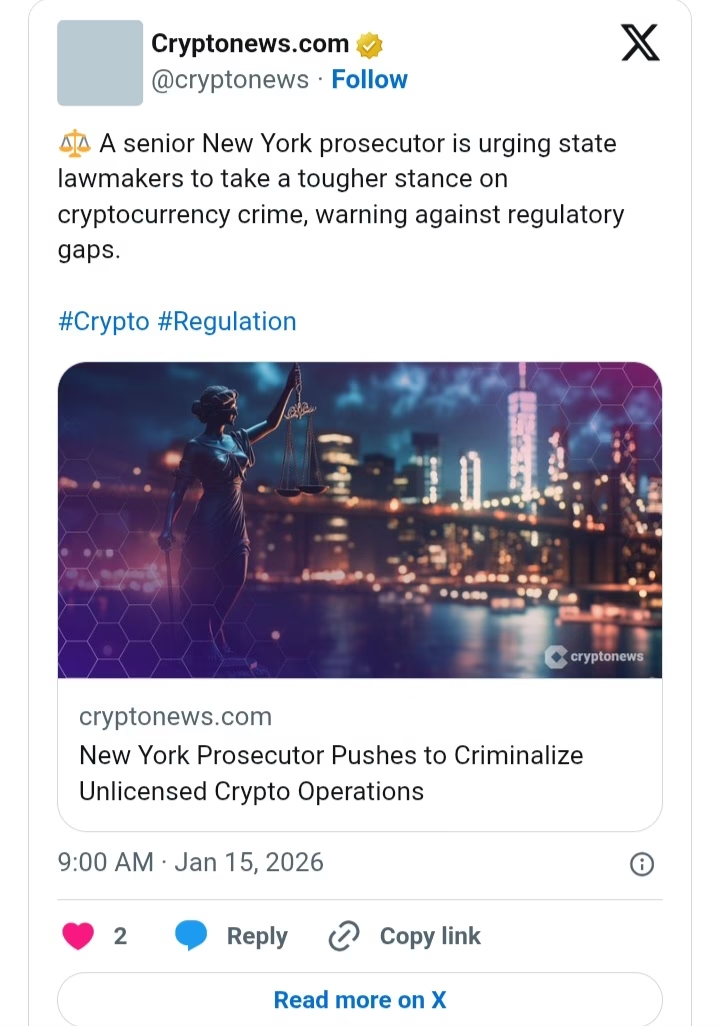
Manhattan District Attorney Alvin Bragg has also weighed in, warning lawmakers about a growing “$51 billion criminal economy” tied to unregulated crypto activity. “If you are operating a crypto business, you should be licensed,” Bragg said.
The surge in Crypto ATM Scams has prompted lawmakers to pursue federal solutions. Senator Dick Durbin introduced the Crypto ATM Fraud Prevention Act (S. 710), which would require kiosk operators to register with the U.S. Treasury, post mandatory scam warnings, enforce transaction caps, and provide refunds to victims.
9
States are not waiting. Wisconsin lawmakers have proposed legislation imposing $1,000 daily limits and strict identity verification requirements on the state’s 582 kiosks.
International regulators are moving even faster. New Zealand has announced a complete ban on crypto ATMs under new anti-money laundering rules. In Australia, Home Affairs Minister Tony Burke called crypto kiosks a “high-risk product” after AUSTRAC found that 85% of high-value ATM transactions were linked to scams.
Spokane, Washington, has gone further than any U.S. city, becoming the first municipality to ban crypto ATMs outright following federal investigations into Crypto ATM Scams.
Despite mounting scrutiny, the crypto ATM industry has not frozen. Washington state regulators recently ordered Coinme to halt operations and repay $8 million after finding the company had improperly converted unredeemed customer funds into revenue.
At the same time, Polygon is reportedly exploring an acquisition of Coinme valued between $100 million and $125 million, while Bitcoin Bancorp announced plans to deploy 200 new ATMs across Texas, a state that already hosts more than 4,000 kiosks under a clearer regulatory framework.
The rapid rise of Crypto ATM Scams has forced regulators, lawmakers, and the industry itself into a pivotal moment. With losses mounting and vulnerable populations targeted, enforcement is accelerating faster than at any point in crypto’s history.
Whether tougher laws and public awareness can stem the tide remains uncertain. For now, authorities are united on one message: if a stranger urges you to use a crypto ATM, it is almost certainly a scam.



Copyright © 2025 - The Bit Gazette.