







- Trending
- Comments
- Latest

Bitcoin mining heat is emerging as an unlikely ally to agriculture, as crypto infrastructure increasingly intersects with sustainability and food production. Bitcoin mining hardware manufacturer Canaan has unveiled a new initiative that channels excess heat from mining machines into tomato greenhouse operations in Canada, marking another step in the industry’s push to reduce waste and improve energy efficiency.
According to a company statement, Canaan has partnered with Bitforest Investment to launch a 3-megawatt pilot project in Manitoba that repurposes Bitcoin mining heat as a supplemental energy source for commercial greenhouses. The initiative is designed to demonstrate how thermal energy generated by mining rigs—often considered a byproduct or liability—can be transformed into a valuable input in cold-climate agriculture.
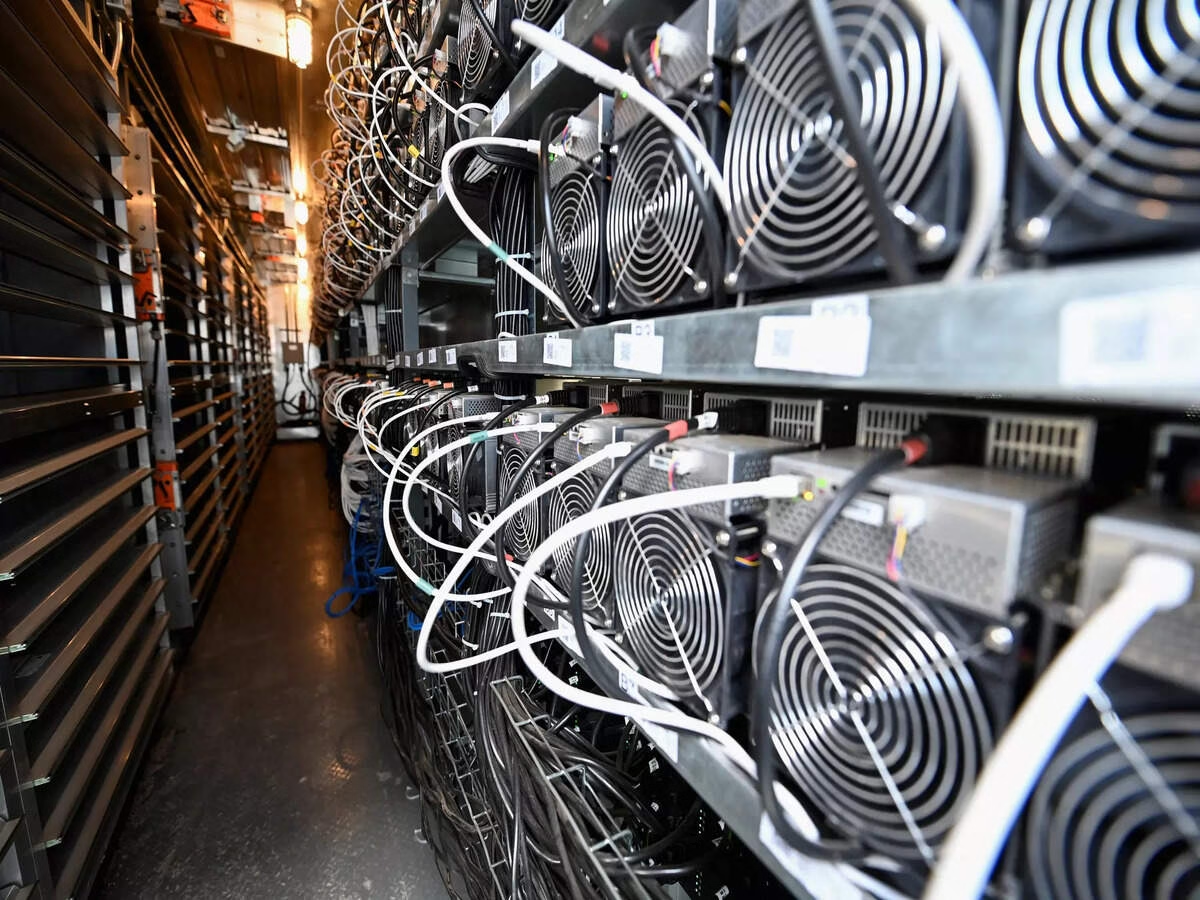
At the core of the project are Canaan’s Avalon A1566HA-460T mining machines, deployed in a liquid-cooled configuration. These units generate substantial thermal output during normal operations. Instead of venting that heat into the atmosphere, the system captures it and redirects it to preheat water used by greenhouse electric boilers.
The company said the setup reduces overall energy demand by lowering the amount of electricity or fossil fuel required to maintain optimal greenhouse temperatures. In regions such as Manitoba, where heating costs are a major expense for year-round tomato cultivation, the reuse of Bitcoin mining heat could significantly improve operational economics.
The pilot program is expected to run for 24 months and will involve the installation of 360 liquid-cooled mining units. By integrating directly with Bitforest’s existing greenhouse infrastructure, the project aims to demonstrate a practical, real-world application of heat recovery rather than a theoretical experiment.
Nangeng Zhang, chairman and chief executive officer of Canaan, emphasized that the initiative is not a one-off demonstration. “Our goal goes beyond deploying equipment for a single greenhouse,” Zhang said in the statement. “We are building a data-driven, replicable model that allows us to measure, model, and scale Bitcoin mining heat recovery for agricultural use, particularly in cold regions.”
Zhang added that the company intends to use data collected during the pilot to refine system design and performance metrics, making it easier for similar projects to be deployed elsewhere. If successful, the approach could be adapted for other crops or industrial heating needs where steady, low-grade heat is required.
One of the key selling points of the project is its potential to reduce dependence on fossil-fuel-powered boilers. Greenhouses typically rely on natural gas or other carbon-intensive fuels to maintain consistent temperatures during winter months. By substituting a portion of that energy with Bitcoin mining heat, operators can lower both costs and emissions.
Bitforest Investment, which operates tomato production facilities in Manitoba, is integrating the system into its existing operations. The recovered heat would otherwise be wasted, dissipating into the environment without any productive use. Instead, it becomes a circular energy solution that aligns agricultural production with digital infrastructure.
Industry observers note that such projects could help reshape public perception of crypto mining, which has long been criticized for its energy intensity. By demonstrating tangible benefits beyond hash rate generation, Bitcoin mining heat recovery initiatives may strengthen the case for mining as a flexible component of modern energy systems.
The Canaan-Bitforest partnership reflects a broader trend within the cryptocurrency mining sector toward sustainability-focused innovation. In recent years, miners have increasingly sought ways to improve energy efficiency, integrate renewable power, and reduce waste.
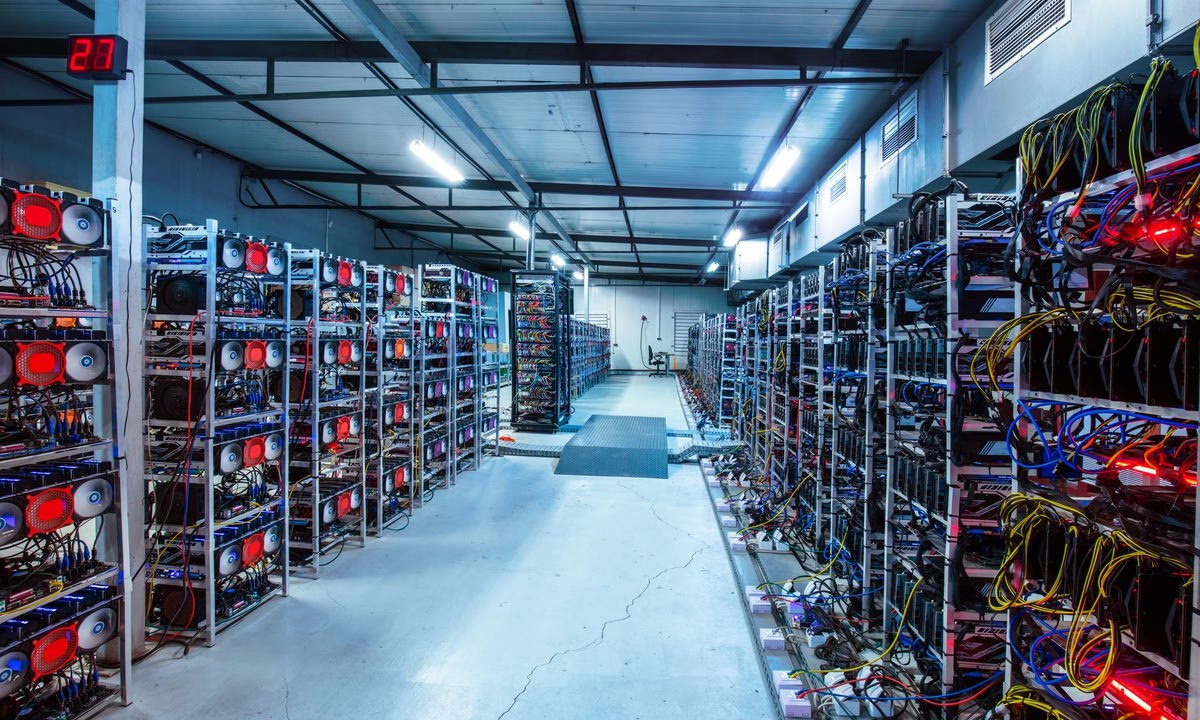
In November, for example, Phoenix Group announced the development of a 30-megawatt Bitcoin mining facility in Ethiopia powered by hydroelectric energy, according to industry reports. While that project focused on clean power sourcing, heat recovery initiatives address a different aspect of mining’s environmental footprint by tackling waste energy directly.
Analysts say Bitcoin mining heat reuse could be particularly impactful in colder regions, where heating demand is high and mining infrastructure can operate efficiently year-round. Unlike intermittent renewable sources, mining rigs produce consistent heat as long as they are running, making them well-suited for integration with greenhouses and district heating systems.
Beyond environmental benefits, the reuse of Bitcoin mining heat may also influence policy discussions around crypto infrastructure. Governments and regulators evaluating mining projects often weigh local economic benefits against energy consumption concerns. Projects that support agriculture, reduce fuel imports, or stabilize local energy systems could be viewed more favorably.

For farmers, partnerships with miners could provide access to predictable, low-cost heat without large upfront investments in new energy systems. For miners, selling or utilizing excess heat creates an additional revenue or cost-saving stream, improving resilience in a volatile market.
While still in its early stages, the Manitoba pilot highlights how Bitcoin mining heat can move from a byproduct to a feature. If the model proves scalable, similar systems could be deployed across Canada, Northern Europe, and other cold regions where greenhouses and industrial heating needs overlap with mining activity.
As the crypto industry matures, such cross-sector collaborations suggest that the future of mining may be less about isolated data centers and more about integrated energy ecosystems. In that vision, Bitcoin mining heat is no longer wasted—it is harvested, measured, and put to work growing food.



Copyright © 2025 - The Bit Gazette.