


- Trending
- Comments
- Latest

Bybit, the world’s second-largest cryptocurrency exchange by trading volume, will begin winding down services for Japanese users in 2026 after failing to secure regulatory approval from Japan’s Financial Services Agency.
The exchange, which processes approximately $4.3 billion in daily trading volume, announced Monday that Japanese accounts will face gradual restrictions starting next year as part of a phased exit from one of Asia’s most tightly regulated crypto markets.
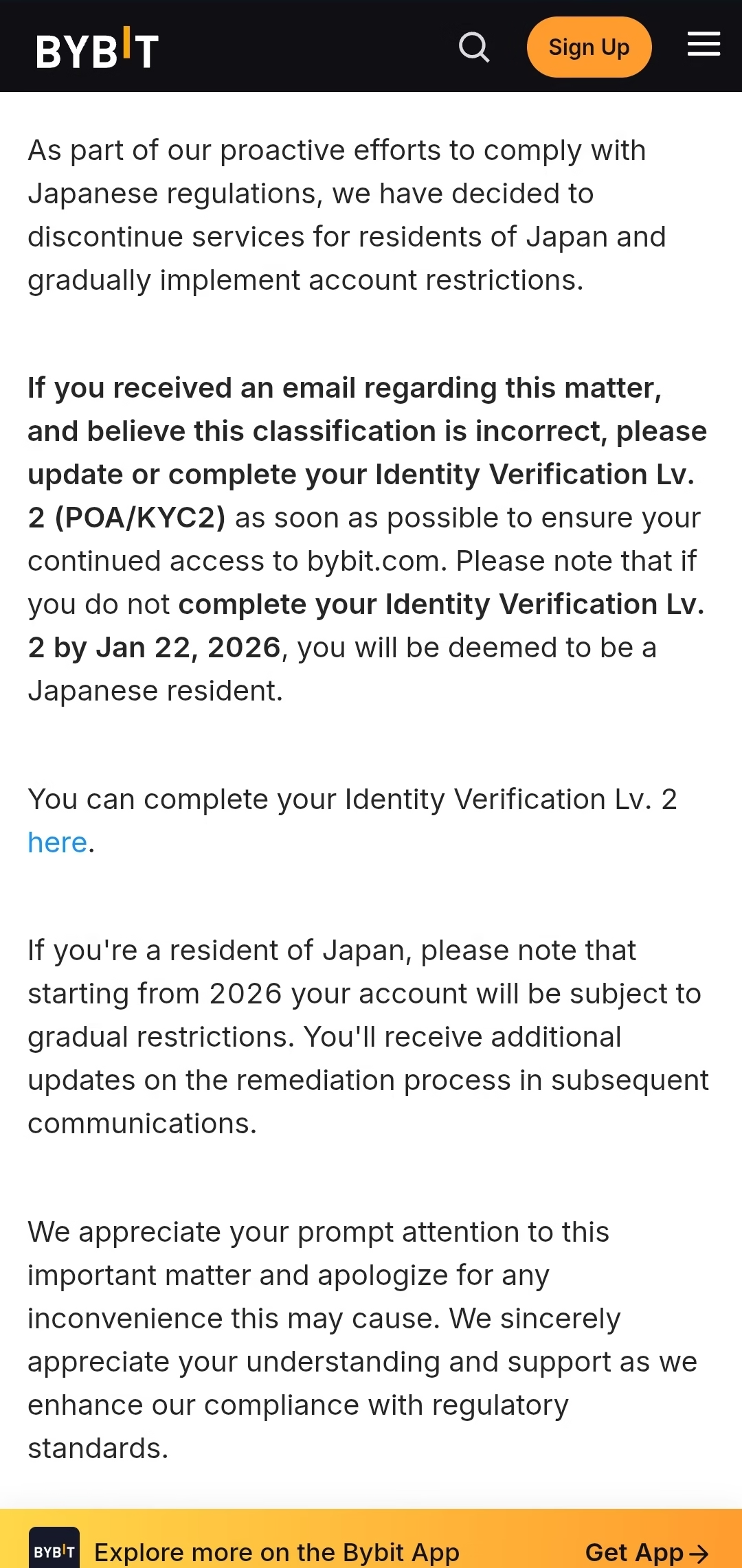
According to the company, the Bybit Japan exit will not happen overnight. Instead, Bybit plans to roll out gradual limitations on affected accounts, with further guidance to be shared directly with users as the process unfolds.
Customers who believe they were incorrectly flagged as Japanese residents have been asked to complete additional identity verification to reassess their account status.
“If you’re a resident of Japan, please note that starting from 2026 your account will be subject to gradual restrictions,” — Bybit, in a statement to users.
The announcement confirms that Bybit does not currently hold the registration approval required by the FSA to serve Japanese residents. Under Japanese law, crypto platforms must be formally licensed to operate, a standard regulators have increasingly enforced in recent years.
Despite the impending Bybit Japan exit, the exchange remains one of the world’s largest by trading volume. Data from CoinGecko shows Bybit processed roughly $4.3 billion in trades over a 24-hour period at the time of reporting, frequently ranking second globally.
The Bybit Japan exit follows earlier steps by the exchange to limit its exposure to the country. In October, Bybit paused new user registrations in Japan, citing ongoing discussions with regulators. That move foreshadowed a broader retreat as regulatory scrutiny intensified.
In February, Japan’s FSA escalated enforcement by requesting Apple and Google to remove the mobile applications of five unregistered crypto exchanges from their app stores. Bybit was among those targeted, alongside MEXC Global, LBank, KuCoin, and Bitget.
Japan is widely regarded as having one of the most stringent crypto oversight regimes globally, with policymakers prioritizing consumer protection and financial stability.
While officials argue the approach reduces risk, critics within the industry say the rules may be driving innovation and liquidity offshore—an outcome reflected in the Bybit Japan exit.
While the Bybit Japan exit marks a retreat from a major Asian market, the exchange is expanding its footprint in other regions.
In the United Kingdom, Bybit recently returned after a two-year hiatus, launching a new platform offering spot trading and peer-to-peer services. The relaunch operates under a promotions arrangement approved by Archax, a UK-regulated firm.
In the Middle East, Bybit has also made regulatory progress. Last month, the exchange secured a Virtual Asset Platform Operator license from the United Arab Emirates’ Securities and Commodities Authority, eight months after receiving in-principle approval. The license allows Bybit to operate in one of the world’s fastest-growing crypto hubs.
These developments highlight the strategic contrast at the heart of the Bybit Japan exit: while Japan tightens access through strict licensing, other jurisdictions are opening regulated pathways for global exchanges.
For policymakers, the Bybit Japan exit raises broader questions about regulatory balance. Japan’s framework has been praised for its consumer protections, particularly following high-profile exchange failures in the past.
However, the departure of major platforms may limit choice for domestic users and reduce Japan’s influence in shaping global crypto markets.



Copyright © 2025 - The Bit Gazette.