

- Trending
- Comments
- Latest

An eligible commodity is a legal classification under U.S. exchange rules that determines which assets can be included in commodity based trust shares, the structure behind most crypto ETFs. It acts as a regulatory signal that an asset meets specific standards for market integrity and surveillance.
The concept builds on the Commodity Exchange Act, where a “commodity” is broadly defined to include goods and assets for which futures contracts exist or may exist. Under this framework, digital assets like Bitcoin and Ethereum have long been treated as commodities by the Commodity Futures Trading Commission.
However, eligible commodity is a narrower, exchange level designation used by platforms such as NYSE Arca and Nasdaq. Under rules like NYSE Arca Rule 8.201 E, a digital asset must meet several conditions to qualify for inclusion in crypto trust products:
The asset must trade on a market that is part of the Intermarket Surveillance Group, enabling data sharing across exchanges
It must support a futures contract listed on a CFTC regulated designated contract market for at least six months
The listing exchange must maintain a comprehensive surveillance sharing agreement with that market
When NYSE Arca filed its recent rule change naming XRP as an eligible commodity, it did not make a sweeping legal declaration. Instead, it identified XRP among digital assets that could qualify under updated listing standards for commodity based trust shares.
The proposal introduces a portfolio structure in which at least 85 percent of a crypto trust’s net asset value must be allocated to approved eligible assets, while up to 15 percent can include other holdings. This 85 to 15 structure allows flexibility while maintaining regulatory guardrails.
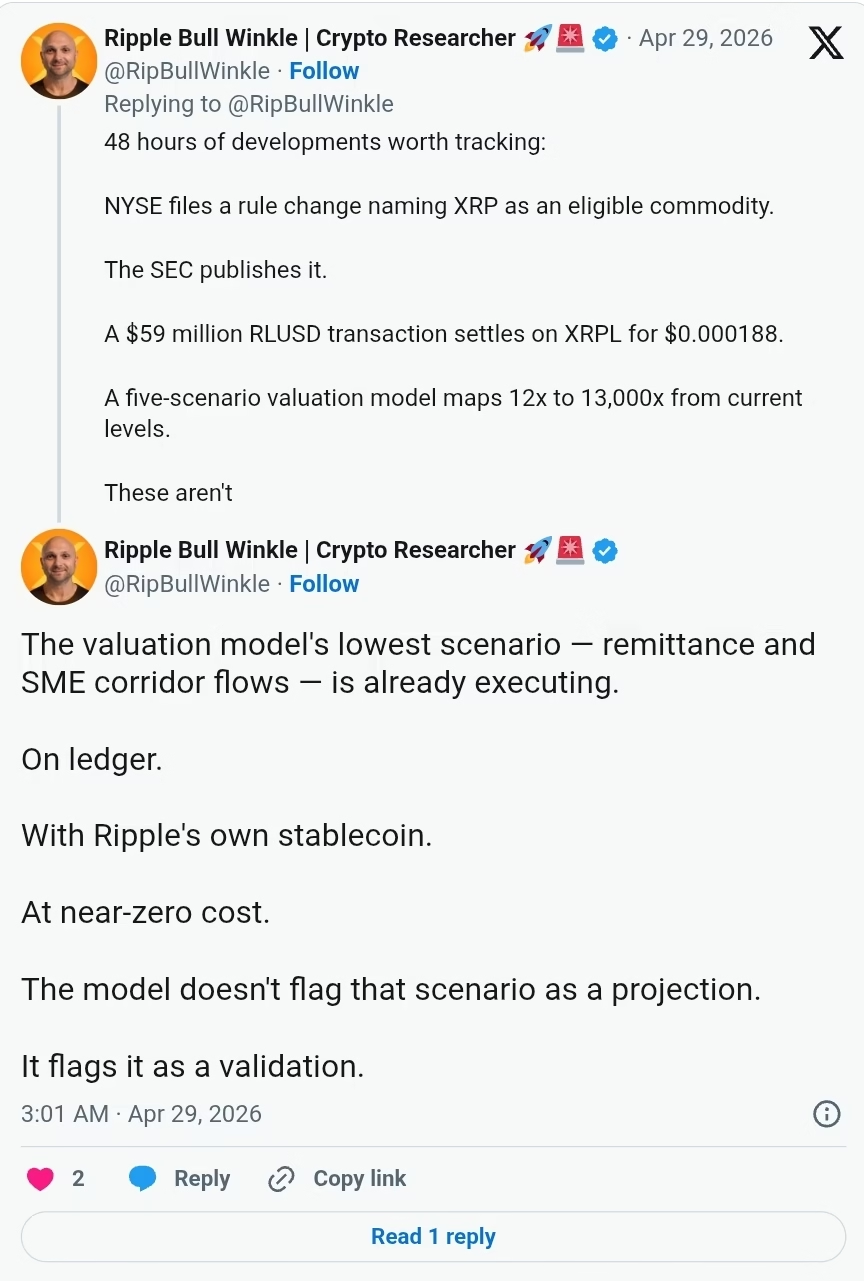
Importantly, the filing does not formally classify XRP as a commodity under federal law. It places XRP within a framework that allows it to be considered for ETF inclusion if it satisfies the required criteria.
Recent moves by the U.S. Securities and Exchange Commission to approve generic listing standards for commodity based trusts have reshaped the ETF landscape. Previously, most crypto ETFs required individual approval. Now, products that meet predefined criteria can list without a separate Commission order.
This shift opens the door for a broader range of digital assets beyond Bitcoin and Ethereum to enter regulated investment vehicles.
The eligible commodity framework also addresses long standing concerns about market manipulation. By requiring assets to trade on surveilled markets with established futures activity, the rules aim to strengthen transparency and investor protection.
The debate over eligible commodities is tied to a larger legal question: which digital assets are commodities and which are securities?
A 2023 federal court ruling in New York found that XRP was not a security in certain contexts, particularly in programmatic sales on public exchanges. However, that decision did not fully resolve its classification.
Regulators including the SEC and CFTC have at times referred to XRP, Bitcoin, and Ethereum as digital commodities, but these interpretations do not carry full statutory authority.
The proposed CLARITY Act, backed by Senator Lummis, seeks to settle this issue by clearly defining the regulatory boundaries between commodities and securities in the digital asset space.
Eligible commodity is the regulatory gateway for crypto ETFs, and the NYSE has now placed XRP within reach of that gateway. The next move lies with regulators and lawmakers who will determine how open that path becomes.



Copyright © 2025 - The Bit Gazette.