





- Trending
- Comments
- Latest

The Federal Reserve will announce its final interest rate decision of 2025 on Tuesday, Dec. 10 at 2 p.m. Eastern time, with the CME Group’s FedWatch tool showing a 90% probability that the Fed will cut rates for the third time this year.
Fed Chairman Jerome Powell will hold a press conference at 2:30 p.m. to explain the decision and provide economic guidance.
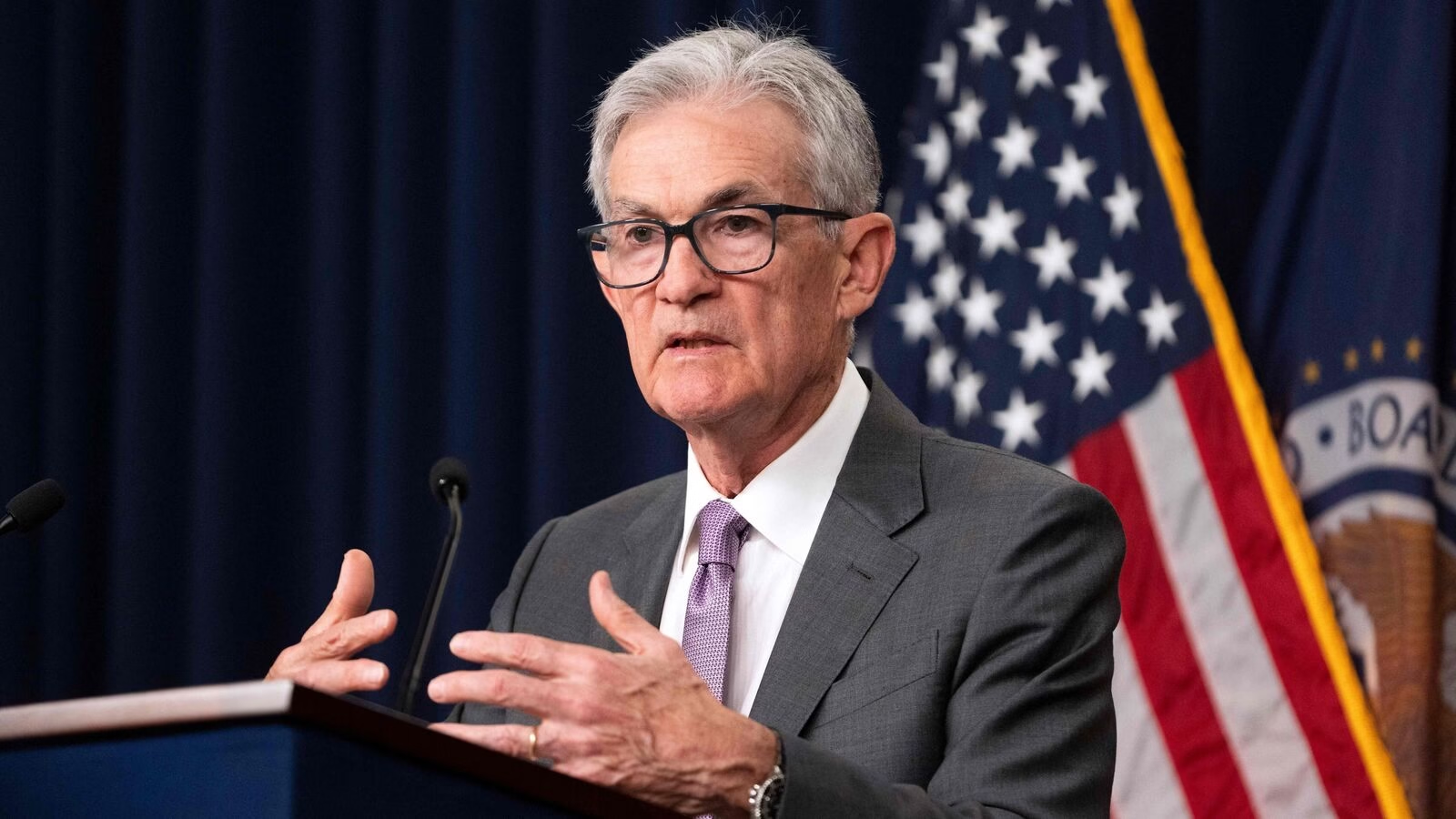
The Federal Open Market Committee (FOMC) is meeting Dec. 9-10, 2025—its eighth and final scheduled meeting of the year.
Key times to know:
Powell’s press conferences are livestreamed and recorded, allowing anyone to watch the Fed chairman explain the reasoning behind rate decisions and answer questions from financial journalists.
Tuning into these meetings can help you understand how the economy is performing and make more informed decisions about your personal finances.
The Fed is widely expected to cut the federal funds rate for the third time in 2025. Markets are pricing in a 90% chance of a rate cut, according to the CME Group‘s FedWatch tool, which tracks probability based on fed funds futures trading.
At its last meeting, the Fed cut its target rate by 25 basis points. In its policy statement, the committee said: “Available indicators suggest that economic activity has been expanding at a moderate pace. Job gains have slowed this year, and the unemployment rate has edged up but remained low through August; more recent indicators are consistent with these developments. Inflation has moved up since earlier in the year and remains somewhat elevated.”
In Fed-speak, this means: the economy is growing steadily but not overheating, employment remains relatively strong despite some cooling, and inflation—while still above the Fed’s target—is moving in the right direction. These conditions typically support continued rate cuts.
That said, predicting Fed decisions with absolute certainty is impossible, as the committee bases its choices on incoming economic data that can shift between meetings.
If the Fed cuts rates as expected, here are steps you can take to protect your finances:
Certificates of deposit currently offer attractive fixed rates, with some paying 4% or more. If the Fed cuts rates this week, CD rates will likely decline in the coming months.
Locking in a CD now protects your returns before rate cuts reduce interest-earning power. However, choose a term that matches when you’ll need access to the funds—pulling money out early typically triggers withdrawal penalties that can eat into your earnings.
If you have high-interest fixed-rate loans—such as a car loan, private student loan, or mortgage—upcoming rate cuts could create refinancing opportunities that lower your monthly payments.
Keep in mind that mortgage rates don’t move in lockstep with Fed rate cuts, as they’re more closely tied to long-term Treasury yields. However, other consumer loans often follow Fed rate changes more directly.
Before refinancing, ensure you qualify for better rates by improving your credit score and paying down other debts. Then compare the potential interest savings against any fees or closing costs to determine whether refinancing makes financial sense.
If you’re considering a major purchase requiring financing—like a home or vehicle—interest rate trends matter. If the Fed cuts rates, borrowing costs may decline, potentially saving you money over the life of a loan.
Until you’re ready to make your purchase, consistently set aside money in a dedicated savings account. Building a larger down payment reduces the loan amount you’ll need, which saves on interest regardless of what rates do.
The federal funds rate—the interest rate banks charge each other for overnight lending—serves as a benchmark that influences rates throughout the economy.
When the Fed cuts this rate, effects typically ripple through to consumer financial products:
Understanding this connection helps you anticipate changes to your finances and act strategically rather than reactively.
When Chairman Powell takes questions at 2:30 p.m. on Dec. 10, pay attention to:
These signals often matter more than the rate decision itself, as they shape expectations for the months ahead.