


- Trending
- Comments
- Latest

A pseudonymous researcher working from open blockchain records helped recover millions in stolen funds and contributed to multiple arrests, without a badge, a subpoena, or institutional backing.
A new generation of independent investigators known as blockchain sleuths is doing the work regulators can’t keep pace with, using public transaction data and open-source intelligence to expose fraud across the digital asset industry.
A blockchain investigator, often called a crypto sleuth, is an individual who independently examines blockchain transactions and publicly available information to uncover fraud, theft, money laundering, market manipulation, and other forms of misconduct within the digital asset ecosystem.
Unlike traditional investigators, crypto sleuths rely heavily on transparent blockchain data. Because most blockchain networks maintain public and permanent transaction records, investigators can follow the movement of funds from one wallet to another and identify patterns that may reveal the individuals or organizations behind them.
Many prominent crypto investigators operate under pseudonyms and share their findings through social media platforms, blogs, YouTube channels, and messaging communities.
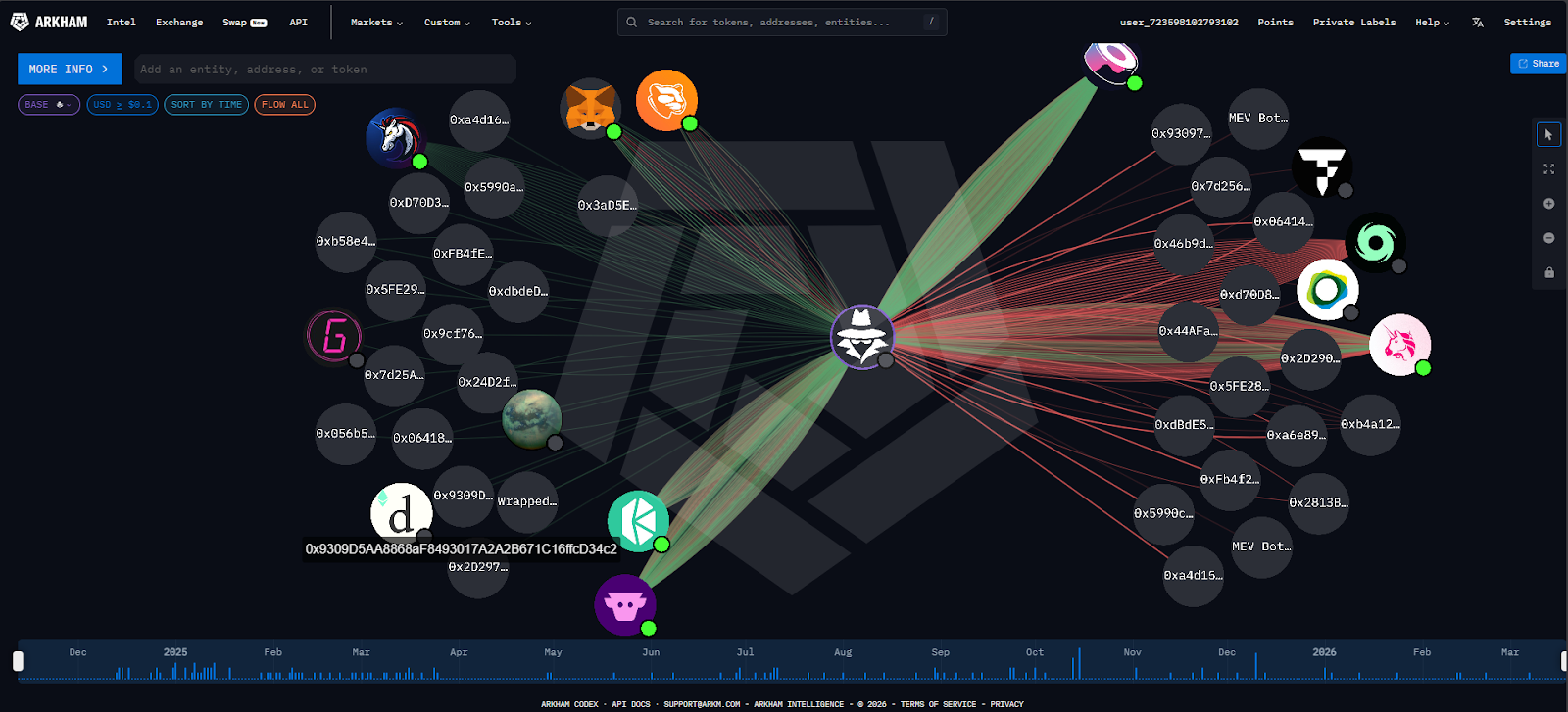
Visualizing linked addresses – Arkham
The motivations vary widely.
Some investigators entered the field after becoming victims of scams themselves and wanted to prevent others from experiencing similar losses. Others are attracted by the challenge of analyzing complex blockchain activity and uncovering hidden connections.
For professional investigators, blockchain forensics has become a growing career path. Some are hired by victims seeking assistance in tracing stolen assets, while others work with compliance teams, exchanges, cybersecurity firms, and law enforcement agencies.
At its core, the work is driven by a desire for transparency and accountability in an industry that still faces significant regulatory and enforcement challenges.
Aspiring crypto investigators should develop expertise in several key areas:
The foundation of every investigation is the ability to read and interpret blockchain data.
Investigators must understand wallet addresses, transaction histories, smart contracts, token transfers, timestamps, and network activity.
Blockchain data alone rarely tells the entire story.
Successful investigators often combine on-chain information with social media profiles, website registrations, public records, court documents, leaked communications, and other publicly available sources.
One of the most valuable investigative techniques involves grouping multiple wallet addresses that appear to be controlled by the same person or organization.
Patterns such as transaction timing, fund movement, and common counterparties can help investigators identify relationships between wallets.
Blockchain investigations require patience, attention to detail, and the ability to connect seemingly unrelated pieces of information into a coherent narrative.
Several platforms have become standard tools for crypto investigators.
Blockchain explorers allow users to examine transaction histories and wallet activity on public networks.
Popular examples include:
These platforms provide visibility into transaction amounts, wallet addresses, timestamps, and smart contract interactions.
Among the most widely used forensic platforms is Arkham Intelligence.
The platform offers advanced features such as:
Arkham also maintains a community-driven database of wallet labels and provides investigative tools that help researchers connect unknown addresses to known entities.
One of the most influential figures in blockchain investigations is ZachXBT, a pseudonymous researcher known for uncovering scams, tracing stolen funds, and publishing detailed forensic reports.
After entering the cryptocurrency market during the ICO era, ZachXBT reportedly taught himself blockchain analytics following losses to fraudulent projects.
His investigations combine blockchain analysis with OSINT techniques, often producing evidence that has been referenced by exchanges, regulators, and law enforcement agencies.
Several of his investigations have contributed to arrests, asset seizures, and heightened scrutiny of suspected criminal operations.
Another prominent investigator is Stephen Findeisen, better known as Coffeezilla.
Unlike purely on-chain researchers, Coffeezilla combines investigative journalism, interviews, documentary-style reporting, and blockchain analysis.
His YouTube investigations have examined controversial crypto projects, celebrity-backed tokens, exchange collapses, and allegations of financial misconduct within the digital asset sector.
Through detailed reporting and interviews, Coffeezilla has become one of the most recognized accountability voices in crypto.
For beginners, the best approach is to start small.
Like cybersecurity or investigative journalism, blockchain forensics is a skill developed through consistent practice and real-world experience.
As cryptocurrency adoption continues to grow, blockchain investigations are becoming increasingly important.
Independent researchers now play a critical role in identifying scams, exposing fraudulent schemes, tracing stolen assets, and improving transparency across the industry.
The combination of public blockchain records, advanced analytics platforms, and collaborative online communities has created an environment where determined investigators can uncover information that was once difficult to access.
For those interested in technology, finance, cybersecurity, and investigative research, blockchain forensics offers a unique opportunity to contribute to the integrity of the digital asset ecosystem.
Blockchain investigators have become an essential part of the cryptocurrency landscape. By combining technical analysis, open-source intelligence, and investigative persistence, they help uncover fraud, support accountability, and strengthen trust in the industry.
While becoming a skilled crypto sleuth requires time and dedication, the tools and educational resources available today make it more accessible than ever for newcomers to begin learning the craft.
Source inspiration: Adapted from reporting and research originally published by Arkham Intelligence’s 0xKira (June 19, 2026).



Copyright © 2025 - The Bit Gazette.