


- Trending
- Comments
- Latest

The cryptocurrency market operates around the clock, presenting both unprecedented opportunities and significant risks for new traders. With over $3.88 to $3.98 trillion in total market capitalization and daily trading volumes exceeding $200 billion, digital assets have evolved from experimental technology into a legitimate asset class attracting institutional investors and retail traders alike.
Crypto prices can go up or down a lot, really fast. This means one can make good money, but it also means the money can be lost just as quickly. Many beginners jump in excited but get caught off guard by the speed and swings of the market.
Entering this volatile landscape requires more than enthusiasm, it demands systematic preparation, risk management discipline, and a thorough understanding of market mechanics.
This comprehensive guide provides the essential roadmap for starting your cryptocurrency trading journey safely and strategically.

Cryptocurrency trading involves buying and selling digital assets to profit from price movements. Unlike traditional stock markets that operate during business hours, crypto markets never close, creating constant opportunities for price speculation across Bitcoin, Ethereum, and thousands of alternative cryptocurrencies.
The fundamental principle remains simple: profit by buying low and selling high, or by shorting assets when prices decline. However, crypto’s extreme volatility—where 10-15% daily price swings are common—amplifies both potential profits and losses exponentially.
Trading focuses on short- to medium-term price movements, typically involving positions held for minutes, hours, days, or weeks. Traders actively monitor charts, news events, and market sentiment to capitalise on volatility.
Investing involves buying and holding cryptocurrencies for months or years, based on long-term fundamental beliefs about technology adoption and market growth.
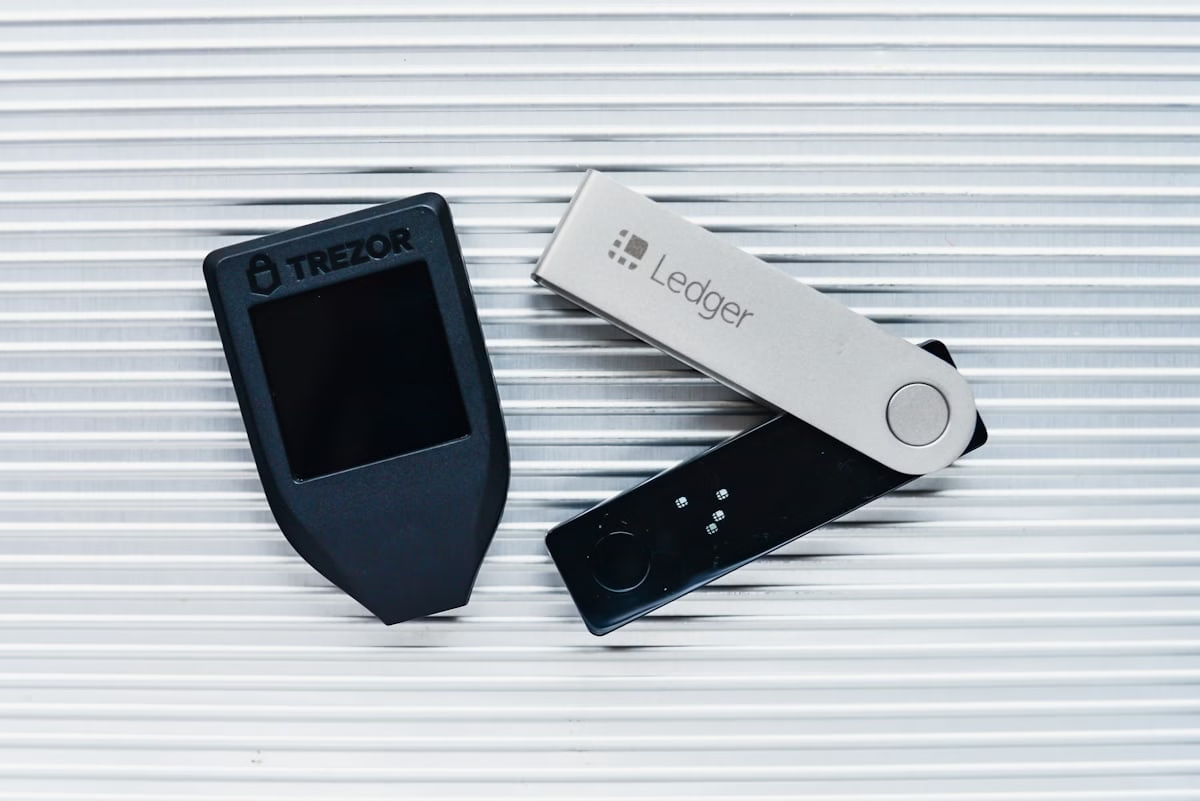
A cryptocurrency wallet is essential infrastructure that stores your private keys—the cryptographic proof of ownership for your digital assets. The security principle “not your keys, not your coins” reflects a fundamental truth: without controlling your private keys, you don’t truly own your cryptocurrency.
Hot Wallets (Software-Based): Hot wallets remain connected to the internet, offering convenience for active trading. Popular options include MetaMask, Trust Wallet, and Exodus. While user-friendly, they’re vulnerable to hacking attempts and malware.
Cold Wallets (Hardware-Based): Cold storage devices like Ledger Nano X and Trezor Model T store private keys offline, providing superior security for larger holdings. These hardware wallets require physical access and authorization for transactions, making them nearly immune to remote attacks.
Your wallet generates a seed phrase—typically 12 to 24 randomly selected words that serve as your master recovery key. This phrase must be:
Warning: The 2014 Mt. Gox exchange collapse, where hackers stole 850,000 Bitcoin, demonstrated the dangers of leaving funds on platforms you don’t control. More recently, the FTX bankruptcy in November 2022 left millions of users unable to access their funds, reinforcing the importance of self-custody.
Exchanges serve as the primary gateway between traditional finance and cryptocurrency markets. Your choice of platform significantly impacts trading costs, security, and available features.
Security and Regulatory Compliance: Research the exchange’s security track record, regulatory licenses, and compliance measures. Look for platforms implementing two-factor authentication (2FA), cold storage for user funds, and regular security audits.
Liquidity and Trading Volume: Higher liquidity ensures tighter spreads and easier order execution. Major exchanges like Binance, Coinbase, and Kraken typically offer superior liquidity across popular trading pairs.
Fee Structure: Trading fees vary significantly between platforms. Most exchanges charge 0.1% to 0.5% per trade, with reduced fees for high-volume traders. Consider both maker fees (adding liquidity) and taker fees (removing liquidity).
User Experience and Tools: Beginners benefit from intuitive interfaces, while advanced traders need sophisticated charting tools, order types, and API access.
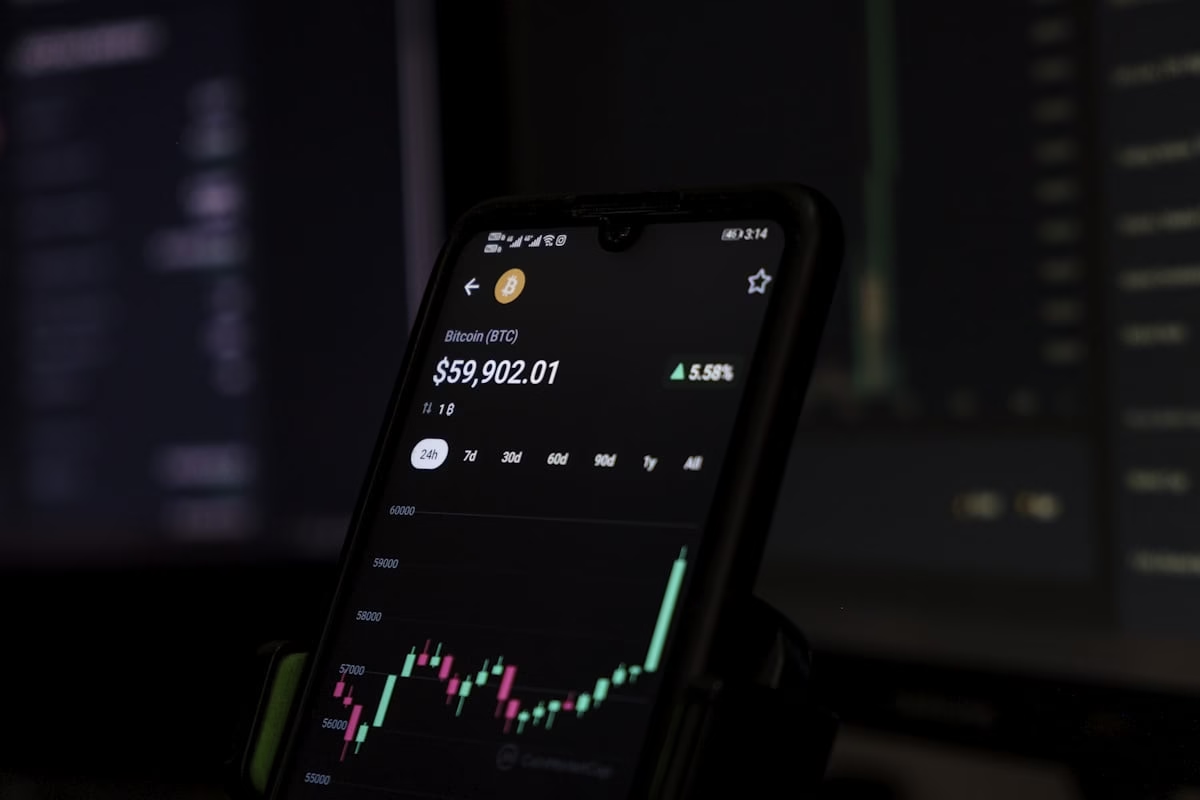
Most exchanges support multiple funding methods, each with distinct advantages and limitations.
Bank Transfers (ACH): Typically the cheapest option with fees under 1%, but can take 1-5 business days to process. Withdrawal restrictions may apply during the clearing period.
Debit/Credit Cards: Instant funding but higher fees (3-4%). Best for immediate market entry when timing is critical.
Peer-to-Peer (P2P) Trading: Essential in regions with banking restrictions. Platforms like Binance P2P allow direct trading with other users using local payment methods.
Cryptocurrency Deposits: Transferring existing crypto holdings between wallets and exchanges. Fastest method for experienced users but requires understanding of network fees and transaction times.
Many traders convert fiat currency to stablecoins like USDT or USDC before trading. These dollar-pegged cryptocurrencies offer:
Understanding order types is crucial for executing effective trading strategies and managing risk.
Market Orders: Execute immediately at the best available price. Idea for urgent entries or exits but less price control, especially in volatile conditions.
Limit Orders: Execute only when the market reaches your specified price. Provides precise control but may not fill if the market doesn’t reach your level.
Stop-Loss Orders: Automatically sell when price drops to a predetermined level, limiting potential losses. Essential for risk management in volatile markets.
Take-Profit Orders: Automatically close profitable positions when reaching target prices, helping lock in gains during emotional market conditions.
Order books display all pending buy and sell orders, revealing market depth and liquidity. Key concepts include:

Professional traders rely on analysis rather than intuition. Two primary approaches dominate cryptocurrency analysis.
Fundamental analysis evaluates the underlying factors driving cryptocurrency value:
Ethereum’s Merge
In September 2022, Ethereum transitioned from proof-of-work to proof-of-stake consensus, reducing energy consumption by 99.95%. This fundamental improvement drove long-term bullish sentiment, with many traders positioning ahead of the upgrade based on fundamental analysis.
Technical analysis uses historical price data and trading volume to predict future movements.
Moving Averages
Relative Strength Index (RSI)
MACD (Moving Average Convergence Divergence)
Bollinger Bands
Professional traders integrate both approaches:

Risk management separates successful traders from those who lose capital quickly. Professional risk management involves multiple layers of protection.
Never risk more than 1-2% of your total capital per trade. This ensures survival during inevitable losing streaks.
Example: With a $10,000 account, risk only $100-200 per trade. If buying Bitcoin at $30,000 with a stop-loss at $29,000, your maximum position size would be $3,000-6,000 worth of Bitcoin.
Stop-losses are non-negotiable for serious traders. Place stops:
Target trades where potential profit exceeds potential loss by at least 2:1. This allows profitability even with a 40% win rate.
Avoid concentration risk by:
Emotional control often determines trading success:
Cryptocurrency markets exhibit cyclical patterns and recurring events that provide trading opportunities and lessons.
Bitcoin’s mining reward halves approximately every four years, historically triggering bull markets:
Trading Strategy Implications: Professional traders often position for halving events 6-12 months in advance, using dollar-cost averaging to build positions gradually.
The Terra ecosystem’s $50 billion collapse provides critical lessons about crypto risks:
What Happened:
TerraUSD (UST), an algorithmic stablecoin, lost its dollar peg during extreme selling pressure. The protocol minted massive amounts of LUNA tokens to defend the peg, causing hyperinflation that crashed LUNA from $85 to near zero in days.
Key Lessons:

FTX’s bankruptcy shocked the industry, wiping out $8 billion in customer funds:
Timeline:
Trading Lessons:
Successful trading requires systematic approaches rather than random speculation.
Define Your Goals
Choose Your Approach: Select strategies matching your personality and schedule:
Trend Following
Breakout Trading
Range Trading
Scalping
Before risking real capital:
Many platforms like TradingView offer paper trading functionality for risk-free practice.
Maintain detailed trading journals recording:
Regular review identifies patterns in successful and unsuccessful trades, enabling systematic improvement.
Learning from others’ errors accelerates your development as a trader.
FOMO (Fear of Missing Out): Chasing price spikes often results in buying tops. Wait for pullbacks or clear breakouts with confirmation.
Panic Selling: Selling at lows during market crashes locks in losses. Predetermined exit strategies prevent emotional decisions.
Revenge Trading: Attempting to quickly recover losses often leads to larger losses. Step away from trading after significant losses.
Overconfidence After Early Wins: Beginner’s luck can lead to oversized positions and inadequate risk management.
Overleveraging: Using excessive margin multiplies both gains and losses. Start with spot trading before considering leverage.
Ignoring Transaction Fees: Frequent trading accumulates significant costs. Factor fees into profit calculations.
Poor Security Practices
Inadequate Research: Buying cryptocurrencies without understanding their fundamentals or technical prospects.
Lack of Diversification: Concentrating investments in single assets or sectors increases portfolio risk.
No Exit Strategy: Entering trades without predetermined profit targets or stop-losses.
Following Hype and Social Media: Making decisions based on social media sentiment rather than analysis.
Overtrading: Excessive trading often reduces returns due to fees and emotional exhaustion.
As skills develop, traders can explore more sophisticated approaches.
Futures Contracts: Agreements to buy/sell assets at future dates. Useful for hedging and speculation without owning underlying assets.
Options: Provide right butlearntthe right not the obligationthe right to buy/sell at specific prices. Complex but powerful for risk management and income generation.
Perpetual Swaps: Popular crypto derivatives with no expiration dates. Enable long and short positions with leverage.
Leverage Considerations: While leverage amplifies profits, it equally magnifies losses. Many exchanges offer 10x-100x leverage, but professional traders typically use minimal leverage to preserve capital.
Spot Arbitrage: Profiting from price differences across exchanges. Requires fast execution and considers transaction costs.
Cross-Exchange Arbitrage: Similar to spot arbitrage but between different trading platforms.
Triangular Arbitrage: Exploiting price differences between three currency pairs on the same exchange.
Trading Bots: Software programs executing trades based on predetermined criteria. Popular for systematic strategy implementation.
API Trading: Direct connection to exchange trading systems for faster execution and advanced order management.
Cryptocurrency trading occurs within evolving regulatory frameworks that vary by jurisdiction.
Most legitimate exchanges require identity verification, including:
In most jurisdictions, cryptocurrency trading creates taxable events:
Stay informed about regulatory changes affecting:
Cryptocurrency trading can be profitable but requires continuous learning and adaptation.
Continuous Learning Resources:
Community Engagement
Join trading communities for:
Professional Development
Consider formal education in:
Capital Growth Strategies:
Technology Upgrades:
Cryptocurrency trading represents an exciting frontier in global finance, offering 24/7 markets, high volatility, and significant profit potential. However, success requires systematic preparation, disciplined risk management, and continuous learning.
The journey from beginner to profitable trader typically takes months or years of dedicated study and practice. Start small, focus on education over profits initially, and prioritise capital preservation above all else.
Remember that markets are constantly evolving. New technologies, regulations, and trading opportunities emerge regularly. Successful traders adapt their strategies while maintaining core risk management principles.
The cryptocurrency market’s volatility creates both tremendous opportunities and substantial risks. Your success will depend not on predicting every market move, but on managing risk effectively, learning from mistakes, and staying disciplined during both winning and losing periods.
Key Takeaways:



Copyright © 2025 - The Bit Gazette.