


- Trending
- Comments
- Latest

OKX has secured a Payments Institution licence in Malta, clearing the regulatory path to offer stablecoin-powered payment services across the European Union ahead of MiCA’s core requirements taking effect in March 2026.
The license positions OKX to continue offering stablecoin-powered payment services across the bloc under the Markets in Crypto-Assets regulation, widely known as MiCA, as well as under the EU’s Second Payment Services Directive (PSD2). With MiCA’s core requirements scheduled to take effect in March 2026, the development places OKX among a growing group of crypto firms racing to lock in regulatory certainty.
For OKX, the approval is more than a compliance milestone. It is a strategic step that strengthens its broader OKX MiCA license ambitions as stablecoins move from crypto-native tools into mainstream financial infrastructure.
Under MiCA and the updated PSD2 framework, crypto-asset service providers that facilitate payments using stablecoins—classified legally as electronic money tokens (EMTs)—must hold either a Payments Institution or an Electronic Money Institution authorization. Without such approval, firms risk losing access to the EU market.
By securing the PI license in Malta, OKX can legally provide stablecoin payment services throughout the European Economic Area via passporting rights, reinforcing its OKX MiCA license pathway.
“We have recently launched real-world payment products, including OKX Pay and our OKX Card, that bring stablecoins into everyday use,” said Erald Ghoos, CEO of OKX Europe. “Securing a Payment Institution license ensures that these products operate on a fully compliant footing.”

That emphasis on “real-world use” highlights the exchange’s wider strategy: tying the OKX MiCA license to consumer-facing products that bridge crypto and traditional finance.
Stablecoins are rapidly becoming a focal point of European crypto regulation, and OKX has been positioning itself accordingly. With regulators increasingly scrutinizing how euro- and dollar-pegged tokens are used in payments, compliance has become a prerequisite rather than an advantage.
The PI license allows OKX to support payment flows involving stablecoins without regulatory ambiguity. This capability is central to the OKX MiCA license narrative, as MiCA introduces strict rules around issuance, custody, and redemption of EMTs.
Industry analysts note that exchanges unable to meet these standards may be forced to scale back offerings or exit certain EU markets altogether. Against that backdrop, OKX’s early move strengthens confidence among partners, users, and regulators.
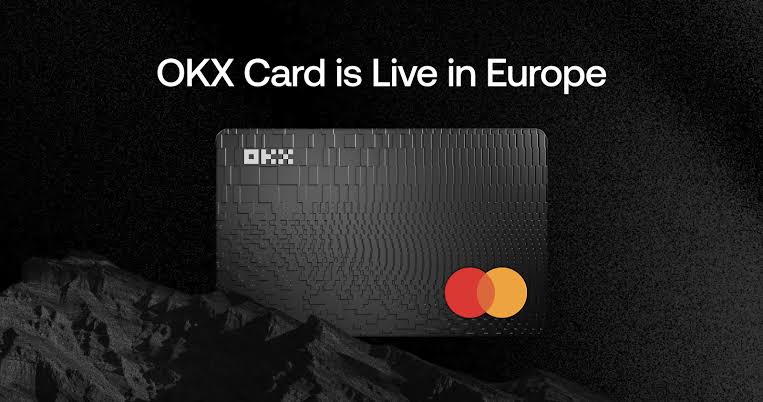
The licensing announcement follows OKX’s recent launch of a crypto payment card in Europe in partnership with Mastercard. The card enables users to spend digital assets at millions of merchants worldwide, converting crypto balances into fiat at the point of sale.
The card rollout directly complements the OKX MiCA license strategy by embedding compliant stablecoin payments into daily transactions, from retail purchases to online services.
According to people familiar with the matter, EU regulators have been paying close attention to crypto cards because they blur the line between digital assets and traditional payments. Holding a PI license addresses many of those concerns by ensuring consumer protections and operational safeguards align with PSD2 standards.
Malta has emerged as a key jurisdiction for crypto firms seeking EU-wide compliance. Its regulatory framework has been widely viewed as aligned with MiCA’s objectives, making it an attractive base for exchanges pursuing passportable licenses.
By anchoring its PI authorization in Malta, OKX strengthens the credibility of its OKX MiCA license roadmap while benefiting from a regulator experienced in supervising digital asset businesses.
A senior EU compliance consultant said the choice reflects “a calculated move to balance regulatory clarity with operational flexibility,” noting that Malta-based licenses are likely to be closely scrutinized—but also widely recognized—under MiCA.
Beyond payments and cards, OKX has been actively investing in the stablecoin ecosystem itself. OKX Ventures, the exchange’s innovation and investment arm, recently backed STBL, a platform focused on stablecoin issuance.
That investment underscores how the OKX MiCA license is part of a broader, vertically integrated strategy—one that spans trading, payments, and infrastructure.
“Exchanges that understand stablecoins as infrastructure rather than just trading pairs will be better positioned under MiCA,” said a Europe-based digital assets policy researcher. “OKX appears to be building exactly that.”
As MiCA reshapes the European crypto landscape, regulatory certainty is fast becoming a competitive advantage. Firms that secure approvals early can focus on product development while rivals remain entangled in licensing processes.
The OKX MiCA license approach reflects this thinking. By aligning payments, cards, and stablecoin services under a single compliance umbrella, OKX reduces operational risk while expanding its addressable market.
Importantly, the PI license aligns with EU requirements that formally take effect in March 2026, giving OKX a head start of more than a year. That runway could prove critical as enforcement ramps up.
For the broader industry, OKX’s move sends a clear message: Europe’s regulatory era has begun. The days of operating cross-border payment services without explicit authorization are ending.
The OKX MiCA license story illustrates how exchanges can adapt—not by retreating, but by embedding regulation into their growth strategy. As stablecoins edge closer to everyday finance, compliance will determine who gets to participate.
With its Malta PI license secured, OKX is betting that being early, visible, and compliant will pay off. And as MiCA comes into force, the OKX MiCA license may become a benchmark for how global exchanges navigate Europe’s new crypto rulebook.



Copyright © 2025 - The Bit Gazette.