






- Trending
- Comments
- Latest

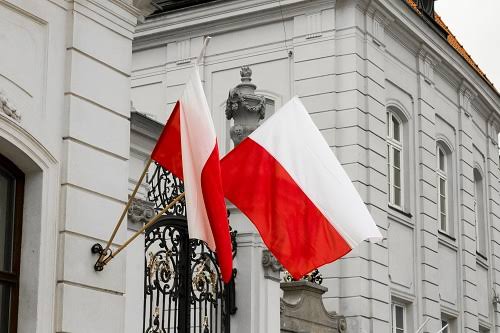
Poland’s president has rejected the country’s crypto regulation bill for the third time, leaving the EU member state without MiCA-compliant legislation less than three weeks before the bloc’s July 1 compliance deadline, and forcing domestic crypto firms to consider seeking licences elsewhere in Europe.
The standoff between President Nawrocki and Prime Minister Donald Tusk’s government has prolonged months of political wrangling and created uncertainty for Poland’s domestic cryptocurrency sector. With less than three weeks remaining before the EU deadline, the future of the Poland crypto bill remains unclear.
The latest veto marks the third time President Nawrocki has blocked the legislation after previously rejecting it in November and February. According to the president, lawmakers failed to address nearly all of the amendments proposed by his office.
“Bad law does not become good law simply because it is passed a hundred times,” — Karol Nawrocki, President of Poland.
Nawrocki said only one of the 16 amendments submitted by his office had been accepted. He argued that the proposed law grants excessive authority to Poland’s Financial Supervision Authority (KNF), creates the risk of overregulation, and does not adequately protect consumers.
The president insisted that he supports cryptocurrency regulation but believes it should be implemented in a more balanced manner.
“The bill will be signed into law if it is amended,” — Karol Nawrocki, President of Poland.
Among the changes sought by the president are stronger judicial oversight of regulatory decisions, shorter timeframes for freezing crypto accounts, and broader state liability when accounts are frozen unlawfully. However, the Sejm, Poland’s parliament, rejected those proposals when it approved the bill in May by a vote of 241 to 200.
The latest developments have deepened divisions surrounding the Poland crypto bill, with both sides showing little willingness to compromise.
Prime Minister Donald Tusk responded swiftly to the veto, suggesting that political considerations could be influencing the president’s actions.
“He’s probably more implicated in this than anyone thought,” — Donald Tusk, Prime Minister of Poland.
Tusk did not provide further details, but his comments have fueled speculation surrounding the collapse of Zondacrypto, a Polish-founded cryptocurrency exchange registered in Estonia. Authorities are investigating the platform over allegations of fraud and money laundering involving approximately 30,000 customers who reportedly lost at least 350 million zloty, equivalent to more than $95 million.
The prime minister had previously accused Zondacrypto of sponsoring conservative political events, including a CPAC conference in Rzeszów where Nawrocki received support during his presidential campaign.
In April, citing information from Poland’s domestic intelligence agency ABW, Tusk alleged that the exchange’s chief executive donated to foundations linked to opposition figures and maintained ties with Russian organized crime.
President Nawrocki rejected those claims and accused government agencies of relying on unreliable sources.
“Government-controlled agencies, instead of verifying the credibility of the informant, decided to use the story to attack political opponents,” — Karol Nawrocki, President of Poland.
The controversy has added another layer of complexity to the debate over the Poland crypto bill, which has increasingly become intertwined with broader political disputes.
Had the legislation become law, the KNF would have been appointed as the principal regulator of Poland’s cryptocurrency market.
Under the provisions of the Poland crypto bill, the authority would have been empowered to sanction crypto companies, freeze fiat and digital asset accounts, and suspend transactions for up to 96 hours, with possible extensions lasting as long as six months. The regulator would also maintain a database of websites suspected of facilitating fraudulent crypto activities.
Critics from opposition parties and sections of the crypto industry argue that these measures exceed the requirements outlined under MiCA.
The nationalist Konfederacja party proposed a more limited approach to implementing the EU framework. Nevertheless, parliament’s Public Finance Committee opted to support the government-backed version in May.
Debate over the scope of the Poland crypto bill has become one of the main reasons behind the repeated vetoes.
The uncertainty surrounding the Poland crypto bill comes at a critical moment. Poland’s Financial Supervision Authority has warned that failure to enact the legislation before July 1 could have serious consequences for domestic crypto businesses.
Without national legislation, Polish companies may lose the ability to obtain licenses required under the European Union’s MiCA framework. As a result, firms may have to seek authorization in other EU member states to continue operating.
At the same time, the Polish market could become increasingly accessible to foreign operators already licensed elsewhere within the bloc.
Finance Minister Andrzej Domański criticized the president’s latest move, saying that Nawrocki had “for the third time chose not to stand on the side of the financial security of Poles.”
For Prime Minister Tusk and his allies, the challenge now is whether they can secure enough support to revive the Poland crypto bill. Previous attempts to override the presidential veto have fallen short. In April, lawmakers failed to gather the 263 votes required, with only 243 deputies supporting the effort.
As the July 1 deadline approaches, the fate of the Poland crypto bill remains uncertain, leaving Poland isolated within the European Union and forcing the country’s cryptocurrency sector to prepare for an increasingly complicated regulatory landscape.



Copyright © 2025 - The Bit Gazette.

