

- Trending
- Comments
- Latest

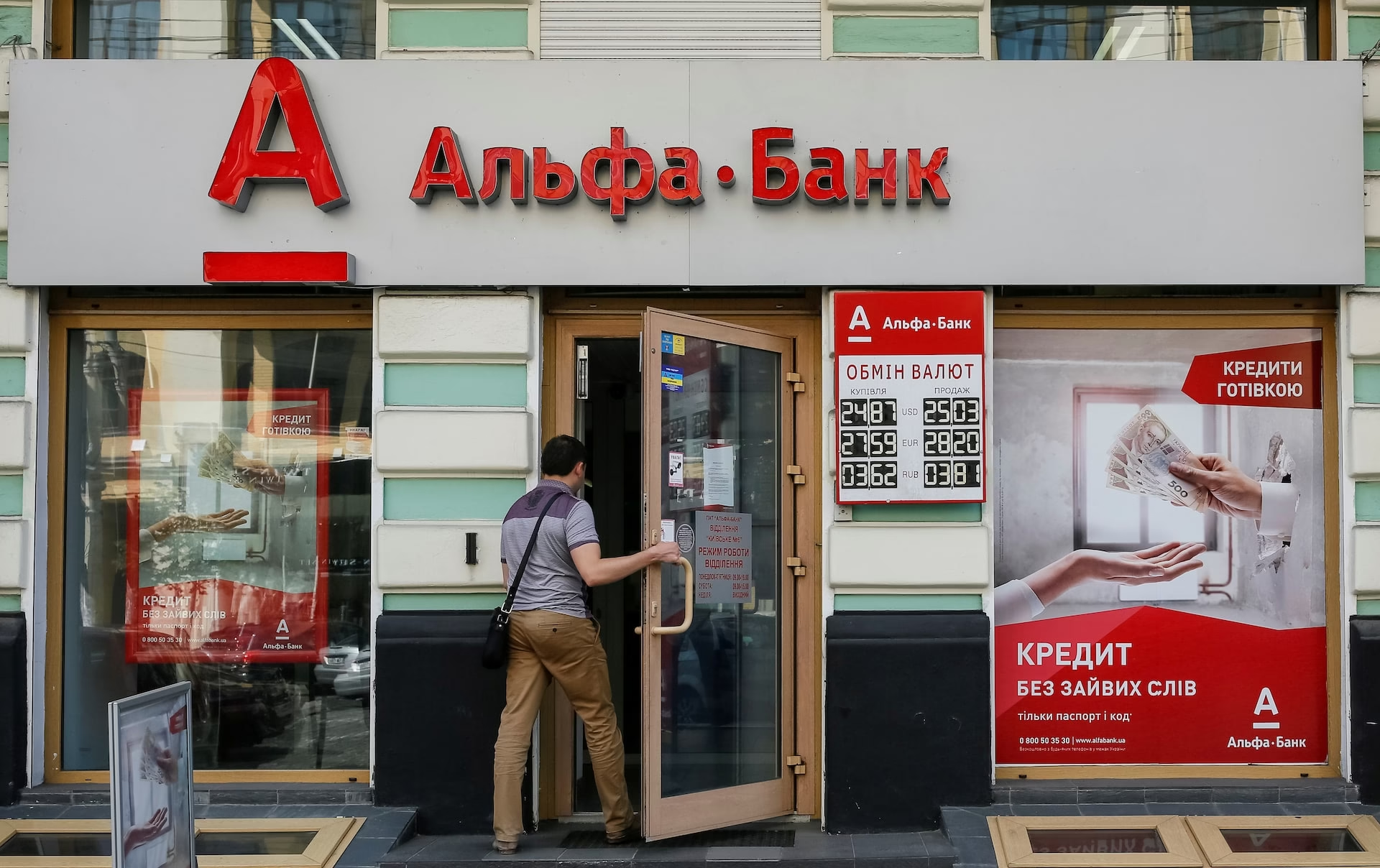
Alfa-Bank has begun testing cryptocurrency trading, including Bitcoin, Ethereum, Solana and Tether, through its Alfa Investments brokerage app, limited for now to a select group of qualified investors, the bank confirmed this week.
The pilot, confirmed this week by the bank, comes as Russian financial institutions position themselves for a broader rollout of digital asset products ahead of anticipated cryptocurrency legislation expected later this year.
For crypto investors, the development shows a growing trend: traditional banks are increasingly competing to become the primary gateway to regulated digital assets.
Alfa-Bank confirmed that it has started testing cryptocurrency trading through its Alfa Investments application with a select group of professional investors.
According to the bank, the service is currently available only within a controlled pilot program but is expected to expand once Russia finalizes its regulatory framework governing digital assets.
The brokerage interface reportedly includes access to major cryptocurrencies including Bitcoin, Ethereum, Solana, Tether, USD Coin, Litecoin and Zcash.
The bank also said it is building the infrastructure required for cryptocurrency custody and crypto-to-ruble conversion services, targeting a broader retail rollout during the fourth quarter of 2026, subject to regulatory approval.
The initiative reflects a broader shift among Russia’s largest financial institutions, many of which are preparing digital asset offerings as lawmakers finalize legislation governing cryptocurrency trading and custody.
“The bank is implementing crypto services in the Alfa Investments application. A wider range of clients will receive access shortly after the regulatory acts expected this autumn are adopted.” Alfa-Bank Press Service, via RBC Investments.
Alfa-Bank is not entering the market alone. State-owned Sberbank, alongside other major lenders including T-Bank and VTB, has also announced plans to expand regulated cryptocurrency services, including digital asset custody platforms.
Several banks are preparing to obtain custody licenses under Russia’s evolving digital asset legislation. The competition reflects a strategic shift inside Russia’s financial sector.
Rather than allowing offshore exchanges to dominate digital asset activity, domestic banks appear determined to provide regulated alternatives integrated into existing banking infrastructure.
Russia’s proposed legal framework would permit banks and licensed financial institutions to operate cryptocurrency services while maintaining restrictions on using cryptocurrencies for domestic payments.
Regulators instead envision crypto primarily as an investment asset and a tool for certain international transactions.
The move also aligns with Russia’s broader efforts to develop domestic financial infrastructure amid ongoing international sanctions and changing global payment dynamics.
Despite growing enthusiasm from major banks, the pace of adoption still depends largely on regulatory certainty.
Russia’s proposed law “On Digital Currency and Digital Rights” has experienced multiple delays but is now expected to establish the legal framework governing cryptocurrency circulation, custody, and licensed market participants.
Additional regulations from the Bank of Russia are expected before full-scale retail services can begin.
First Deputy Chairman Vladimir Chistyukhin has previously indicated that the regulatory acts necessary to launch legal cryptocurrency operations could be completed later this year.
Industry observers note that banks are effectively building infrastructure before regulation fully arrives, allowing them to move quickly once legal approval is granted.
For global crypto investors, Alfa-Bank’s pilot represents more than a domestic product launch, it illustrates how traditional financial institutions continue integrating digital assets into mainstream banking.
Unlike earlier cycles, where banks largely avoided direct cryptocurrency exposure, today’s strategy focuses on regulated custody, compliant trading platforms, and blockchain-based investment products that operate alongside conventional financial services.
The trend mirrors developments across multiple jurisdictions where banks increasingly view digital assets as another asset class rather than an alternative financial system.
As institutional participation expands, competition among banks could reshape how retail and professional investors access cryptocurrencies, potentially reducing reliance on standalone exchanges while increasing regulatory oversight.
Although Russia’s regulatory framework remains unfinished, the country’s largest banks appear unwilling to wait.
Their investments in custody infrastructure, brokerage integration, and blockchain-based financial products suggest they expect digital assets to become a permanent component of modern banking rather than a temporary experiment.



Copyright © 2025 - The Bit Gazette.