Tag: binance

  • Pi coin price spikes 3.4% amid Pi2day buzz as experts warn of early correction

    Pi coin price spikes 3.4% amid Pi2day buzz as experts warn of early correction

    Pi coin price spiked 3.4% in the past 24 hours following the reveal of major ecosystem milestones from the Pi2Day 2025 Challenge, but broader market signals are flashing caution.

    The Pi coin price, now hovering around $0.45, got a jolt of momentum as the Pi Core Team (PCT) unveiled staggering engagement stats from the Pi2Day 2025 campaign.

    But despite this rally, the cryptocurrency continues to battle headwinds, with its longer-term trend still facing considerable downward pressure.

    Pi2Day 2025: Driving Pi network innovation

    Between June 28 and July 7, the Pi2Day 2025 Ecosystem Challenge energized the Pi Network community, with participation from over 2.6 million Pioneers, according to the official Pi Core Team blog.

    “The eight-step Pi2Day Ecosystem Challenge walked Pioneers through Pi2Day’s new releases: Pi App Studio, Ecosystem Directory Staking, updated Node tools, and more,” the PCT noted.

    Out of the millions who began the challenge, 761,000 Pioneers completed all eight tasks, earning exclusive usernames and color badges.

    The Pi App Studio—a major release—saw remarkable traction with 14,100 custom apps publishedand 7,600 chatbot apps created during the event.

    Adding to the network’s utility, 34,800 users actively engaged in development, indicating a clear appetite for building within the Pi ecosystem.

    Staking frenzy without rewards? Pioneers still all in

    One standout metric: 37.7 million Pi coins were staked across 1,450+ apps despite zero direct incentives.

    The Ecosystem Directory Staking feature saw 16,700 users boost app visibility with their staked tokens.
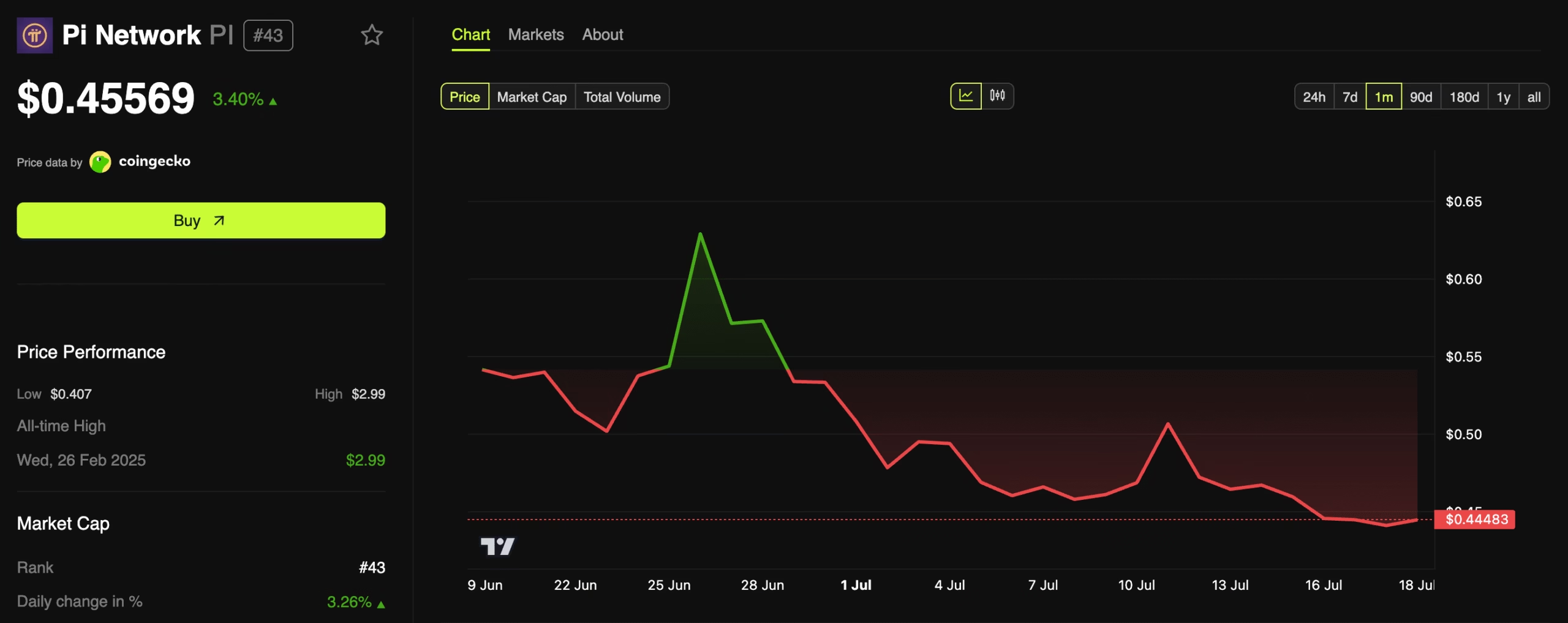
    Pi Coin Price Performance. Source: BeInCrypto
    Pi Coin Price Performance. Source: BeInCrypto

    Currently, over 25 million Pi remain actively staked—underscoring strong long-term belief in the network.

    “With thousands of apps created, millions of Pi staked, and strong global participation in the Ecosystem Challenge, Pi2Day 2025 highlighted how new tools and programs are being used actively by the community,” the team added in their July update.

    Despite short-term bullishness, Pi coin price remains locked in a broader decline. Data from CoinGecko shows a 18.6% drop over the past 30 days, making Pi one of the top losers among major cryptocurrencies.

    Even the recent market-wide rally—pushing Bitcoin to new highs—has failed to lift Pi out of its slump.

    According to BeInCrypto, PI briefly surged to $0.53 before slipping back, reflecting weak momentum.

    Exchange activity suggests mounting sell pressure

    Alarmingly, Pi token supply on centralized exchanges continues to climb. According to Piscan.io, holdings on CEXs have ballooned from 384 million to 391 million PI this week alone.

    “Expect way more volatility and most likely a hard time for Pi’s price action over the coming months,” warned one Reddit user. “With 139M PI unlocking in August and another 170M in December, this will put serious pressure on the market.”

    Token unlock schedules can significantly impact price, especially if demand remains stagnant and liquidity shallow. For Pi, the upcoming unlocks could be a pivotal moment.


    Community divided: frustration grows, but hope lingers

    On platforms like Reddit and X, sentiment is increasingly polarized. Some Pioneers are openly frustrated over the lack of transparency and decentralized development.

    “This bullrun is OVER for PI… There’s no liquidity, the unlocks are overwhelming, and the Core Team refuses to decentralize,” one post read.

    Yet others see a silver lining. Some are pointing to technical chart patterns, such as a descending wedge—a potentially bullish formation signaling a reversal.

    “Pi is undervalued. On Sept 14th, the six-month rolling window ends, and we could see forfeited Pi return to mining. That might be the scarcity trigger,” another Pioneer noted.

    The Pi coin price remains one of the most talked-about metrics in crypto circles right now. While Pi2Day showcased undeniable community strength and ecosystem growth, traders and long-term holders remain divided on whether the recent gains are sustainable or just another bounce in a bearish cycle.

    With massive token unlocks looming and exchange supply swelling, Pi’s future could hinge on renewed developer incentives, broader adoption of the Pi App ecosystem, and increased transparency from the Core Team.

    For now, the Pi coin price may keep swinging—but one thing is clear: it’s a battleground worth watching.

  • Solana price movement triggers $2.8M short squeeze as SOL surges past $176

    Solana price movement triggers $2.8M short squeeze as SOL surges past $176

    The Solana price movement erupted into chaos over the past 24 hours, with a violent 14,602% liquidation imbalance crushing short traders as SOL rallied toward $178.

    Data from CoinGlass reveals that over $2.82 million in bearish positions were wiped out in a single hour during the surge, marking one of the most aggressive short squeezes in recent weeks.

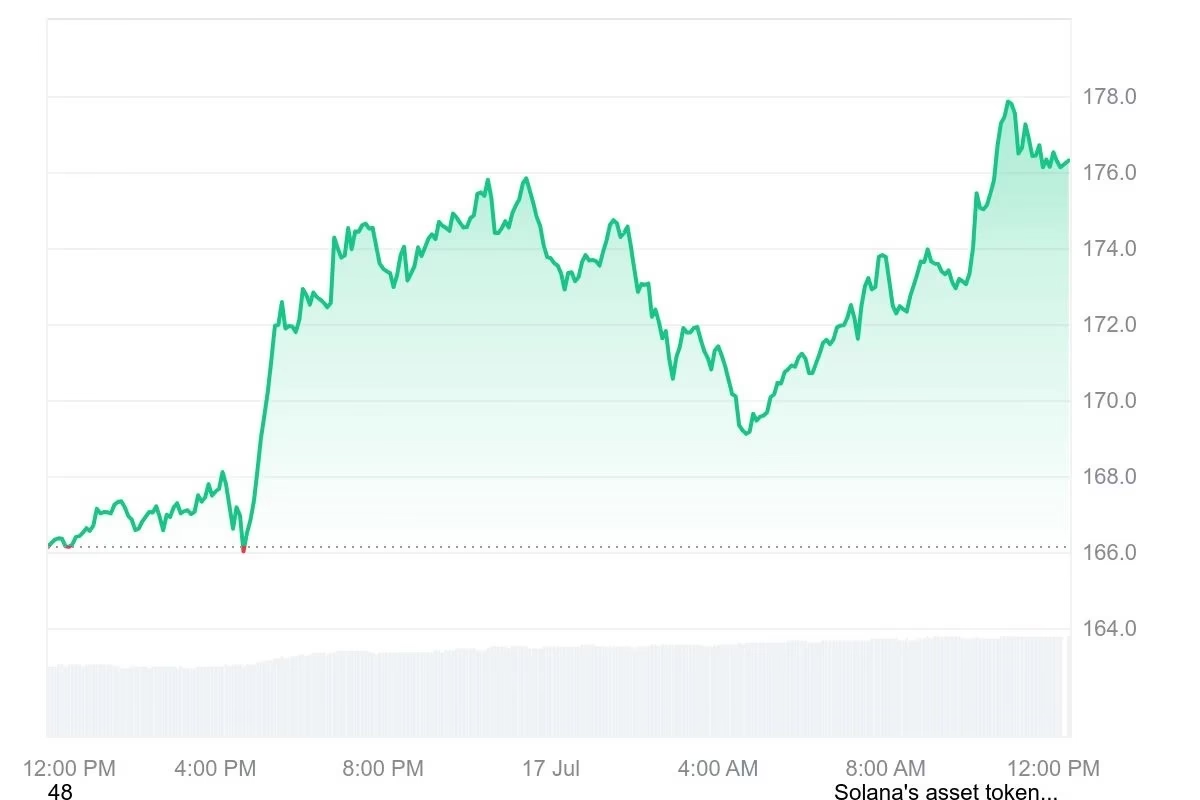
    The rally briefly propelled Solana to $178.07 before a slight pullback, leaving the market firmly in the bulls’ grip.

    Short sellers crushed in hourly bloodbaths

    The shocking Solana price movement not only surprised retail traders but caught institutional short-sellers off guard.

    The liquidation imbalance—an eye-watering 14,602% in favor of longs—is one of the highest seen in recent weeks. Longs only suffered minimal damage, with just $19,180 wiped out in the same hour.

    “This kind of imbalance is rare and signals intense one-sided pressure,” said James Lavish, managing partner at Bitcoin Opportunity Fund. “Solana is proving itself as more than a speculative asset—it’s attracting serious capital and user volume.”

    While the Solana price movement may seem sudden, the groundwork for this rally has been building over days. On-chain metrics show growing network revenue, soaring transaction fees, and increased user adoption—all bullish signs.

    SOL Daily Price Chart | Source: CoinMarketCap
    SOL Daily Price Chart | Source: CoinMarketCap

    Data from CryptoFees.info reveals that Solana generated $17.37 million in fees, eclipsing rivals like Ethereum and Tron, and proving that user engagement on the blockchain is surging. Analysts see this as a strong fundamental tailwind.

    Solana’s ecosystem is red hot,” noted Rachel Lin, CEO of SynFutures. “From NFT activity to DeFi protocol growth, everything is pushing the price north.”

    Whales fuel the Solana price movement

    In tandem with rising user activity, whale movements suggest that big money is now circling Solana.

    High-stakes wallets have been accumulating SOL aggressively over the past 72 hours, a move analysts interpret as smart money anticipating a break above the $200 mark.

    This pattern of accumulation supports the recent price surge, with whale wallets choosing to hold rather than sell—a sign of confidence in long-term gains.

    As of press time, Solana trades at $176.35, representing an 8.23% gain in the past 24 hours, according to CoinMarketCap. It has climbed from a low of $166.02 to its current level, with strong volume and bullish technicals pointing to more upside.

    If momentum continues, Solana could challenge the $200 psychological resistance—a level that, if broken, might open the door to explosive price action.

    “This is no longer just a pump—it’s a full-blown rally backed by fundamentals,” said Chris Burniske, partner at Placeholder VC. “The Solana price movement is gaining structural support.”

    Final thoughts: A market turning point?

    The Solana price movement marks a potential turning point for the altcoin, especially in a market hungry for breakout narratives. With shorts devastated and whales piling in, the crypto community is watching closely.

    Whether this rally is sustained or corrects sharply, one thing is clear—the Solana price movement has captured the spotlight and reignited bullish sentiment across the board.

    The Solana price movement has become the center of attention in the crypto market. With whales backing the rally and fundamentals strengthening, the Solana price movement shows no signs of slowing.

    Traders are closely monitoring the Solana price movement, as each surge confirms bullish sentiment. As momentum builds, the Solana price movement could redefine short-term market dynamics.

  • BNB Chain targets 20,000 TPS and native privacy in 2026 to rival centralized finance

    BNB Chain targets 20,000 TPS and native privacy in 2026 to rival centralized finance

    BNB Chain is making a radical pivot in its evolution, prioritizing TPS and native privacy in 2026 as core pillars to challenge traditional finance giants.

    In a newly unveiled roadmap, the blockchain revealed plans to achieve 20,000 transactions per second and integrate built-in privacy features, aiming to close the gap between decentralized networks and the speed, security, and user control expected from centralized systems.

    With sub-cent fees and near-instant finality already in place, this upgrade could redefine scalability for Web3 mass adoption.

    TPS and native privacy in 2026 are central to BNB Chain’s strategy to close the gap between decentralized networks and centralized exchanges. According to its report, “The Future of BNB Chain:

    An Outlook for the Rest of 2025 & 2026,” the project is entering a critical transition phase with the goal of marrying speed, scalability, and user-centric privacy at an unprecedented scale.

    Redefining blockchain performance

    The TPS and native privacy in the 2026 roadmap builds upon what has already been a breakout year for BNB Chain.

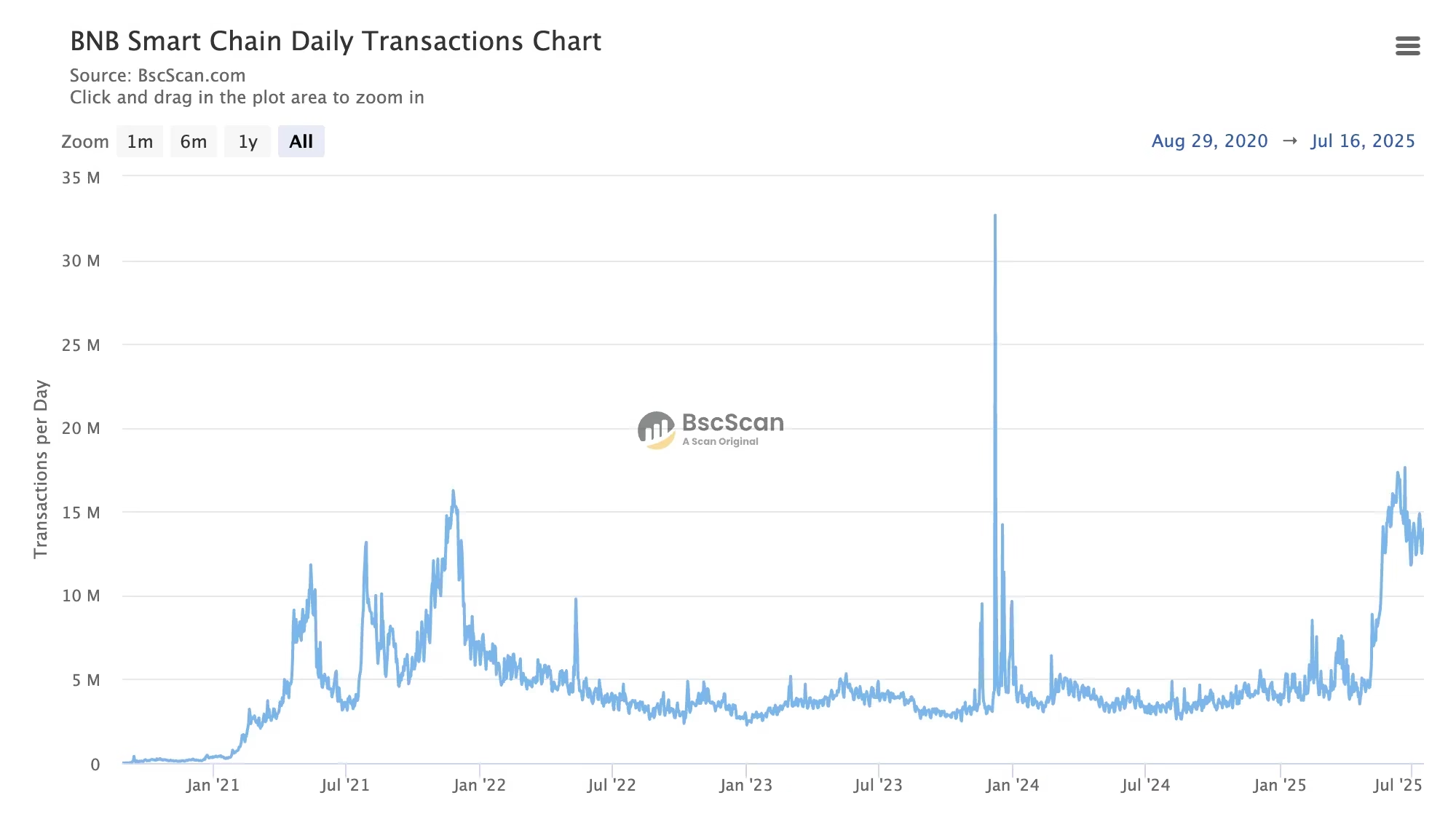
    The platform has halved its block production time to 0.75 seconds, slashed finality to just 1.875 seconds, and enabled daily transaction volumes to soar to an average of $9.3 billion.

    A record-setting 17.6 million transactions in a single day underscores the growing demand for faster and cheaper blockchain solutions.

    “BNB Chain is no longer competing with other blockchains—it’s now gearing up to compete with traditional finance and centralized exchanges,” said Yi He, co-founder of Binance, in a recent developer update.

    TPS and native privacy in 2026 are not aspirations—they are requirements for Web3 mass adoption.”

    Sub-cent gas fees and fairer transactions

    Cost efficiency is another major pillar of the project. With average gas fees dropping to $0.01, BNB Chain has established itself as one of the most economical Layer-1 networks in the crypto ecosystem.

    Even more notably, it achieved a 95% reduction in harmful Miner Extractable Value (MEV) activity, a feat rarely matched in public chains.

    BNB Chain daily transactions. Source: Bscscan
    BNB Chain daily transactions. Source: Bscscan

    These advancements are preparing the foundation for the upcoming 2026 upgrades, where TPS and native privacy in 2026 take center stage in the broader architecture overhaul.

    Native privacy: The next frontier

    In today’s hyper-connected world, privacy is no longer a luxury—it’s a demand. Recognizing this shift, BNB Chain plans to natively embed privacy features at the protocol level by 2026. This includes zk-based privacy protections and encrypted transactions without compromising speed.

    “Privacy will be native, not bolted on,” said Arno Lunen, Head of BNB Chain’s architecture committee. “We’re not building a side feature. We’re redesigning the protocol stack from the ground up. TPS and native privacy in 2026 are at the core of this transformation.”

    This architectural shift is critical in making Web3 more viable for industries like decentralized finance, gaming, and digital identity management—all sectors where data protection is crucial.

    Rust-based clients and super instructions

    To make TPS and native privacy in 2026 a technical reality, BNB Chain is engineering a Rust-based client designed for performance at scale.

    The integration of “super instructions” will allow for hyper-optimized transaction batching, while a revamped StateDB will support scalable storage with rapid access.

    Together, these updates aim to deliver a blockchain capable of processing over 20,000 TPS with sub-150 millisecond finality—numbers that were once only achievable by centralized systems.

    BNB Chain’s 2026 roadmap doesn’t just target high throughput and privacy—it’s about scale. The platform is preparing to onboard over 200 million users, an audacious yet strategic goal in an environment where centralized liquidity is rapidly migrating on-chain.

    “With the right infrastructure, we believe blockchain can match or exceed traditional systems,” said Dominic Williams, Founder of DFINITY and advocate for decentralized scalability.

    “BNB Chain’s commitment to TPS and native privacy in 2026 reflects the kind of forward-thinking that will drive Web3 into the mainstream.”

    From Binance affiliation to independent giant

    Once viewed primarily as part of Binance’s ecosystem, BNB Chain is aggressively positioning itself as a standalone Layer-1 juggernaut.

    Its 2026 vision expands far beyond exchange services, with use cases spanning global finance, enterprise systems, and real-time Web3 gaming.

    With the relentless pursuit of TPS and native privacy in 2026, BNB Chain isn’t just upgrading—it’s rewriting what’s possible for decentralized infrastructure.

    The roadmap for TPS and native privacy in 2026 presents BNB Chain as more than just a technical powerhouse—it’s an ideological statement about what the future of blockchain must look like: fast, secure, and private by design.

    If BNB Chain executes on even half of these promises, it may not just catch up with centralized systems—it could redefine the industry entirely.

  • Tech titan Peter Thiel snaps up 9.1% stake in Ethereum treasury startup BitMine

    Tech titan Peter Thiel snaps up 9.1% stake in Ethereum treasury startup BitMine

    Ethereum treasury startup BitMine just received a powerful vote of confidence from tech billionaire Peter Thiel, who has acquired a significant 9.1% stake in the company.

    This bold investment places BitMine, once a Bitcoin miner, at the forefront of Ethereum-based institutional strategies.

    BitMine disclosed the news in a recent U.S. Securities and Exchange Commission (SEC) filing.

    The filing revealed that Thiel made his move through his renowned venture vehicle, Founders Fund Growth II Management.

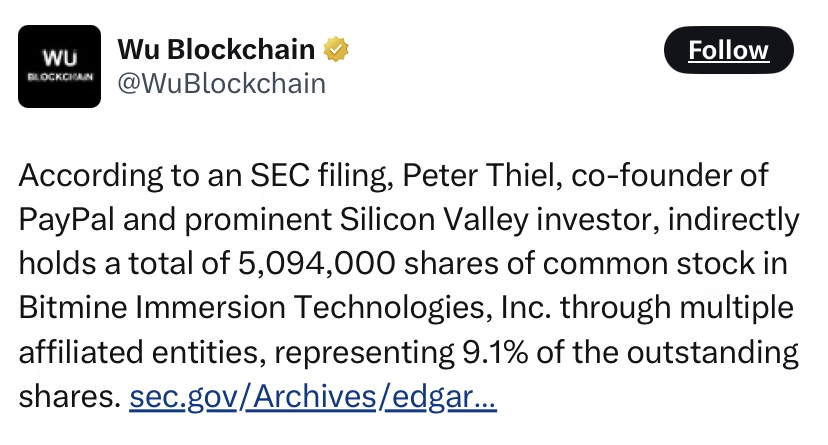
    The purchase gives Thiel control of approximately 5.09 million BMNR shares, translating into a 9.1% ownership of the Nasdaq-listed firm.

    From Bitcoin mining to Ethereum treasury powerhouse

    Once a pure Bitcoin mining outfit, BitMine has undergone a radical pivot under the leadership of CEO Jonathan Bates and newly appointed chairman Tom Lee.

    Now, the company holds a staggering 163,000 ETH — currently worth around $500 million — making it one of the largest Ethereum treasury startup in the public market.

    “Ethereum is not just a cryptocurrency — it’s a programmable platform for the future of finance,” said Tom Lee, co-founder of Fundstrat Global Advisors, in a recent interview.

    “We believe Ethereum will underpin smart contracts, stablecoins, and real-world financial systems. BitMine is aligning itself with this future.”

    The $250 million private placement that brought Thiel into the fold closed on July 9. Alongside Thiel’s stake, major crypto-native firms including Pantera Capital, Galaxy Digital, and Kraken Ventures also participated, solidifying BitMine’s status as a legitimate and ambitious Ethereum treasury startup.

    “The institutional support we’re seeing reflects growing confidence in Ethereum’s evolving role in global finance,” said BitMine CEO Jonathan Bates.

    “Our strategy isn’t speculative — it’s structural. Ethereum is becoming the foundation for decentralized finance and beyond.”

    Thiel’s Ethereum bet is symbolic—and strategic

    Peter Thiel’s involvement may be classified as a “passive investment” according to the SEC filing, but the symbolism of his backing is loud and clear.

    Known for spotting transformative trends early — including Facebook, Palantir, and SpaceX — Thiel’s entry into the Ethereum arena validates BitMine’s thesis and trajectory.

    Source: x/WuBlockchain
    Source: x/WuBlockchain

    “Peter Thiel doesn’t invest lightly,” said Alex Thorn, Head of Firmwide Research at Galaxy Digital.

    “His involvement signals to markets that Ethereum is maturing as an institutional asset. It’s not just a smart contract chain anymore. It’s the backbone of a new financial system.”

    Thiel’s investment also aligns him with Tom Lee’s bullish stance on Ethereum, which he recently described as “on the brink of a major breakout.”

    Ethereum treasury startup Role in a changing market

    As Ethereum increasingly proves its value through staking, real-world asset tokenization, and institutional-grade DeFi applications, companies like BitMine are stepping in to consolidate treasuries and infrastructure.

    This positions BitMine not just as a token holder, but as an emerging Ethereum treasury startup capable of shaping financial services.

    “The world is waking up to Ethereum’s potential,” said Dan Morehead, CEO of Pantera Capital. “BitMine’s treasury strategy could become a blueprint for how public companies gain long-term exposure to decentralized infrastructure.”

    Thiel’s broader crypto push

    Notably, Thiel’s investment in the Ethereum treasury startup comes on the heels of his participation in backing Erebor, a newly launched U.S. bank focused on supporting startups and digital assets in the post-SVB era.

    This further demonstrates his conviction in crypto’s role within future banking and capital systems.

    Thiel’s move into BitMine is more than a financial maneuver — it’s a clear signal to both Wall Street and crypto natives that Ethereum’s institutional age has arrived.

    For BitMine, it means credibility, capital, and a seat at the table in building Ethereum’s financial layer.

    With 163,000 ETH on its balance sheet, strategic leadership, and high-profile investors, BitMine is quickly cementing its status as a dominant Ethereum treasury startup, and the market is paying attention.

  • US June CPI print shows inflation rose to 2.7%, crypto markets react

    US June CPI print shows inflation rose to 2.7%, crypto markets react

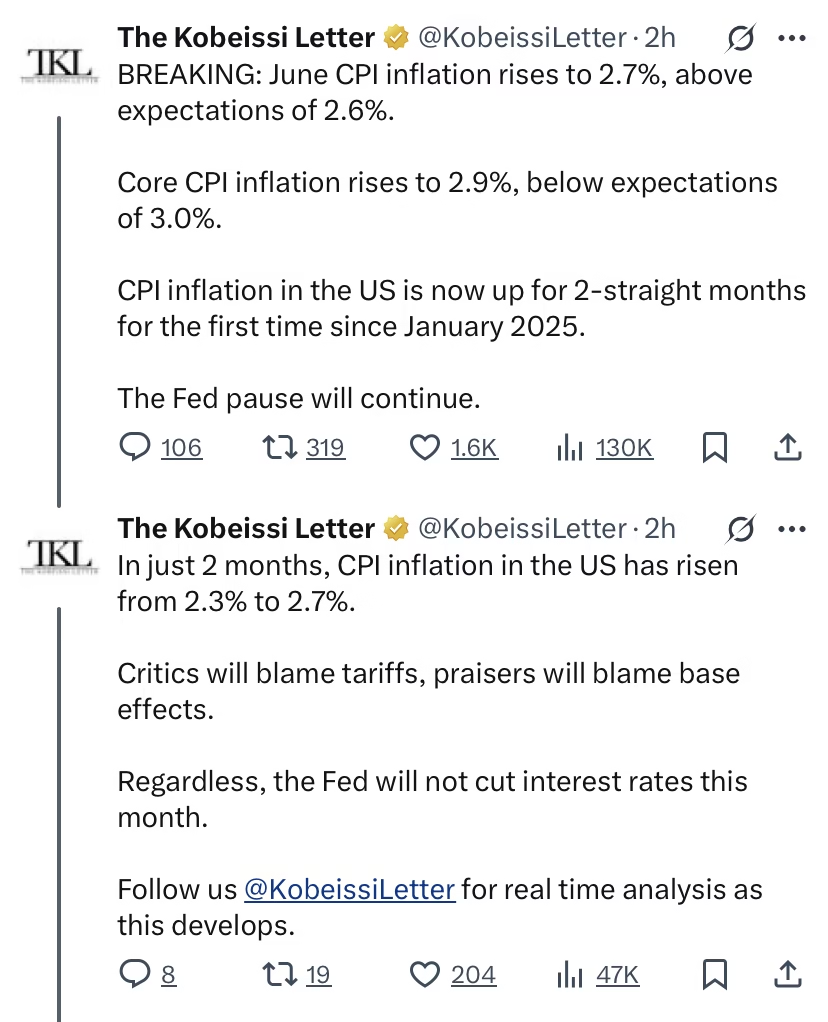
    US June CPI print data released Thursday delivered a jolt to global markets, showing inflation rose to 2.7% year-over-year, above expectations and sending ripples through Bitcoin and altcoins.

    The fresh inflation reading has complicated the Federal Reserve’s monetary policy path ahead of its critical July 30 FOMC meeting.

    US June CPI print figures were closely watched after traders priced in a potential uptick, but the actual rise from May’s 2.4% to 2.7% has forced a swift recalibration across risk assets.

    Bitcoin (BTC), which had already slipped below $117,000 earlier in the day, saw a mild post-data rebound before stabilizing.

    Bitcoin reacts to hotter-than-expected CPI print

    The US June CPI print beat expectations for the first time in five months. Analysts had forecast a 0.3% MoM rise and a 2.6% YoY gain. Instead, headline inflation ticked even higher.

    “ABOVE expectations for the first time in 5 months,” noted analyst Quinten in a post on X, formerly Twitter.

    Bitcoin dropped from a session high of $123,000 in the days leading to the release but hovered near $117,138 post-print.

    Altcoins also reflected this muted but calculated response, with traders appearing to have priced in the higher inflation scenario.

    Attention now turns sharply to the Federal Reserve. According to the CME FedWatch Tool, the odds of the Fed holding rates steady surged to 97.4% following the US June CPI print. That’s up from 95.3% just a day prior.

    “In just 2 months, CPI inflation in the US has risen from 2.3% to 2.7%,” observed macro outlet The Kobeissi Letter. “Critics will blame tariffs, and praisers will blame base effects. Regardless, the Fed will not cut interest rates this month.”

    The next FOMC decision, due July 30, now hinges on how policymakers interpret both this US June CPI print and upcoming labor and spending data.

    Tariffs, oil prices, and geopolitical risk blamed

    Analysts say the hotter inflation may be due to external economic shocks. Tensions in the Middle East, particularly between Iran and Israel, have driven oil prices higher.

    Source: x/KobeissiLetter
    Source: x/KobeissiLetter

    Iran’s movement to restrict shipping through the Strait of Hormuz is seen as a contributing factor.

    “It is expected to be higher than last month due to an increase in OIL price,” wrote Daan Crypto Trades. “The recent comment by Bessent seems like foreshadowing… DXY appears to be moving a bit.”

    Others point directly to the Trump-era tariffs, which are now being passed onto consumers. Businesses that had previously absorbed costs or stockpiled goods are running out of buffers.

    “You’re still in an environment where businesses used a broad array of strategies to mitigate the effect of duties,” Bloomberg quoted EY-Parthenon Chief Economist Gregory Daco as saying. “They can do so no longer, with consumers now bearing the brunt.”

    Fed officials divided as CPI surprises

    Minutes from the Fed’s June policy meeting already highlighted division within the central bank over the direction of inflation. The US June CPI print will further intensify that debate.

    “Inflation turning higher over the summer was expected,” Fed Chair Jerome Powell said at a July 1 conference. “Tariffs and supply chain issues are complicating the picture, and we must remain cautious.”

    Private-sector forecasters had similarly projected a rebound in CPI due to shifting global trade patterns and surging commodities. The US June CPI print confirms that outlook—though some see it as a temporary base effect.

    While the US June CPI print has not triggered panic, it has prompted renewed caution. Risk assets, including crypto, equities, and bonds, are recalibrating.

    “Notwithstanding, the next CPI print is always the most important after the last one,” BeInCrypto reported. “And today’s inflation reading is no different.”

    Bitcoin’s resilience in the face of rising inflation may be a sign that investors believe the Fed will maintain a steady hand. Still, rate cuts are off the table—at least for July.

    With just weeks until the next FOMC meeting, every inflation signal counts. And the US June CPI print has made it clear: the road to the Fed’s 2% inflation target remains bumpy.

  • $2.5m vanishes in shocking Arcadia finance data breach

    $2.5m vanishes in shocking Arcadia finance data breach

    A devastating Arcadia Finance data breach has exposed critical vulnerabilities in decentralized finance, with hackers exploiting a smart contract flaw to steal $2.5 million in crypto assets.

    The attack, which happened on July 14, targeted the platform’s Rebalancer contract, allowing cybercriminals to drain user vaults in minutes before laundering funds through Tornado Cash

    As investigations into the Arcadia Finance data breach unfold, experts warn that this breach highlights growing risks in DeFi. The Arcadia Finance data breach demands immediate attention.

    The Arcadia Finance data breach has sent shockwaves through the decentralized finance (DeFi) space after hackers stole $2.5 million in crypto assets from the platform on the Base blockchain.

    The sophisticated exploit targeted a vulnerability in the protocol’s Rebalancer contract, enabling attackers to empty multiple user vaults in minutes.

    Vulnerability in rebalancer contract

    The breach originated from a flaw in Arcadia Finance’s Rebalancer contract, which failed to validate critical swapData parameters.

    According to Hacken, a leading blockchain security firm, the exploit allowed the attacker to execute unauthorized swaps, bypassing protocol security.

    “The attacker manipulated input data in a way that bypassed standard security controls. This highlights a systemic failure in contract validation,” said Dyma Budorin, CEO of Hacken.

    By exploiting the faulty logic, the attacker orchestrated a flurry of transactions draining USDC, WETH, EURC, AERO, USDS, and WELL tokens.

    Hacken’s post-mortem reported the funds were swiftly swapped and moved through Across Protocol to obfuscate tracking.

    The Arcadia Finance data breach was executed with precision:

    • 10:58 PM UTC, July 14: Attacker deposits ETH into Tornado Cash.

    • ~11:30 PM UTC: Funds bridged to Base blockchain.

    • 04:03 AM UTC, July 15: Exploit contract deployed and triggered within one minute.

    • Following hours: 12 addresses drained across multiple tokens, with assets moved to Ethereum via fresh wallets.

    The attacker received 199 WETH and 965.8 million AERO tokens, severely impacting liquidity across affected assets.

    Arcadia Finance responds

    Arcadia confirmed the breach via a public post on X (formerly Twitter), urging users to immediately revoke permissions from Rebalancer contracts.

    “We’ve identified unauthorized transactions via a Rebalancer. All users should immediately remove asset manager permissions,” the team wrote.

    They also issued detailed instructions for users to access wallet settings and disable any outdated Rebalancer access.

    Despite the swift response, the damage was already done—marking Arcadia’s second major exploit within a year.

    A pattern of security failure

    The Arcadia Financedata breach follows a $455,000 hack in October 2023, caused by insufficient input validation and lack of reentrancy protection. At the time, cybersecurity firm PeckShield issued warnings about lingering smart contract flaws.

    Those concerns appear to have gone unheeded.

    “This was preventable. Our previous audit flagged similar risks,” stated PeckShield in a follow-up post after the latest breach.

    The repeat breach calls into question Arcadia’s approach to cybersecurity and smart contract auditing—a critical issue in today’s rapidly evolving DeFi environment.

    The breach comes amid a troubling trend in the DeFi sector. According to blockchain security firm CertiK, over $2.47 billion has been lost to exploits and scams in the first half of 2025 alone.

    • Wallet breaches: $1.7B across 34 attacks

    • Phishing scams: $410M across 132 incidents

    The Base blockchain, where Arcadia operates, is not immune. Despite Coinbase’s support and a $5M bug bounty program launched via Cantina, vulnerabilities persist as more institutions build on the network.

    The stakes are getting higher

    With JPMorgan launching its JPMD digital deposit token on Base and Shopify integrating USDC payments across 34 countries, the consequences of security failures are magnified.

    Incidents like the Arcadia Finance data breach risk undermining mainstream confidence in DeFi platforms and L2 blockchains.

    “Security is no longer optional—it’s existential,” said CertiK co-founder Ronghui Gu. “Protocols must move beyond patchwork fixes and invest in systemic audits and formal verification.”

    With $2.5M gone and confidence shaken, Arcadia now faces an uphill battle to restore trust in its platform.

    As institutional players double down on Base and other L2s, security hygiene will determine survival. For Arcadia and the broader DeFi landscape, this attack is a wake-up call with a $2.5 million price tag.

    The Arcadia Finance data breach has exposed deep flaws in DeFi protocol security. As the Arcadia Finance data breach shakes investor confidence, it’s clear stronger protections are needed.

  • Grayscale quietly files IPO, puts crypto purchases in Europe at crossroads

    Grayscale quietly files IPO, puts crypto purchases in Europe at crossroads

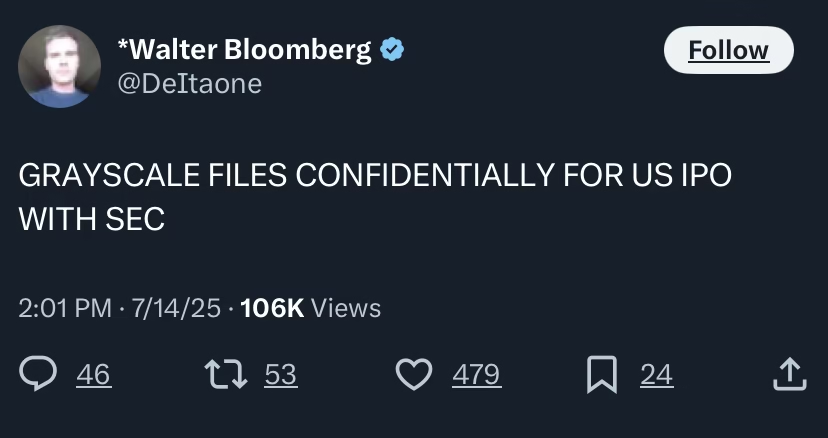
    Crypto purchases in Europe could experience a seismic shift as Grayscale Investments, one of the largest digital asset managers, confidentially filed for an initial public offering (IPO) with the U.S. Securities and Exchange Commission (SEC).

    The move, quietly revealed via a Form S-1 draft registration, underscores a bold strategy by the crypto-trust behemoth to reshape its place in the global financial system.

    Crypto purchases in Europe may not directly hinge on U.S. IPOs, but Grayscale’s push toward the public markets sends a loud message across the Atlantic: institutional crypto is entering a more mature, regulated, and investor-friendly phase.

    “This confidential filing is a clear sign that crypto firms are aiming for deeper legitimacy in capital markets,” said James Butterfill, Head of Research at CoinShares, in a statement to Bloomberg.

    A Quiet step with loud implications

    Grayscale’s confidential IPO filing allows it to test the waters without the scrutiny of public market pressure.

    This mechanism—enabled by SEC reforms—permits both U.S. and non-U.S. entities to submit non-public draft statements, keeping early-stage plans under wraps.

    That’s not just a paperwork shuffle. It’s a calculated strategy.

    “Grayscale is navigating new regulatory terrain with stealth, but the endgame is clear—broader access, deeper liquidity, and a louder voice in global finance,” said Meltem Demirors, Chief Strategy Officer at CoinShares.

    With crypto purchases in Europe rising steadily, a Grayscale IPO could ripple through investment circles, encouraging more traditional players to enter the scene.

    Despite the headline-grabbing filing, Grayscale’s IPO timeline remains shrouded in mystery. The firm hasn’t disclosed how many shares will be offered or what price range it’s targeting.

    “The number of shares to be registered and the price range… have not yet been determined,” the company stated in its press release. “The registration is expected to take place after the SEC completes its review process, subject to market and other conditions.”

    Source: x/DeITaone
    Source: x/DeITaone

    That kind of ambiguity reflects the cautious tone companies are taking amid uncertain economic conditions.

    Yet it also gives Grayscale breathing room to shape the offering in a way that benefits its long-term strategy, particularly with rising institutional crypto purchases in Europe.

    IPO fever spreads across Crypto

    Grayscale is not alone. The IPO pipeline in the digital assets world is heating up fast:

    • Design software unicorn Figma filed for IPO just weeks earlier.

    • Gemini, the crypto exchange led by the Winklevoss twins, is reportedly preparing its own public listing.

    • OKX, one of the largest Asian exchanges, is restructuring with an eye toward IPO readiness.

    • Tron’s Justin Sun is reportedly exploring a reverse merger to achieve public status.

    In a climate where crypto purchases in Europe are fueling cross-border demand, these IPOs could provide more transparency, compliance, and confidence to institutional investors.

    While IPO momentum surges, not every crypto heavyweight is hopping aboard. Rumors of a potential Tether IPO surfaced after the stablecoin issuer’s sky-high valuation grabbed headlines. But CEO Paolo Ardoino quickly quashed speculation.

    “We are not planning to go public,” Ardoino stated, adding that Tether is confident in its current growth trajectory without the need for outside capital.

    Even so, Grayscale’s quiet yet powerful play may rekindle IPO ambitions across crypto firms—especially as crypto purchases in Europe drive the need for regulated, institutional-grade access points.

    The future of crypto purchases in Europe

    As European markets become increasingly crypto-curious, Grayscale’s IPO move could have wide-ranging effects.

    A publicly listed Grayscale would open the door for European asset managers, pension funds, and even family offices to engage with crypto in a more compliant and structured way.

    “If Grayscale goes public, it may finally offer a regulated channel that satisfies the stringent compliance needs of European investors,” noted Simon Peters, Market Analyst at eToro.

  • Coinbase accused of smear campaign against Trump-linked World Liberty Financial, Binance

    Coinbase accused of smear campaign against Trump-linked World Liberty Financial, Binance

    The crypto world is embroiled in controversy after explosive claims surfaced that Coinbase may have been behind a coordinated attack on Binance and the Trump-linked World Liberty Financial (WLFI) project.

    The allegations, made by an X user known as Wallace, suggest the U.S.-based exchange sought to undermine its rivals as Binance eyes a potential return to the American market.

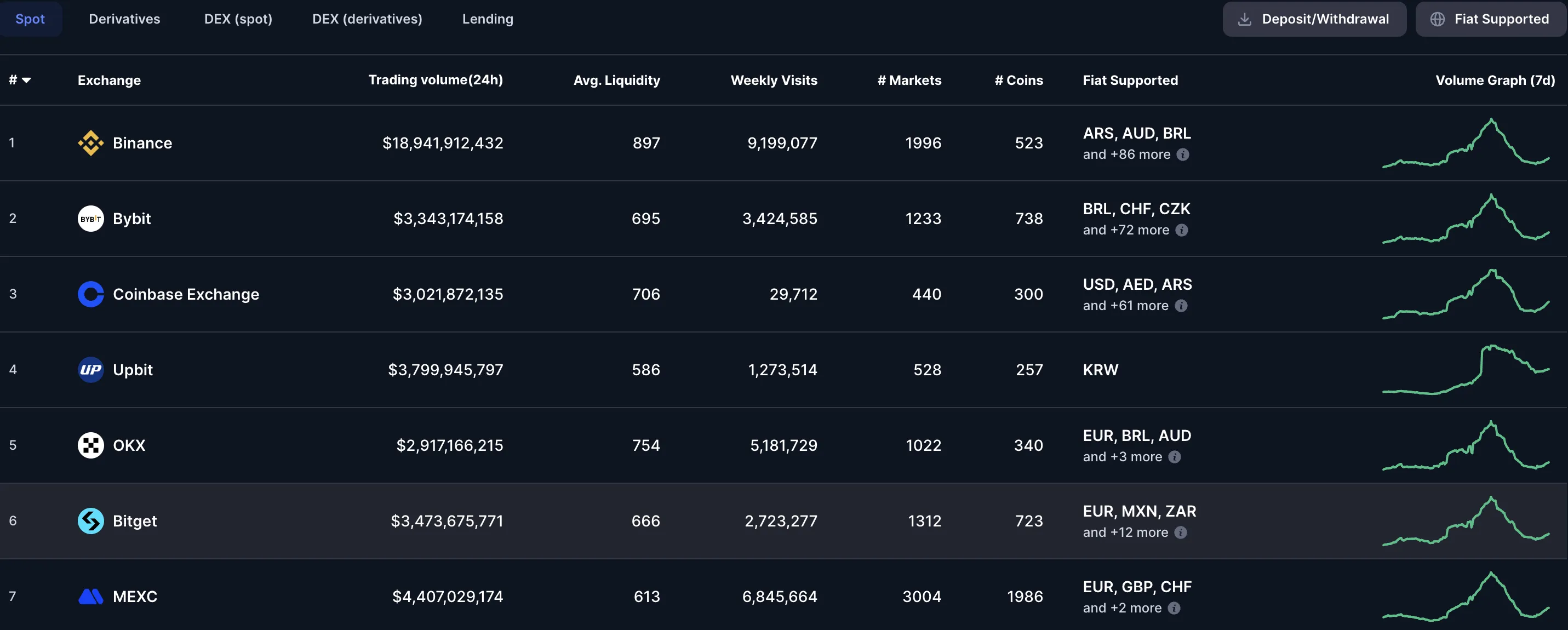
    With Binance commanding a staggering $19 billion in 24-hour trading volume compared to Coinbase’s $3 billion, the stakes are high.

    The situation grows more complex with rumors that former Binance CEO Changpeng “CZ” Zhao could receive a pardon from former President Donald Trump, whose ties to the Trump-linked World Liberty Financial project have drawn scrutiny.

    The “anonymous source” controversy

    Wallace’s tweet ignited a firestorm by accusing Coinbase of being the unnamed origin of negative reports targeting both Binance and the Trump-linked World Liberty Financial initiative.

    “Evidence is emerging that Coinbase was the ‘anonymous’ source behind the hit job on President Trump’s World Liberty Financial and Binance,” Wallace stated.

    The claims gained traction after Bloomberg published articles scrutinizing WLFI’s connections to Binance, including meetings in Abu Dhabi between CZ and WLFI founders to discuss crypto industry standards.

    Reports also allege Binance contributed source code to WLFI’s USD1 stablecoin—a claim that, if true, could deepen regulatory and political tensions.

    Trading volume of Binance and Coinbase. Source: CoinMarketCapCoinbase accused of smear campaign against Trump-linked World Liberty Financial, Binance
    Coinbase accused of smear campaign against Trump-linked World Liberty Financial, Binance. Source: CoinMarketCap

    Coinbase’s Chief Legal Officer, Paul Grewal, swiftly denied involvement:

    “Sorry—this is pure misinformation. We absolutely did not contribute to this story. We don’t attack competitors, and we welcome any businesses that share our goal of growing the crypto pie.”

    Despite the denial, CZ’s ambiguous retweet of Wallace’s allegations has fueled speculation, leaving investors questioning Coinbase’s transparency.

    Political and market fallout

    The clash transcends typical corporate rivalry, intersecting with U.S. political dynamics. The Trump-linked World Liberty Financial project, which aims to promote crypto adoption, has become a flashpoint in the debate over fair competition and regulatory oversight.

    Critics argue Coinbase’s alleged tactics reflect desperation to maintain dominance. “This isn’t just business—it’s anti-American,” Wallace asserted, framing the dispute as part of a broader ideological battle over crypto’s future.

    Meanwhile, Binance’s potential U.S. reentry looms large. Banned since 2023 over money laundering charges, its resurgence, potentially aided by a Trump pardon, could upend Coinbase’s market position.

    Investor confidence at risk

    The controversy arrives during a fragile period for crypto markets, already strained by regulatory crackdowns. Accusations of smear campaigns threaten to erode trust further, particularly among retail investors.

    “When giants clash, the little guys get trampled,” said crypto analyst Maria Vasquez of Chainalysis. “These allegations, if proven, could trigger a backlash against centralized exchanges altogether.”

    Data from CoinMarketCap shows the disparity between Binance’s global dominance and Coinbase’s narrower reach—a gap that may widen if Binance regains U.S. access.

  • Binance unveils bold sharia-compliant multi-token staking targeting $4t Islamic market

    Binance unveils bold sharia-compliant multi-token staking targeting $4t Islamic market

    Sharia-compliant multi-token staking has officially entered the crypto mainstream as Binance launches Sharia Earn, a first-of-its-kind halal staking platform certified by leading Islamic finance authority Amanie Advisors.

    This marks a pivotal moment for both crypto and Islamic finance—two sectors long seen as incompatible.

    Sharia-compliant multi-token staking, developed in line with Islamic principles, allows users to earn passive income without violating Sharia laws that prohibit interest (riba), excessive uncertainty (gharar), and investments in non-halal sectors.

    “Sharia Earn is where two financial systems meet – Islamic finance and blockchain technology,” said Binance in its launch announcement.

    Bridging the gap between faith and finance

    Binance’s Sharia-compliant multi-token staking platform is designed to bring financial inclusion to over 1.9 billion Muslims worldwide.

    With the global Islamic finance market valued at over $4 trillion, Binance sees a significant opportunity in providing access to halal digital financial products.

    “This is our first formal step into Islamic finance,” Binance stated, noting that the staking platform is fully compliant with Islamic ethical investing standards.

    The platform was audited and certified by Amanie Advisors, a globally respected Sharia advisory firm.

    The platform launches with support for BNB, Ethereum (ETH), and Solana (SOL)—three of the world’s leading crypto assets.

    Source: x/cryptoquant
    Source: x/cryptoquant

    According to Binance, Sharia-compliant multi-token staking offers users daily halal yield with no exposure to riba or haram industries such as gambling, alcohol, or adult entertainment.

    Dr. Mohd Daud Bakar, Chairman of Amanie Advisors, said in a statement:

    “This collaboration ensures that Muslim investors can now participate in digital asset growth while upholding their religious values.”

    The staking mechanism uses a Wakala agreement, a Sharia-compliant agency structure that enables halal capital delegation and eliminates interest-based returns.

    Availability and technology behind the platforms

    Initially, Sharia-compliant multi-token staking will be available in 31 countries, including Saudi Arabia, Indonesia, Pakistan, Egypt, and the United Arab Emirates—key Islamic finance hubs. Binance said it plans to expand this offering further, depending on regulatory approval.

    The tech stack behind the product leverages Binance’s existing staking protocols, including:

    • BNB Simple Earn Locked Products

    • ETH Staking with WBETH rewards

    • SOL Staking with BNSOL rewards

    These mechanisms were reviewed by Islamic scholars to ensure full compliance with Sharia law. Users will receive rewards directly in their Spot Wallets, with yields automatically distributed.

    Why this matters for deFi and islamic finances

    While DeFi has gained traction globally, many Muslim investors have remained on the sidelines due to ethical and religious uncertainties. Binance’s Sharia-compliant multi-token staking aims to resolve this disconnect.

    “Islamic finance challenges traditional finance through halal guidelines like risk sharing, wealth circulation, and the prohibition of interest,” Binance explained.

    By launching a product that satisfies these principles, Binance not only opens new doors for millions of investors but also boosts its position in the ethical DeFi space.

    The significance of Sharia-compliant multi-token staking cannot be overstated. According to the Islamic Finance Development Report, only a fraction of Islamic investors have participated in crypto due to religious concerns.

    “Removing ambiguity is key,” said Nurul Islam, an Islamic finance researcher. “Products like Sharia Earn are pivotal in giving Muslims confidence to explore DeFi.”

    Binance is also offering launch promotions with up to $100,000 in USDT rewards, further incentivizing adoption.

    Binance’s broders dominance continues

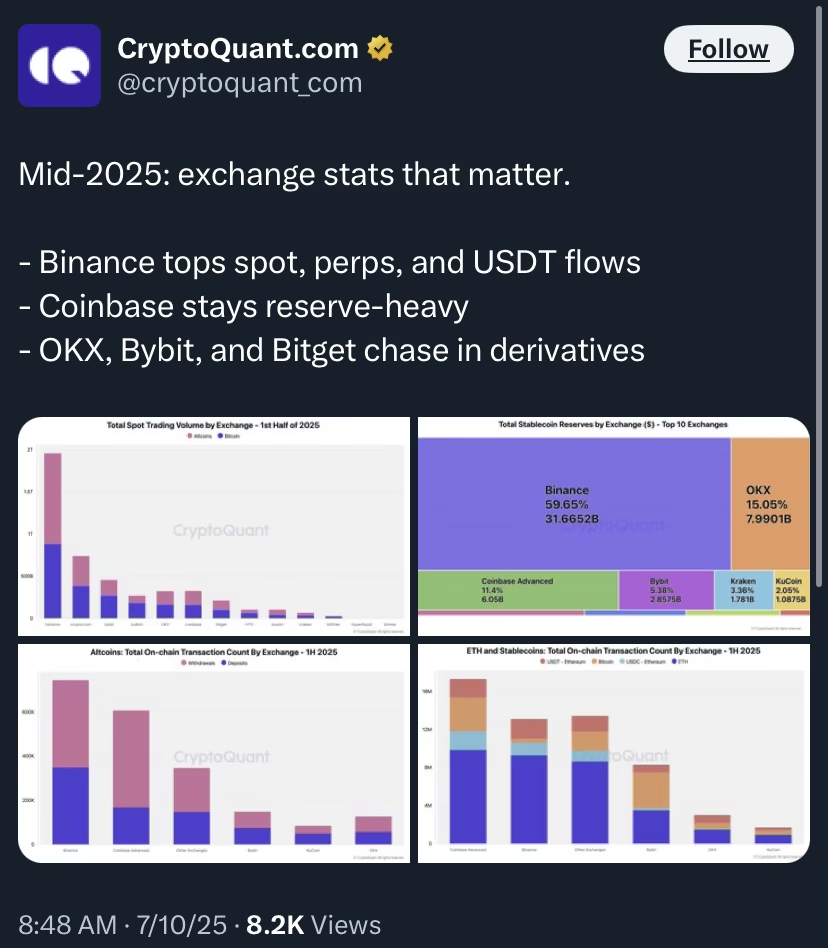
    This launch follows Binance’s strong performance in 2025. According to CryptoQuant’s mid-year report, Binance leads in spot volume, futures trading, stablecoin reserves, and on-chain user activity.

    By pioneering Sharia-compliant multi-token staking, Binance strengthens its global footprint while advancing ethical finance innovation.

    With this landmark launch, Sharia-compliant multi-token staking signals a new era for ethical DeFi. For many Muslim investors, the wait for a halal staking solution is finally over.

    And for Binance, it’s a strategic leap toward unlocking untapped markets with culturally tailored solutions.

    As faith and finance converge on the blockchain, Binance’s Sharia Earn may well become the blueprint for religiously compliant crypto platforms worldwide.

  • Fake AI startups unleash wave of crypto-stealing malware in sophisticated 2025 scams

    Fake AI startups unleash wave of crypto-stealing malware in sophisticated 2025 scams

    A dangerous wave of crypto-stealing malware is sweeping through digital asset communities, with cybersecurity firm Darktrace uncovering an alarming trend: scammers are now creating entirely fake AI and Web3 startups to distribute malicious software.

    These elaborate operations – complete with professional branding, counterfeit investor pages, and verified social media accounts – have already drained millions from unsuspecting victims through seemingly legitimate projects like “Eternal Decay” and “Pollens AI.”

    The crypto-stealing malware typically hides in software downloads promoted through Telegram, Discord, and X by actors posing as company representatives.

    Fake startups creating real threats

    “Threat actors are going to great lengths to make these fake startups look real,” said a Darktrace analyst in a press briefing.

    “They’re building fake merchandise shops, faking investor pages, and even using verified social accounts to boost credibility.”

    Startups like “Eternal Decay,” which pretended to be a blockchain-based gaming platform, fooled users with images stolen from another title, “Zombie Within.” Other bogus firms include Pollens AI, Swox, and Buzzu — all with eerily similar branding and cloned codebases.

    What links them all? A payload of crypto-stealing malware embedded in software downloads, often shared directly via Telegram, Discord, or X (formerly Twitter) by scammers posing as company employees.

    Source: Darktrace
    Source: Darktrace

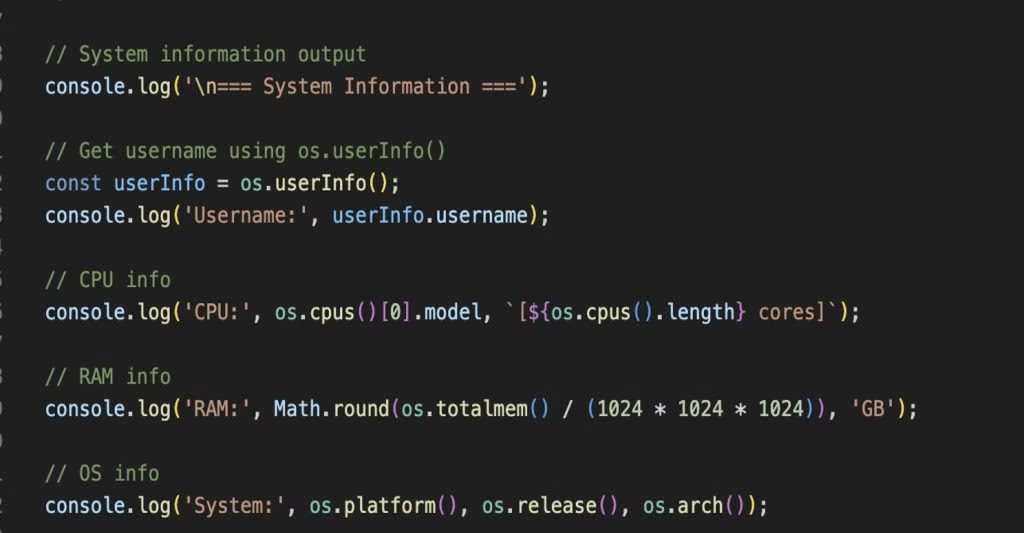
    Darktrace’s technical team discovered that the malware, often based on the Realst and Atomic Stealer families, targets both Windows and macOS.

    The Windows version relies on Electron-based apps for system profiling and stealthy file execution. On macOS, it uses sophisticated tactics like obfuscation, stolen certificates, and background persistence.

    “These apps appear polished — like something you’d see from a real startup — but they’re weapons built to steal wallets and identity data,” explained Darktrace in their report.

    The return of the notorious malware group CrazyEvil?

    Interestingly, the tactics mimic methods used by the notorious malware group CrazyEvil, first identified by Recorded Future earlier this year.

    Though not directly linked yet, the strategy and deception style match previous campaigns that specifically targeted developers and Web3 contributors.

    “Whether it’s CrazyEvil or a new threat actor, the evolution is clear,” said Allan Liska, a threat intelligence analyst at Recorded Future. “We’re seeing malware authors create brands, communities, and whole ecosystems as traps — not just phishing emails.”

    The explosion of crypto-stealing malware in 2025 isn’t isolated. It’s part of a broader cybercrime wave targeting crypto. A recent Kaspersky Financial Cyberthreats report found that:

    • Crypto phishing attacks are up 83.4% year-over-year

    • Mobile banking trojans have surged by 360%

    • Meanwhile, attacks on traditional banking systems are in decline

    “Cybercriminals are following the money,” noted Kaspersky’s lead researcher, Igor Golovanov. “They’re investing in malware specifically designed to target crypto, because that’s where the real profits are now.”

    Crypto-stealing malware is surging in 2025, with scammers impersonating flashy AI and Web3 startups to launch one of the most coordinated digital heists in recent memory.
    Kaspersky also recently warned of SparkCat malware threat

    🐾 SparkKitty: A silent killer on mobile

    One of the most dangerous new strains is SparkKitty, a mobile malware family that’s been active since February 2024.

    Disguised as TikTok mods or crypto apps, it managed to bypass Play Store and App Store protections, stealing users’ seed phrases by accessing photo galleries and clipboard data.

    Security researchers believe SparkKitty’s success proves just how advanced crypto-stealing malware has become, and how underprepared average users remain.

    How to stay safe from these scammers

    With scammers replicating legitimate business tactics, spotting fraud is tougher than ever. Experts advise users to:

    • Avoid downloading crypto apps from unverified sources

    • Double-check team identities and project backers

    • Never share private keys or seed phrases, especially in chats

    • Use multi-layered wallet security (cold storage, passphrases)

    As 2025’s crypto-stealing malware campaigns reach new heights, they reveal a chilling truth: trust, the cornerstone of Web3, is now a primary attack vector.

    In a world where innovation is easily imitated and credentials are gold, vigilance is no longer optional but survival.

Are you sure want to unlock this post?
Unlock left : 0
Are you sure want to cancel subscription?