Tag: uk regulation

  • Keir Starmer calls for tougher rules on AI chatbots to protect children from harm

    Keir Starmer calls for tougher rules on AI chatbots to protect children from harm

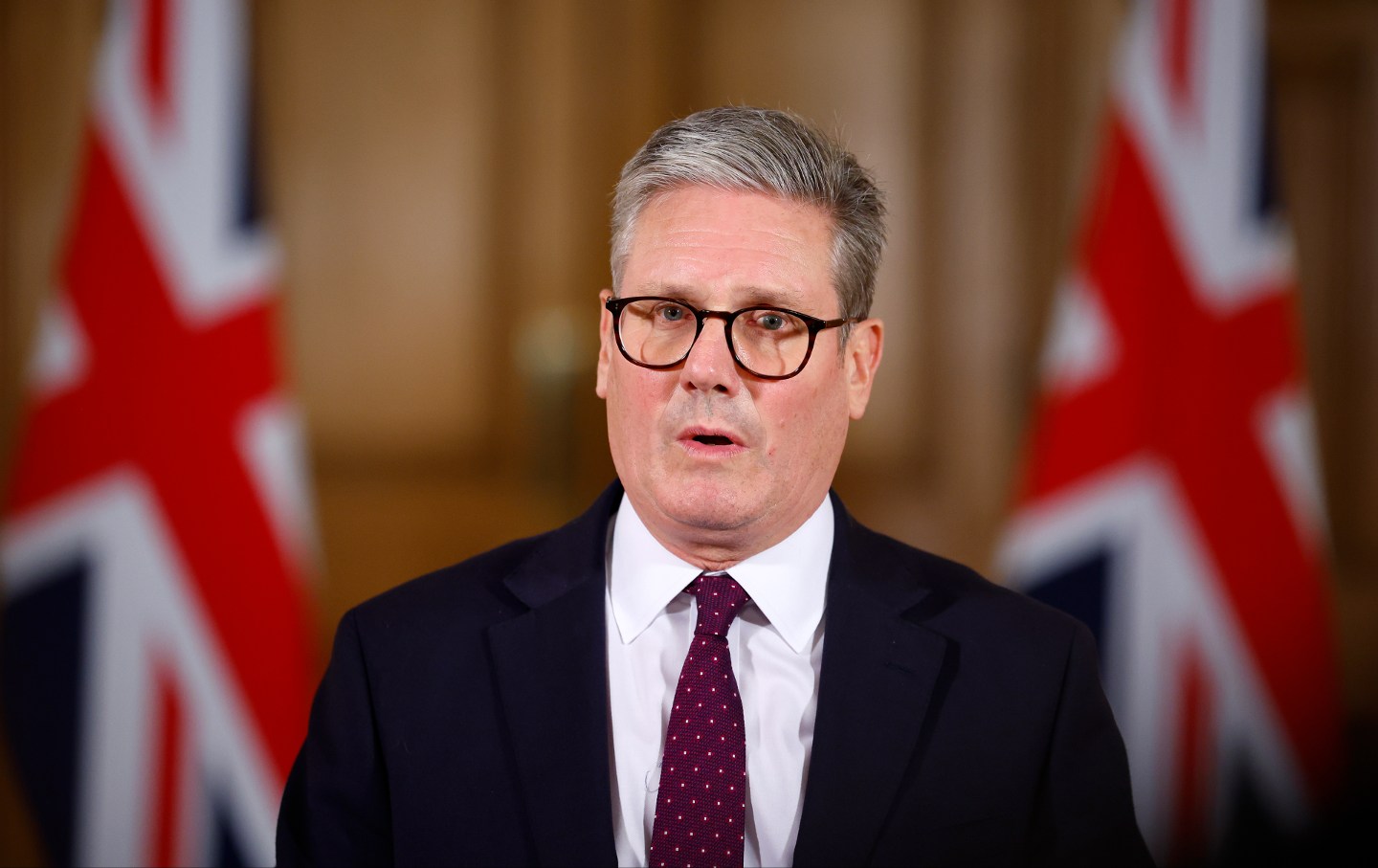
    Prime Minister Keir Starmer has signalled that the UK government may extend the Online Safety Act to cover AI chatbots, warning that conversational AI systems pose distinct risks to children that existing social media regulations were not designed to address.

    In a recent public update, Starmer warned that rapidly evolving AI systems are reshaping childhood in ways lawmakers can no longer afford to overlook. While online harms debates have traditionally centered on social media platforms, he argued that AI Chatbot Regulation must now catch up with technologies capable of generating real-time, human-like interactions.

    “Protections for young people must evolve as technology evolves,” Starmer wrote, framing AI Chatbot Regulation as a natural extension of the UK’s broader online safety reforms.

    Expanding the scope of online safety laws

    The UK already has one of the world’s most comprehensive digital frameworks in the form of the Online Safety Act 2023, which places new duties of care on tech platforms. However, policymakers are now assessing whether the legislation sufficiently captures AI-driven services that function differently from traditional social media feeds.

    Under potential reforms, AI Chatbot Regulation could explicitly extend to conversational systems embedded in apps, search engines, gaming platforms, and standalone AI services. These tools, often powered by large language models, engage users in personalized dialogue that can mimic empathy, authority, or companionship.
    AI Chatbot Regulation

    For children and teenagers, Starmer cautioned, such systems may blur the boundaries between neutral information and persuasive influence—making AI Chatbot Regulation a pressing matter.

    Unique risks posed by AI chatbots

    Unlike static content platforms, AI chatbots generate responses dynamically. This real-time generation makes moderation significantly more complex. Harmful or inappropriate responses cannot always be pre-screened in the same way as uploaded content.

    Starmer pointed to concerns ranging from exposure to explicit material and misleading advice to emotional dependency. Child development experts have warned that young users may form attachments to conversational AI systems, particularly when interactions feel private and personalized.

    “Children deserve the space to grow without being shaped by opaque algorithms,” Starmer said, underscoring why AI Chatbot Regulation must address both content risks and design features that encourage prolonged engagement.

    Digital safety advocates have echoed that sentiment. Andy Burrows, CEO of the Molly Rose Foundation, has previously argued that AI tools “must not repeat the mistakes made with social media,” adding that proactive AI Chatbot Regulation could prevent harm before it becomes systemic.

    Parliamentary powers and faster enforcement

    One of the core challenges facing AI Chatbot Regulation is the speed at which AI capabilities are advancing. Chatbots today can simulate emotional support, provide educational guidance, or even role-play complex scenarios. Tomorrow’s iterations may be even more immersive.

    AI Chatbot Regulation

    Starmer suggested that Parliament may require enhanced regulatory flexibility to respond swiftly as these technologies develop. This could involve empowering the communications regulator Ofcom with expanded authority to oversee AI-driven services under the Online Safety Act.

    Ofcom already holds enforcement powers over major platforms, including the ability to levy substantial fines for non-compliance. Incorporating AI systems into its remit would represent a significant step forward for AI Chatbot Regulation in the UK.

    A spokesperson for Ofcom previously stated that the regulator is “closely monitoring the development of generative AI services” and stands ready to implement parliamentary directives if legislation evolves.

    Balancing innovation and protection

    Starmer was careful to stress that the government does not intend to stifle innovation. The UK has positioned itself as a global hub for artificial intelligence research and development, hosting major AI safety discussions and courting private-sector investment.

    However, he insisted that innovation must not come at the expense of child safety. In his view, AI Chatbot Regulation is about ensuring responsible design and deployment, not blocking technological progress.

    “Tech companies must take greater responsibility for how their tools are built and used,” Starmer said, signaling that voluntary safeguards may no longer suffice.

    This stance aligns with broader international trends. The European Union’s AI Act and ongoing discussions in the United States reflect growing consensus that generative AI requires clearer guardrails—particularly when minors are involved.

    Public consultation and next steps

    The UK government is expected to launch a public consultation to gather evidence on how AI-driven services are being used by minors and where regulatory gaps exist. The findings will inform the next phase of AI Chatbot Regulation, potentially leading to legislative amendments.

    AI Chatbot Regulation

    Stakeholders likely to participate include child welfare organizations, educators, AI developers, and digital rights advocates. The consultation process will examine technical feasibility, enforcement mechanisms, and proportionality—key pillars of effective AI Chatbot Regulation.

    Legal analysts note that extending existing law may be more efficient than drafting entirely new statutes. By adapting the Online Safety Act framework, lawmakers could integrate AI Chatbot Regulation without creating regulatory overlap or confusion.

    A defining test for digital governance

    As AI tools become embedded in everyday life—from homework assistance to mental health advice—the stakes are rising. The UK’s approach to AI Chatbot Regulation may serve as a model for other democracies grappling with similar questions.

    For Starmer, the issue is ultimately about safeguarding childhood in a digital age. He framed the initiative as part of a broader mission to “give children the space to grow” free from manipulation or unchecked algorithmic influence.

    With consultation on the horizon and political momentum building, AI Chatbot Regulation is poised to become a central pillar of the UK’s evolving tech policy. Whether lawmakers can craft rules that protect young users while preserving innovation will determine not just the future of AI oversight—but the digital environment shaping the next generation.

  • UK regulator prioritizes pound stablecoin rules for 2026

    UK regulator prioritizes pound stablecoin rules for 2026

    Britain’s financial regulator has opened applications for a sandbox program allowing firms to test pound-backed stablecoins, making digital currency regulation a top priority for 2026 as the UK seeks to cement its position as a global crypto hub.

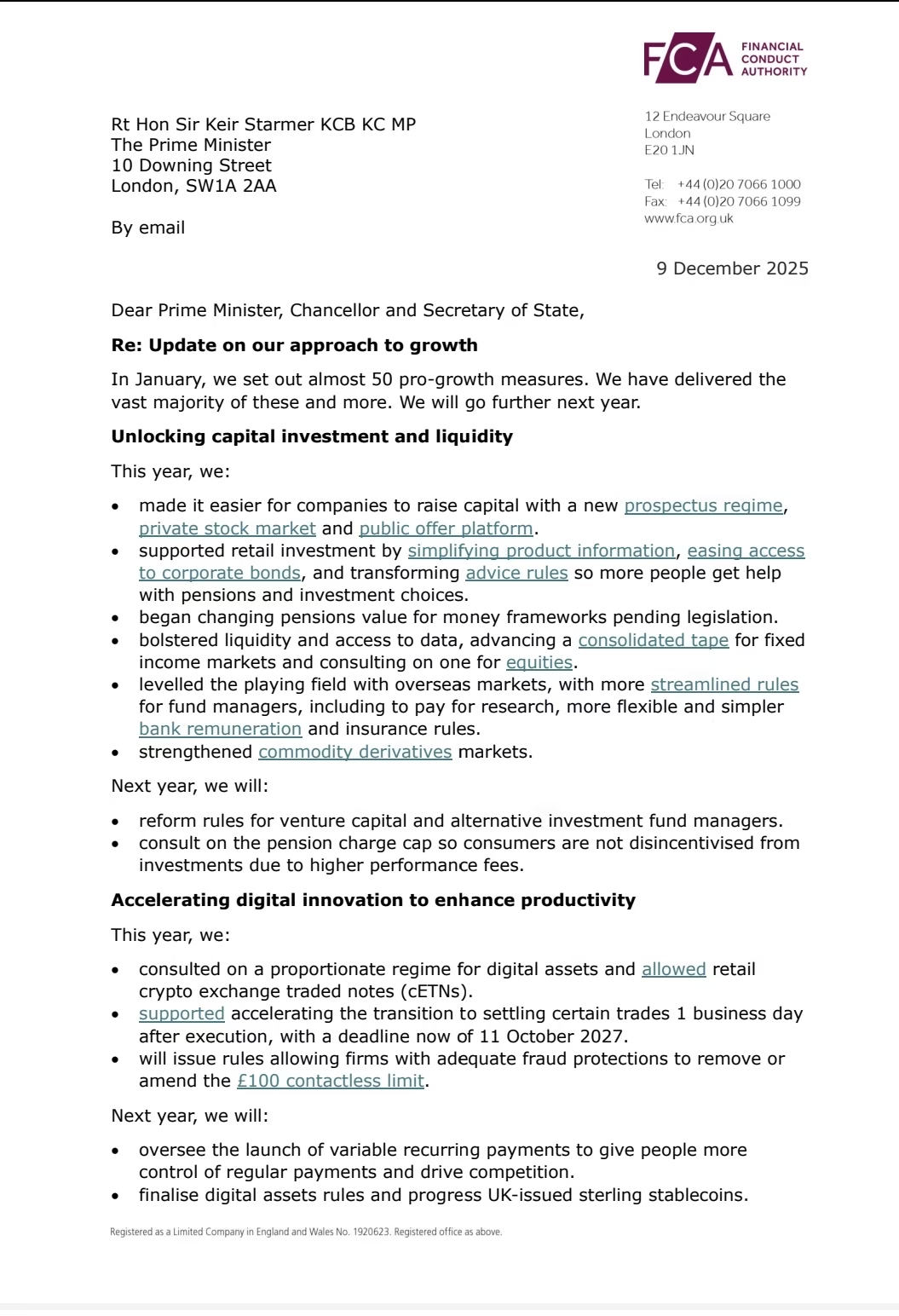
    The Financial Conduct Authority announced Wednesday it will fast-track rules governing sterling stablecoins and related payment systems, with applications for the testing program open until January 18, according to a letter from FCA Chief Executive Nikhil Rathi to Prime Minister Keir Starmer.

    FCA outlines 2026 priorities focused on digital innovation

    In a formal letter to Prime Minister Keir Starmer, FCA Chief Executive Nikhil Rathi set out the agency’s strategic objectives for the coming year, with a major emphasis on facilitating pounds sterling stablecoin payment mechanisms for UK-based issuers.

    The statement marks one of the clearest indications yet that regulators intend to bring stablecoins into the mainstream financial architecture.

    “Our reforms help the UK maintain its global competitive edge in our world-leading wholesale markets, attract international investment, and lead on innovation in financial services,” — Nikhil Rathi, Chief Executive, FCA.

    The FCA’s strategy aligns with a broader initiative to finalize comprehensive digital asset regulations in 2026. These include new rules for trading platforms, custody providers, lending services, staking frameworks, and — critically — pounds sterling stablecoin payment oversight.

    While the United States has pushed forward with more rapid regulatory rollouts, the UK continues to favor a phased, safety-first model. Officials argue this approach is essential for consumer protection, although some firms say it has slowed progress in the pounds sterling stablecoin payment landscape.

    Regulatory sandbox opens as UK pushes stablecoin experimentation

    As part of its digital finance agenda, the FCA has opened a regulatory sandbox tailored for domestic stablecoin issuers. The initiative allows companies to test new pounds sterling stablecoin payment systems in a controlled environment, including settlement mechanisms, integrations with financial institutions, and cross-platform interoperability.

    The sandbox is now accepting applications from issuers until Jan. 18, providing what many see as a critical opportunity for innovation ahead of the 2026 rulemaking window. Market observers say participation could be particularly important for companies aiming to future-proof their pounds sterling stablecoin payment infrastructure.

    The FCA emphasized that the sandbox is part of a broader push to modernize the UK’s financial system, especially following the passage of the Property (Digital Assets etc.) Act 2025, which formally recognized digital assets as a new and distinct property class.

    This legal clarity is expected to support the growth of pounds sterling stablecoin payment systems by giving issuers and custodians a firmer basis for enforcement and consumer protection.

    Balancing innovation with oversight sparks industry debate

    Despite the apparent momentum, the FCA’s cautious, layered approach has drawn criticism from some industry stakeholders.

    Firms such as Consensys have argued that applying existing financial rules too strictly has caused the UK to fall behind the United States in developing digital asset infrastructure — including pounds sterling stablecoin payment capabilities.

    Still, regulators maintain that measured progress is essential, especially as digital markets evolve at unprecedented speed.

    “Rapid technological change means we must focus on outcomes, not prescriptive rules,” — Nikhil Rathi, FCA, in his letter to the prime minister.

    He added that the regulator will continue refining its supervisory framework “with more tailoring to firms’ size and type,” acknowledging that innovation carries inherent risk but stressing that oversight will focus on the most significant harms.

    This tension between innovation and regulation lies at the heart of the ongoing debate over pounds sterling stablecoin payment adoption.

    For many market participants, the FCA’s new direction signals a willingness to strengthen the UK’s role as a global hub — provided that consumer protection and systemic stability remain intact.

    UK aims to solidify global position in digital finance

    With a growing digital asset ecosystem and increasing global competition, the UK appears determined to build a robust foundation for pounds sterling stablecoin payment integration.

    Collaboration with the Bank of England is expected to accelerate the development of operational standards and ensure interoperability with existing financial systems.

    For investors and policy makers, the framework could offer a clearer path for assessing systemic risks, capital requirements, and potential market efficiencies tied to pounds sterling stablecoin payment innovations.

    For the general public, the reforms serve as an early blueprint for how digital money may circulate safely within a regulated financial system.

    By placing pounds sterling stablecoin payment infrastructure at the center of its 2026 agenda, the FCA is signaling a major step toward aligning regulation with the speed of technological change — a move designed to strengthen market trust while enhancing Britain’s appeal as a modern financial hub.

  • UK tax authority proposes ending immediate taxation on DeFi deposits

    UK tax authority proposes ending immediate taxation on DeFi deposits

    The United Kingdom has introduced a proposal that could reshape how decentralized finance (DeFi) transactions are taxed, marking what industry participants describe as a crucial development in ongoing UK crypto tax reform.

    The plan, released by HM Revenue and Customs (HMRC) on Wednesday, outlines a “no gain, no loss” approach that delays capital gains tax obligations for DeFi users until the underlying crypto assets are sold.

    The move aims to bring consistency and clarity to an area long viewed as a regulatory grey zone, making the proposal one of the most notable steps in UK crypto tax reform to date.

    Under the proposal, lending a token and receiving the same type back, participating in borrowing arrangements, or moving assets into liquidity pools would no longer trigger immediate tax consequences.

    Instead, taxable gains or losses would be recognized only when users redeem their liquidity tokens or fully exit their positions. The announcement forms part of the broader UK crypto tax reform efforts, which have drawn attention from DeFi entrepreneurs, tax experts, and global policymakers.

    The current system taxes deposits into protocols—regardless of the reason—as disposals, exposing users to capital gains taxes ranging from 18% to 32%.

    For many in the industry, the proposed UK crypto tax reform represents a more accurate reflection of how DeFi platforms function economically. This is the central theme driving the debate, as market participants push for clearer and fairer tax treatment.

    Industry calls it a “meaningful step forward”

    Responses from key figures in the decentralized finance ecosystem suggest that the proposal could be a turning point in the UK crypto tax reform discussion.

    Sian Morton, marketing lead at the cross-chain payments system Relay Protocol, said the “no gain, no loss” framework is a “meaningful step forward for UK DeFi users who borrow stablecoins against their crypto collateral, and moves tax treatment closer to the actual economic reality of these interactions.” Morton added that the shift is “a positive signal for the UK’s evolving stance on crypto regulation.”

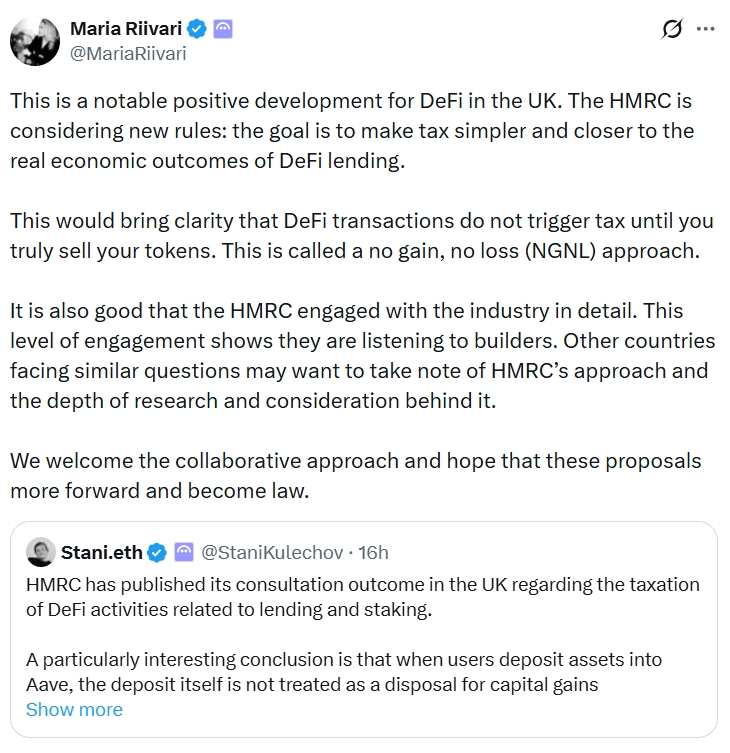
    UK crypto tax reform takes major step with new DeFi proposal
    Source: Maria Riivari

    Maria Riivari, a lawyer at Aave, echoed the sentiment, emphasizing how the proposal clarifies when taxable events occur. She noted that the change “would bring clarity that DeFi transactions do not trigger tax until you truly sell your tokens.”

    Riivari also suggested that HMRC’s effort could influence other jurisdictions grappling with similar digital-asset tax questions. “Other countries facing similar questions may want to take note of HMRC’s approach and the depth of research and consideration behind it,” she said.

    Aave CEO Stani Kulechov described the HMRC proposal as “a major win for UK DeFi users who want to borrow stablecoins against their crypto collateral.”

    His remarks underline the broader industry expectation that UK crypto tax reform should align tax rules with the structure of blockchain-based borrowing and lending markets.

    Not yet finalized, but momentum is building

    Despite the positive reception, the proposal is not yet law. HMRC said it will continue to consult with stakeholders as part of the broader UK crypto tax reform agenda.

    Officials noted that ongoing engagement is necessary “to assess the merits of this potential approach, and the case for making legislative change to the rules governing the taxation of crypto asset loans and liquidity pools.”

    The agency added that any final framework must be practical for individuals and broad enough to cover the wide variety of DeFi transactions. As UK crypto tax reform continues to evolve, ensuring compliance simplicity remains a top priority for policymakers seeking to balance innovation with oversight.

    The initial consultation drew 32 formal responses from individuals, tax professionals, businesses, and industry bodies, including Binance, a16z Capital Management, and CryptoUK. Their submissions reflect the wide-ranging interest in UK crypto tax reform and the importance of establishing rules that support innovation without compromising tax integrity.

    A potential model for global regulators

    If implemented, the proposed “no gain, no loss” system could influence how other countries treat DeFi transactions. As debates over UK crypto tax reform intensify, international observers are watching closely.

    Many regulators are struggling to classify crypto lending, liquidity pooling, and similar activities within traditional tax frameworks. The UK’s attempt to simplify and rationalize its approach could offer a roadmap for others.

    For now, the proposal stands as one of the most substantive developments in UK crypto tax reform in recent years. Industry experts say a more predictable tax environment could encourage greater domestic participation in DeFi markets and strengthen the UK’s positioning as a competitive global hub for digital finance innovation.

  • Bank of England consultation sets 2026 timeline for stablecoin payment regulations

    Bank of England consultation sets 2026 timeline for stablecoin payment regulations

    The Bank of England has proposed capping individual stablecoin holdings at £20,000 and requiring issuers to hold at least 40% of backing assets in central bank reserves, setting some of the world’s strictest rules for digital currencies used in payments.

    The consultation published Monday outlines how Britain plans to regulate ‘systemic’ stablecoins—those widely used for transactions—under central bank supervision starting in 2026, while leaving other crypto tokens under lighter Financial Conduct Authority oversight.

    The boe stablecoin consultation is significant because it sets the timeline, the core requirements (such as backing assets and holding limits), and a clear message: the UK intends to regulate stablecoins as money-like instruments. It also signals to crypto investors that a major jurisdiction is moving from talk to action.

    Key proposals in the BoE stablecoin consultation

    The consultation paper includes several central proposals:

    • Issuers of systemic stablecoins would be required to hold at least 40% of their backing assets in unremunerated accounts at the BoE, while up to 60% could be held in short-term UK government debt. In transition, issuers moving from the FCA regime could hold up to 95% in government debt for a period.
    • Temporary holding limits: individuals would be limited to holding about £20,000, businesses up to £10 million, with exemption regimes for entities with operational needs.
    • Issuers deemed “systemic” by HM Treasury (HMT) would be subject to BoE oversight; non-systemic stablecoins would fall under FCA solo regulation.
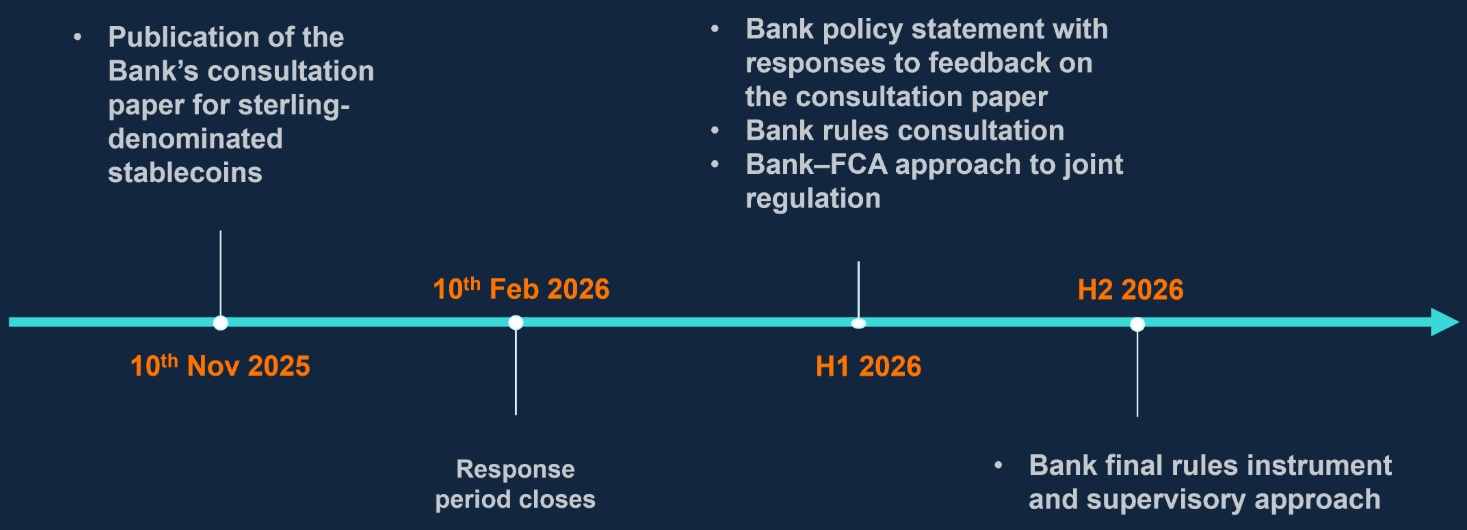
    • The consultation is open until 10 February 2026, with final Codes of Practice expected later in 2026.
    Boe stablecoin consultation signals major shake-up for uk crypto payments
    Timeline for regulation on sterling-denominated stablecoins by the Bank of England. Source: BoE

    Deputy Governor Sarah Breeden said:

    “Today’s proposals mark a pivotal step towards implementing the UK’s stablecoin regime next year. Our objective remains to support innovation and build trust in this emerging form of money.” — Sarah Breeden, Deputy Governor for Financial Stability, Bank of England

    Implications for crypto investors and the payments ecosystem

    For crypto investors and payment-issuers, the boe stablecoin consultation signals both opportunity and caution. On one hand, the clear regulatory horizon offers a pathway to legitimacy for stablecoins in the UK: issuers that align with this regime may access a large payments market with defined rules.

    On the other hand, proposed caps and backing requirements could raise cost and complexity for stablecoin programmes.

    The boe stablecoin consultation also means that stablecoins used for non-payment purposes (such as trading or DeFi) may continue under lighter FCA regulation, but the regime signals where the BoE draws the line between payments-money and speculative tokens.

    Moreover, the timeline is critical: by targeting final rules in 2026, the BoE is giving the industry time to adapt but also signalling that delay is not indefinite. For stakeholders, stepping into the UK market will require planning for transitional requirements, reserving for capacity to hold certain assets, and compliance readiness.

    What to watch and next steps

    As the consultation proceeds, market participants should monitor these key elements of the boe stablecoin consultation:

    • The responses from industry during the consultation window (open until February 2026) and whether the BoE alters its proposals.
    • How the holding limits are addressed, both for individuals and businesses, and whether exemptions prove workable.
    • The designation of “systemic” stablecoins: which tokens qualify, and how many fall under BoE oversight versus FCA only.
    • The interplay with global regulation: how the UK’s regime aligns with frameworks in the U.S., EU and other jurisdictions—particularly as many stablecoins are cross-border.
    • The timing of implementation: when the Treasury and BoE publish the joint approach document and final Codes of Practice expected later in 2026.

    For crypto investors, the boe stablecoin consultation offers a moment to reassess stablecoin risk, issuer credibility, and regulatory exposure in the UK market. For payment platforms and issuers, it underscores the urgency of aligning technical and compliance infrastructure for a regulated future.

Are you sure want to unlock this post?
Unlock left : 0
Are you sure want to cancel subscription?