Donald Trump’s newly established Board of Peace is evaluating whether a dollar-backed stablecoin, supported by a reported $10 billion U.S. commitment, could serve as the primary financial infrastructure for economic reconstruction in Gaza, according to people familiar with the discussions.
According to people familiar with the discussions, a newly created “Board of Peace” established by Donald Trump in early 2026 is studying whether a dollar-backed stablecoin could be deployed to support economic activity and reconstruction efforts in Gaza. The proposal places the Gaza Stablecoin at the center of a complex debate involving finance, regulation, humanitarian aid, and international influence.
Why a Stablecoin Is Being Considered
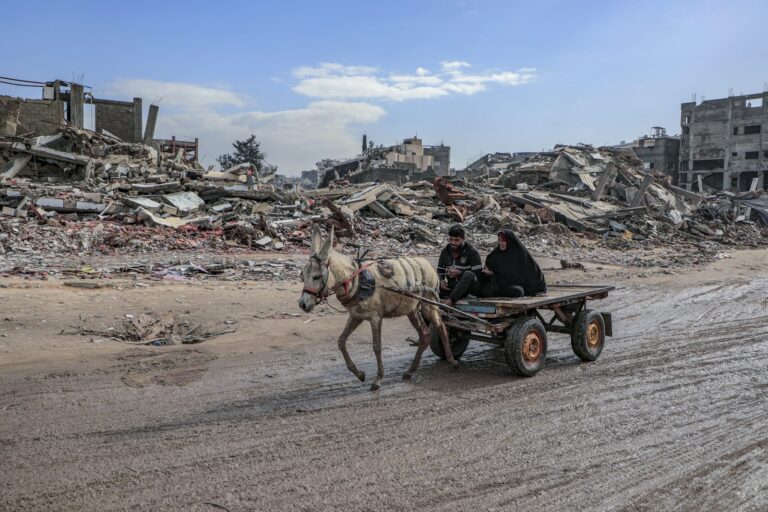
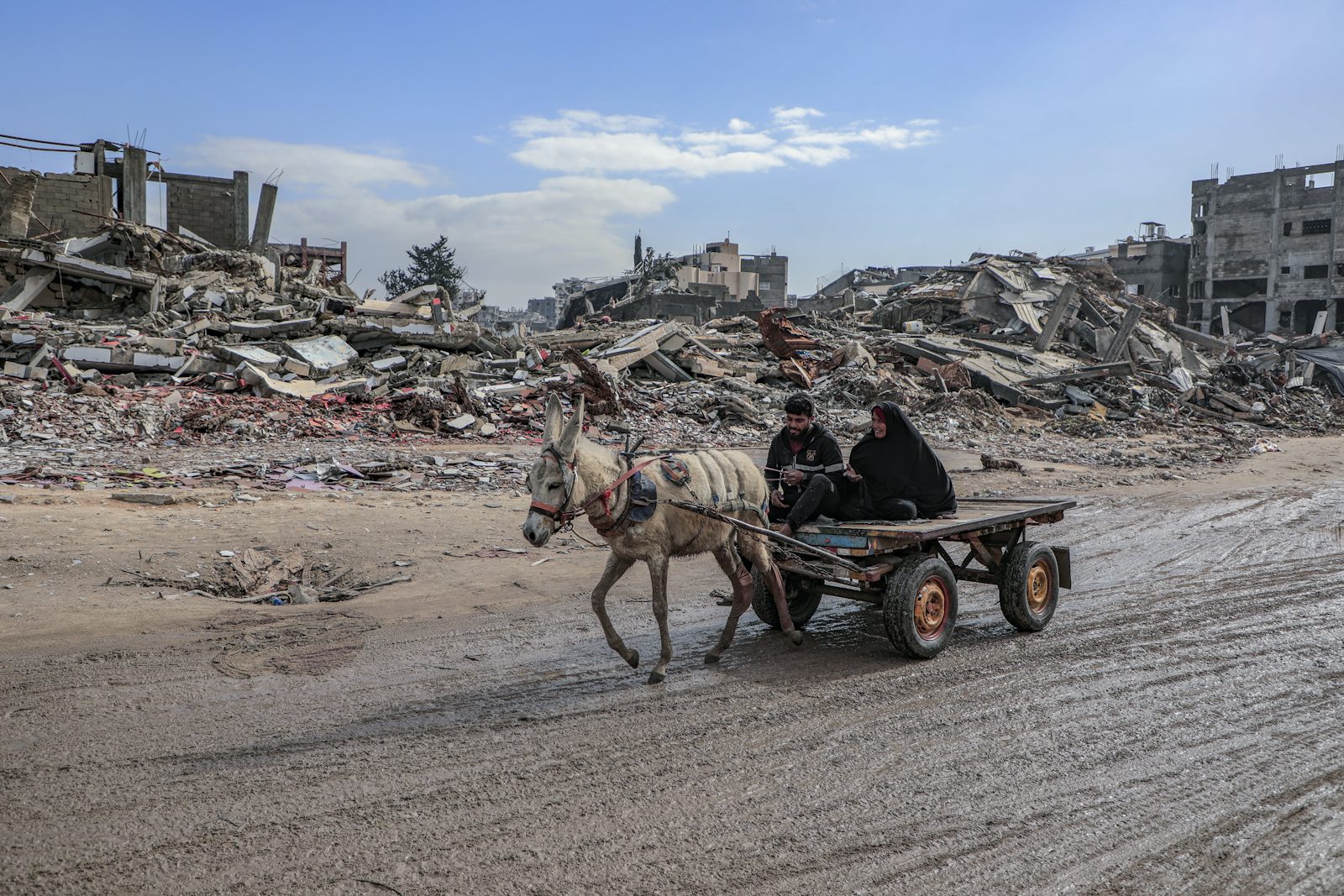
Gaza’s financial infrastructure has been severely damaged, with traditional banking channels largely non-functional and cash flows highly unstable. In that context, proponents argue that a Gaza Stablecoin could provide a digital payment rail capable of restoring basic economic activity where banks cannot operate reliably.
Under the preliminary framework being explored, the stablecoin would be pegged to the U.S. dollar and backed by a reported $10 billion U.S. commitment, alongside more than $1 billion pledged by other member countries participating in the Board of Peace. The intention is not to replace fiat currency overnight, but to offer a trusted medium of exchange for salaries, aid distribution, merchant payments, and cross-border transfers.
Supporters say the Gaza Stablecoin could help reduce reliance on informal cash systems while increasing transparency in aid distribution. “In environments where banks are destroyed, digital money can become the rails for recovery,” one policy adviser involved in the discussions said.
Crypto Already Plays a Role on the Ground
While the proposal remains hypothetical, crypto usage in the region is not new. On-chain data suggests that more than $100 million in stablecoins has already flowed through Gaza and surrounding areas in recent years, largely without formal oversight. That reality has strengthened arguments that a regulated Gaza Stablecoin could be safer than the current ad-hoc usage of existing tokens.

However, critics warn that formalizing such flows without a mature regulatory framework could amplify risks. “Stablecoins don’t magically solve governance problems,” said a compliance expert who advises international NGOs. “A Gaza Stablecoin would need strict controls, or it risks becoming a channel for misuse.”
Regulatory and Compliance Challenges
One of the biggest obstacles facing the Gaza Stablecoin concept is regulation. Gaza currently lacks a comprehensive financial regulatory authority capable of enforcing anti-money laundering (AML) rules, transaction monitoring, and sanctions compliance.
This challenge is compounded by tightening stablecoin regulation in the United States, where lawmakers are pushing for clearer reserve requirements, issuer oversight, and consumer protections. Any U.S.-backed Gaza Stablecoin would likely need to comply with evolving federal standards, creating a complex compliance burden for a territory under reconstruction.
“There’s a real tension here,” said a former U.S. Treasury official. “On one hand, stablecoins offer efficiency. On the other, deploying a Gaza Stablecoin without robust oversight raises red flags for regulators.”
Geopolitical Implications
Beyond technical and regulatory hurdles, the proposal carries geopolitical weight. Dollar-backed stablecoins already dominate global crypto markets, and introducing a Gaza Stablecoin could extend U.S. financial influence into reconstruction efforts.
Some observers see this as a strategic advantage. Others worry it could politicize humanitarian aid. “Once you introduce a state-backed digital currency into a conflict zone, finance and foreign policy become inseparable,” noted a Middle East policy analyst.

The Board of Peace has not published technical details, governance structures, or a rollout timeline, underscoring that the Gaza Stablecoin remains in an exploratory phase rather than an approved program.
Risks Highlighted by the Crypto Industry
Within the crypto sector itself, reactions are mixed. Developers point to the need for clear custody rules, auditable reserves, and transaction transparency. Without these, a Gaza Stablecoin could face the same trust issues that have plagued poorly managed digital asset projects elsewhere.
“There’s nothing inherently wrong with the idea,” said a blockchain infrastructure executive. “But execution matters. A Gaza Stablecoin must be boring, compliant, and boring again. Anything less could undermine reconstruction efforts.”
Security risks also loom large. In regions with limited digital literacy and unstable infrastructure, protecting private keys and preventing fraud would be a significant challenge.
A Turning Point for Stablecoins?
Even if the proposal never materializes, the discussion itself marks a turning point. Stablecoins are no longer viewed solely as trading tools or fintech products. The Gaza Stablecoin debate shows they are now being considered as instruments of reconstruction, governance, and international coordination.

That shift raises fundamental questions: Who controls the money? Who sets the rules? And how do you balance innovation with accountability in fragile states?
For now, officials stress that no final decision has been made. But the fact that a Gaza Stablecoin is being seriously evaluated reflects how far digital assets have moved into mainstream policy thinking.
Much depends on political will, regulatory clarity, and international cooperation. Without a defined legal framework and technical architecture, the Gaza Stablecoin remains a concept rather than a concrete solution.
Still, as traditional financial systems struggle in post-conflict zones, policymakers are increasingly willing to consider unconventional tools. Whether the Gaza Stablecoin becomes a blueprint for future reconstruction efforts—or a cautionary tale—will hinge on decisions made in the months ahead.
What is clear is that crypto has entered a new arena. And the outcome of the Gaza Stablecoin discussions could shape how digital money is used in global recovery efforts for years to come.
About the Author