

- Trending
- Comments
- Latest

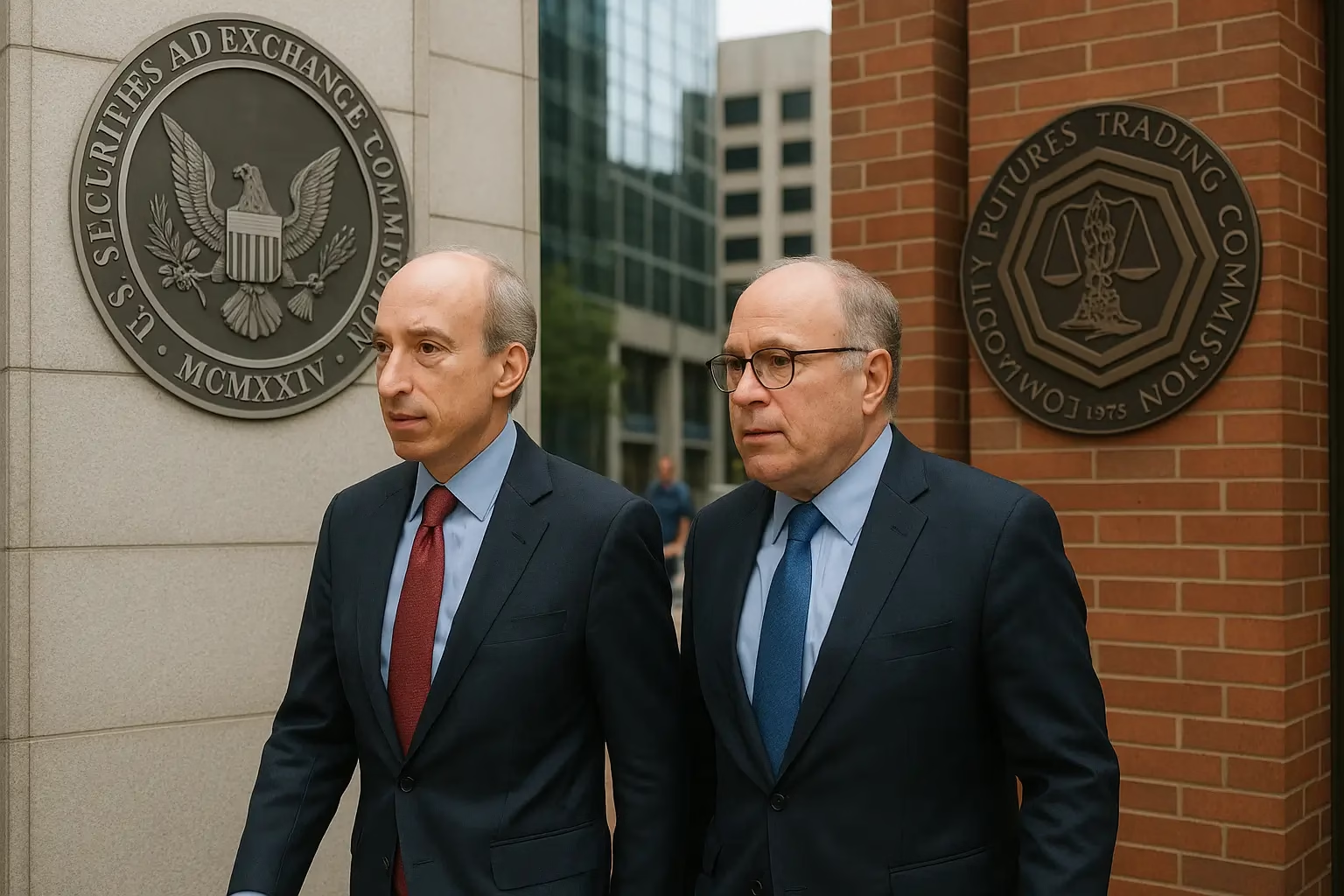
For years, crypto companies have operated inside a jurisdictional dispute they didn’t start, the SEC claiming most tokens are securities, the CFTC insisting major assets are commodities, and no statute clearly settling the question. The CLARITY Act is Congress’s attempt to draw that line, establishing which digital assets fall under which regulator and what compliance looks like on either side.
The lack of clarity has led to overlapping enforcement actions by agencies like the Securities and Exchange Commission (SEC) and the Commodity Futures Trading Commission (CFTC). As previously explored in coverage by The Bit Gazette on ongoing SEC enforcement trends, this uncertainty has created compliance risks for exchanges, token issuers, and decentralized finance (DeFi) platforms.
By defining jurisdictional boundaries, the CLARITY Act aims to reduce regulatory conflict and provide a more predictable framework for market participants.
At its core, the CLARITY Act proposes a structured framework for determining whether a crypto asset falls under securities law or commodities regulation.
Securities vs commodities: Tokens that raise funds from investors with an expectation of profit based on a centralized entity’s efforts would remain under SEC oversight. More decentralized assets similar to commodities like Bitcoin would fall under the CFTC.
Jurisdictional clarity: The bill outlines when regulatory authority shifts from the SEC to the CFTC as a network becomes sufficiently decentralized.
Compliance pathways: It introduces clearer registration and disclosure requirements for token issuers and trading platforms.
This approach attempts to codify distinctions that regulators have previously enforced through case-by-case actions. As noted in The Bit Gazette’s reporting on policy debates around crypto classification, the absence of statutory definitions has been a major barrier to institutional participation.
Reaction to the CLARITY Act has been mixed but largely constructive. Many industry participants see it as a step toward regulatory certainty, while some critics argue it may still leave room for interpretation.
A U.S. lawmaker backing the bill stated that the goal is to “bring clarity to a market that has operated in a gray area for too long,” emphasizing the need for innovation-friendly regulation.
Meanwhile, former SEC Chair Gary Gensler has consistently maintained that “most crypto tokens are securities,” signaling potential resistance to any framework that limits the agency’s jurisdiction.
Industry leaders, particularly from exchanges and DeFi platforms, have welcomed the CLARITY Act’s attempt to define compliance expectations. Earlier Bit Gazette coverage of institutional adoption trends highlights how clearer rules could unlock greater participation from traditional financial firms.
If passed, the CLARITY Act could significantly reshape the crypto landscape in several ways:
More broadly, the CLARITY Act could influence global regulatory approaches, as other jurisdictions monitor how the U.S. balances innovation with investor protection. As seen in The Bit Gazette’s analysis of global crypto policy trends, regulatory clarity often drives capital flows and ecosystem growth.
The CLARITY Act ultimately represents an attempt to transition the crypto industry from regulatory uncertainty to a rules-based system, though its final impact will depend on implementation and enforcement.



Copyright © 2025 - The Bit Gazette.