





- Trending
- Comments
- Latest

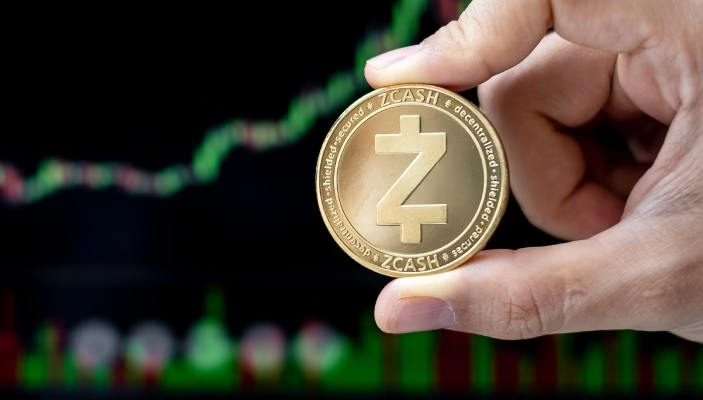
The entire core development team behind Zcash resigned from the project’s governance structure on January 8, citing irreconcilable disputes with Bootstrap, the nonprofit board overseeing the privacy-focused cryptocurrency.
The mass departure by Electric Coin Company (ECC), which has led Zcash protocol development since its 2016 launch, sent ZEC prices down more than 7% as investors weighed potential impacts on future upgrades and community cohesion.
The entire Electric Coin Company (ECC), the principal development organization behind Zcash announced its collective resignation from the project’s formal governance structure.
This decision stems from serious disagreements between key members of ECC and the Bootstrap board, the nonprofit entity responsible for guiding Zcash’s governance.
Josh Swihart, former CEO of ECC, outlined the core issue in a public statement: the board’s decisions, he said he had significantly deviated from Zcash’s foundational mission.
According to Swihart, these governance choices altered employment terms and constrained the team’s ability to work effectively.
“We are founding a new company, but we are still the same team with the same mission, building unstoppable private money,” — Josh Swihar, former CEO, Electric Coin Company says.
Swihart has made it clear that the reorganized team intends to retain its technical momentum, albeit outside the traditional governance framework that historically bound ECC to Bootstrap.
The news of the mass resignation quickly rippled through crypto markets. ZEC’s price retraced sharply in the immediate aftermath, reflecting heightened uncertainty among investors about the project’s direction and leadership continuity.
Price data tracked by market aggregators showed a notable dip with an intraday fall of more than 7% tied directly to the announcement and ensuing negative sentiment.
Market analysts describe this reaction as typical when foundational teams depart, particularly within decentralized projects where technical leadership and community trust are deeply interconnected.
Despite the short-term volatility, some traders view the sell-off as a potential entry point. Crypto veteran Arthur Hayes has publicly maintained a bullish long-term outlook for Zcash.
While citing its privacy attributes and liquidity profile, though he acknowledged that governance clarity remains a gating factor for investors.
While governance battles play out, the Zcash protocol itself continues to operate normally. As an open-source blockchain, it does not rely on a single corporate entity for network consensus or maintenance.
Validators and miners still secure the network, and node operators continue to run the protocol uninterrupted.
However, former ECC members and Zcash founder Zooko Wilcox, who publicly supports the Bootstrap board have offered differing narratives about the root of the discord and its implications.
“The security, privacy features, and permissionless nature of the Zcash protocol will not change due to governance disputes,” — Zooko Wilcox, Zcash founder, in a post addressing the community.
Some community members argue that the governance clash understands the need for structural reforms, including clearer roles for contributors and more transparent decision-making mechanisms.
Others warn that prolonged leadership fragmentation could erode confidence and slow future upgrades, particularly those tied to privacy enhancements and ecosystem growth.
Despite governance turmoil, Zcash has maintained momentum in adoption and institutional interest.
Late in 2025, filings emerged seeking to convert the Zcash Trust into a spot exchange-traded product, reflecting broader demand for regulated exposure to privacy-enhanced digital assets.
Institutions such as Reliance Global Group have also publicly consolidated portions of their digital asset treasury into ZEC, underscoring confidence in the coin’s long-term value proposition.
With the core development team now independent, stakeholders are closely watching whether the split will spur innovation or deepen friction within the Zcash ecosystem.
As one portfolio manager put it, the Governance strength is now as important as technology when valuing any crypto asset.
Analysts expect further volatility as market participants digest not only the current shift but the governance reforms that may follow.



Copyright © 2025 - The Bit Gazette.