- Trending
- Comments
- Latest

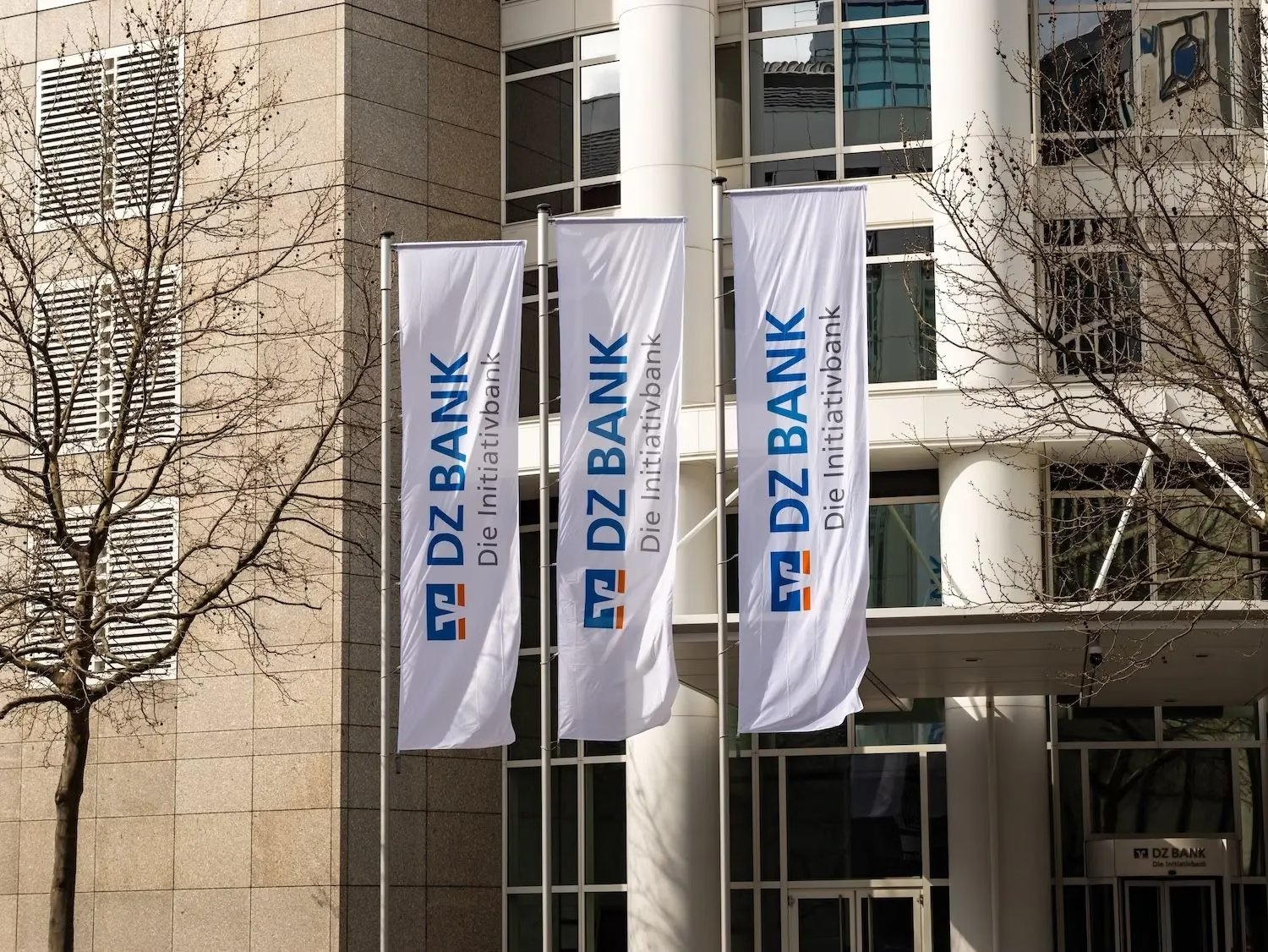
Germany’s second-largest banking group, DZ Bank, has secured formal approval under the European Union’s Markets in Crypto-Assets Regulation (MiCAR), clearing a key regulatory hurdle to offer regulated cryptocurrency trading services to institutional clients.
The licence, granted by Germany’s financial regulator BaFin in late December 2025, authorizes the bank to operate its own digital asset trading platform, meinKrypto, and supports the purchase and sale of major digital assets including Bitcoin (BTC) and Cardano (ADA).
The MiCAR framework, which took effect across the EU, aims to harmonize crypto-asset rules to enhance investor protection and foster competition.
By clinching this approval, DZ Bank joins a small but growing cohort of traditional financial institutions embracing regulated digital asset offerings while aligning operations with stringent compliance standards.
The newly authorized meinKrypto platform — developed jointly by DZ Bank and Atruvia, the IT services provider for Germany’s cooperative banking sector — is designed as a fully digital wallet solution integrated into the cooperative VR Banking App.
Initially targeted at self-directed investors rather than advisory clients, the platform will allow trading of Bitcoin, Cardano, Ethereum (ETH) and Litecoin (LTC) without redirecting customers to third-party exchanges.
However, the rollout of services to customers across the cooperative network which spans roughly 700 Volksbanken and Raiffeisenbanken requires each bank to file its own MiCAR notification with BaFin.
Only after the local approval process can individual institutions begin offering trading to retail users.
“Each participating bank has autonomy in deciding whether to adopt the meinKrypto platform,” said Dr. Albert Müller, Head of Digital Assets.
According to a September 2025 industry study, more than one-third of Germany’s cooperative banks plan to integrate crypto services in the coming months, reflecting broad institutional interest in digital asset markets.
DZ Bank’s move comes amid increasing momentum across European traditional finance to embed regulated crypto services within mainstream banking infrastructure.
France’s BNP Paribas, the Netherlands’ ABN AMRO, and other legacy institutions have recently received similar MiCAR authorizations or rolled out digital asset products, reinforcing the trend toward institutional embrace of digital currencies.
Regulated offerings help address long-standing industry concerns around custody, compliance, and market risk.
By partnering with established infrastructure providers such as Boerse Stuttgart Digital Custody for asset safekeeping and EUWAX for execution services, banks can ensure adherence to rules while meeting institutional demand.
Yet not all observers are unreservedly optimistic. Regulatory expert Ingrid Becker at the European Financial Policy Centre cautioned that while MiCAR creates a unified regime, individual member state implementations and supervision may vary.
The approval of DZ Bank to offer regulated crypto trading represents a notable shift from early skepticism toward digital assets among traditional banks to cautious institutional acceptance.
Regulated financial institutions are increasingly integrating digital asset solutions within established financial systems, potentially expanding market liquidity and confidence.
Market participants anticipate that such regulated offerings will draw in institutional capital that has previously been hesitant due to regulatory uncertainty.
If the rollout succeeds across Germany’s cooperative network and beyond, it could pave the way for broader retail adoption through trusted banking channels, a development with implications for crypto market dynamics in 2026 and beyond.



Copyright © 2025 - The Bit Gazette.