







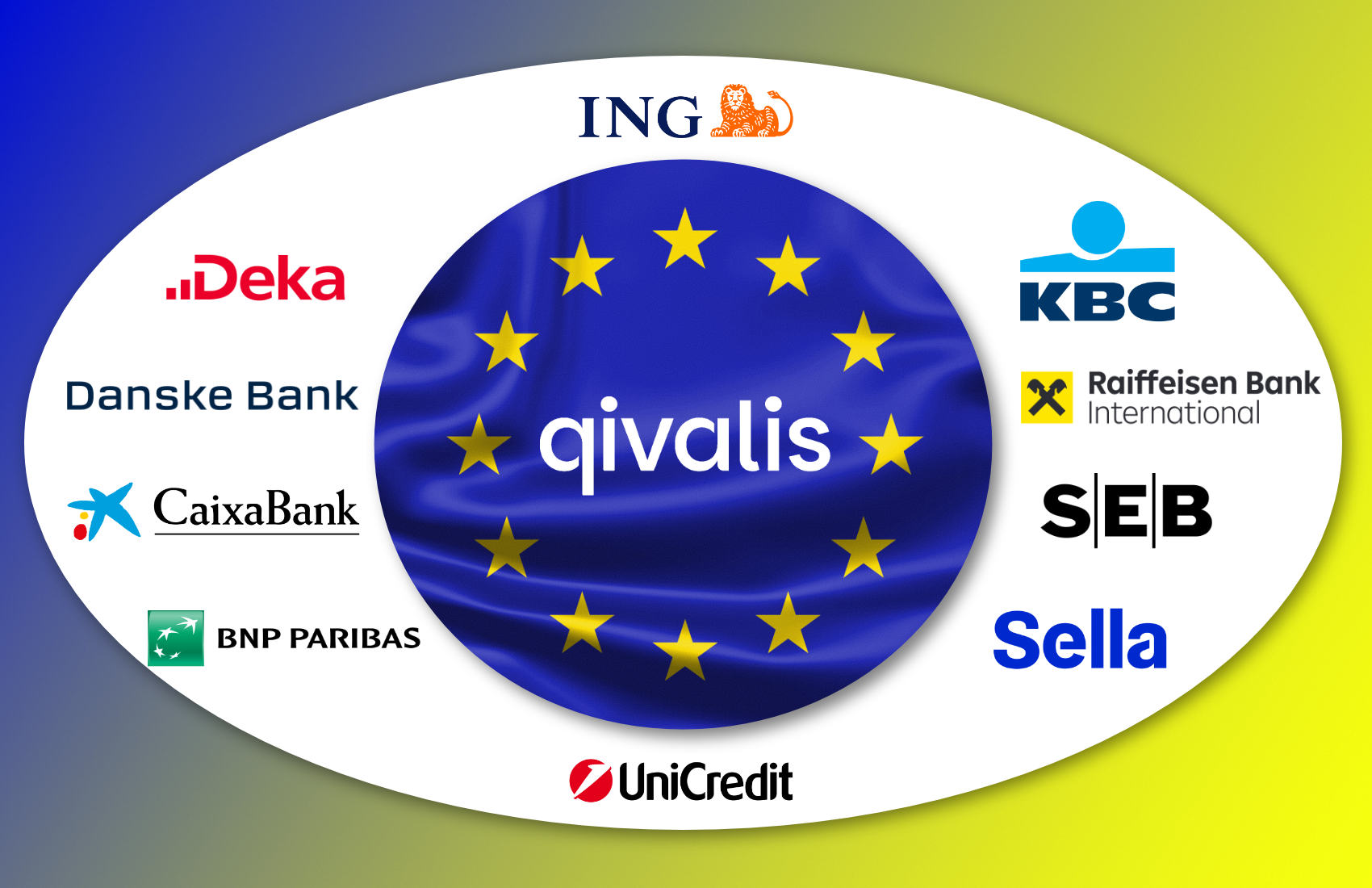
Qivalis, a consortium of nine major European banks including ING, UniCredit and CaixaBank, is in advanced talks with cryptocurrency exchanges and market makers to secure distribution for a Euro-pegged stablecoin it plans to launch in the second half of 2026, according to Spanish business daily Cinco Días.
At the center of the push is Qivalis, a consortium of major lenders that is now in advanced talks with cryptocurrency exchanges, liquidity providers, and market makers to ensure broad distribution at launch. Spanish business daily Cinco Días first reported the discussions, describing them as a critical step in bringing a regulated Euro-pegged stablecoin to market at scale.
Banks Move Early to Secure Distribution
According to people familiar with the talks, Qivalis is negotiating with both established crypto exchanges and specialist trading firms to guarantee liquidity from day one. The strategy mirrors lessons learned from earlier stablecoin launches, where distribution bottlenecks limited adoption despite strong backing.
The consortium’s membership reads like a who’s who of European banking. Founding members include ING, UniCredit, CaixaBank, Danske Bank, Raiffeisen Bank International, KBC, SEB, DekaBank and Banca Sella, with BBVA joining more recently. Together, they represent hundreds of billions of euros in assets and deep ties to corporate and retail clients across the continent.
By locking in exchange partners early, Qivalis aims to avoid the fragmented rollouts that plagued earlier experiments and to position its Euro-pegged stablecoin as a practical settlement and payment tool rather than a niche crypto product.
A Regulated Answer to Dollar Dominance
For European policymakers and bankers alike, the rise of dollar-backed tokens has been a growing concern. Stablecoins tied to the US dollar underpin a large share of global crypto trading and cross-border transfers, reinforcing the greenback’s dominance even in digital markets.
Qivalis’ project is designed as a counterweight. A Euro-pegged stablecoin issued and distributed by regulated banks could offer businesses and consumers a compliant alternative for payments, treasury operations, and on-chain settlement. “The priority is to create a regulated, domestic option that reflects European values and oversight,” said Jan Sell, Qivalis’ chief executive.
Sell, a former Germany head at Coinbase, added that the consortium is deliberately casting a wide net when it comes to partners. “We are evaluating both European and international platforms,” he said, noting that global reach will be essential for the Euro-pegged stablecoin to compete with established dollar-based rivals.
Global Ambitions, European Roots
The consortium was formally announced in September 2025 with nine initial members, at a time when regulatory clarity around stablecoins in Europe was improving. Since then, momentum has accelerated as banks weigh the commercial risks of staying on the sidelines.
Industry analysts say timing will be crucial. By 2026, corporate treasurers are expected to be far more comfortable using blockchain-based instruments, provided they come with bank-grade compliance. A Euro-pegged stablecoin backed by household-name lenders could meet that threshold, particularly for cross-border trade within the eurozone.
Shareholder banks will also be able to distribute the token directly to their own clients, a move that could fast-track adoption and embed the Euro-pegged stablecoin into everyday banking services. That distribution muscle is something most crypto-native issuers lack.
Why 2026 Could Be a Turning Point
The second half of 2026 is shaping up as a pivotal window for European digital finance. By then, regulatory frameworks are expected to be fully operational, and competition from non-European issuers will likely intensify.
Against that backdrop, Qivalis is positioning its Euro-pegged stablecoin not just as a product, but as infrastructure. Supporters argue it could reduce reliance on foreign-denominated tokens, strengthen monetary sovereignty, and give Europe a stronger voice in shaping global digital payments.
Still, execution risks remain. Securing exchange partnerships is only the first hurdle; building liquidity, trust, and real-world use cases will determine whether the Euro-pegged stablecoin can move beyond pilot phases. Yet the involvement of Europe’s banking heavyweights suggests this effort is more than a trial run.
If successful, the initiative could mark the moment when traditional finance reasserts itself in crypto markets—on its own terms, and with a distinctly European imprint.