

- Trending
- Comments
- Latest

Blockchains that rely on Proof of Stake replace miners with validators responsible for confirming transactions and securing the network.
To ensure these validators act honestly, the system introduces penalties for misconduct. One of the most important of these is slashing.
Rather than simply removing a validator from the network, slashing imposes a direct financial penalty.
This explainer breaks down what slashing is, how it works in staking systems, and why it plays a critical role in blockchain security.
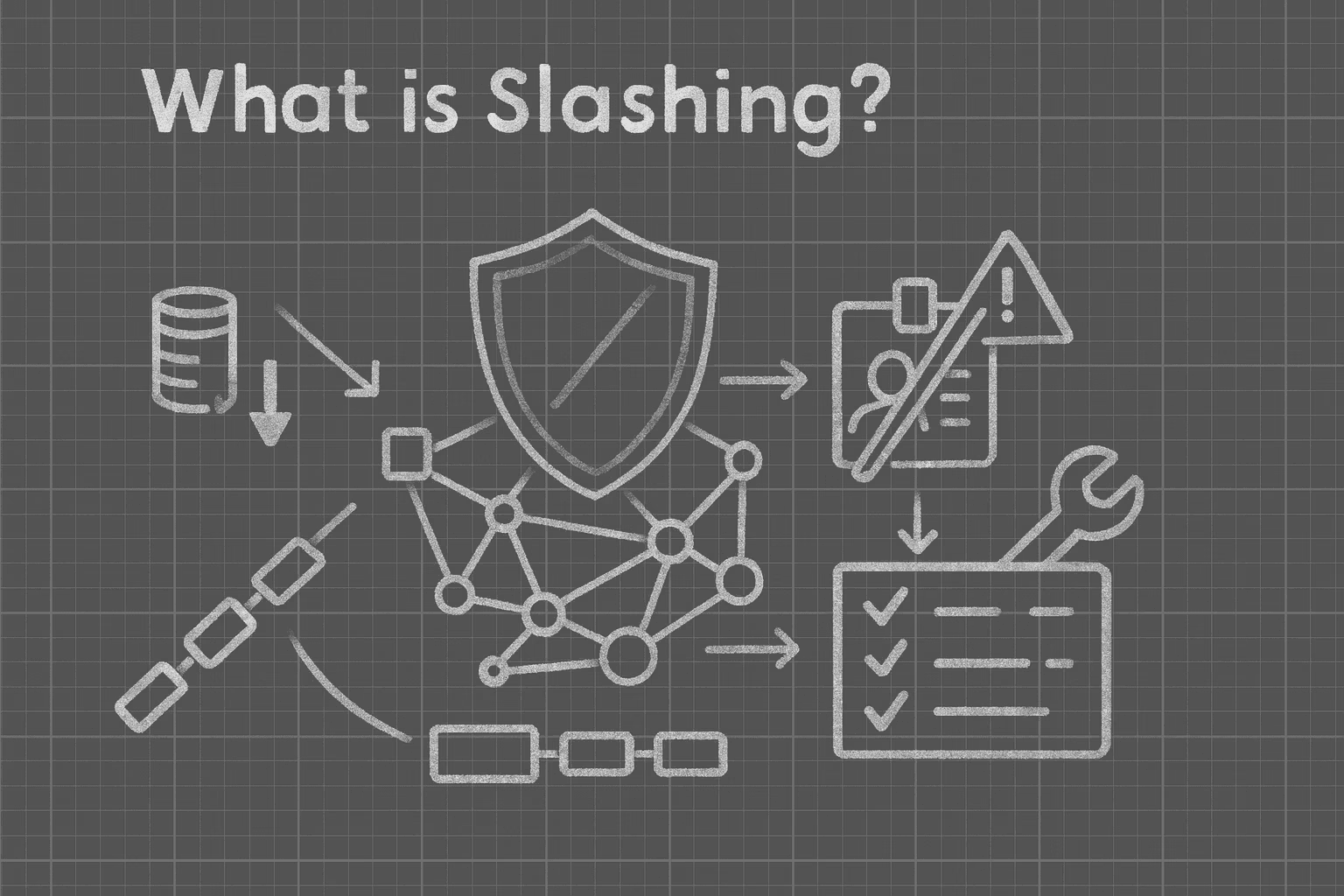
Slashing is a mechanism that penalizes validators by taking a portion of their staked cryptocurrency when they violate network rules.
In Proof of Stake systems, validators are required to lock up funds as collateral. This stake acts as a guarantee that they will behave honestly.
If a validator acts maliciously or fails to perform required duties, part of their stake is permanently removed.
According to ethereum official page, slashing is designed to discourage harmful behavior and maintain the integrity of the network.
This approach aligns incentives by making dishonest actions financially costly.
In a blockchain network, slashing is triggered when a validator engages in specific types of misconduct.
These can include double-signing blocks, validating conflicting transactions, or remaining offline for extended periods.
When such behavior is detected, the protocol automatically enforces a penalty by reducing the validator’s stake.
The process works as follows:
In some systems, repeated offenses can result in the validator being removed entirely from the network.
This mechanism is commonly used in Proof of Stake networks like Ethereum, where maintaining validator reliability is essential for consensus.
Slashing plays a central role in maintaining trust and security in Proof of Stake systems.
By introducing financial consequences, it discourages validators from attempting to manipulate the network or act irresponsibly.
This is particularly important in decentralized environments where there is no central authority enforcing rules.
At the same time, slashing introduces risk for participants. Validators must ensure their systems are properly configured and consistently online to avoid penalties.
This creates a balance between opportunity and responsibility in staking.
Slashing reflects a broader shift in how blockchain networks enforce security.
Instead of relying solely on computational power, Proof of Stake systems depend on economic incentives and penalties to maintain order.
As more networks adopt staking models, mechanisms like slashing will continue to play a key role in ensuring reliability and trust.
They also highlight the importance of careful participation, as even unintentional mistakes can result in financial loss.



Copyright © 2025 - The Bit Gazette.