


- Trending
- Comments
- Latest

The United Nations Development Programme (UNDP) is testing blockchain infrastructure across 42 public sector use cases in developing economies, according to an analysis of UNDP deployment initiatives released March 28. The pilot programs span Africa, Latin America, Asia, and Eastern Europe, targeting efficiency gaps in digital identity, climate finance tracking, and government payments.
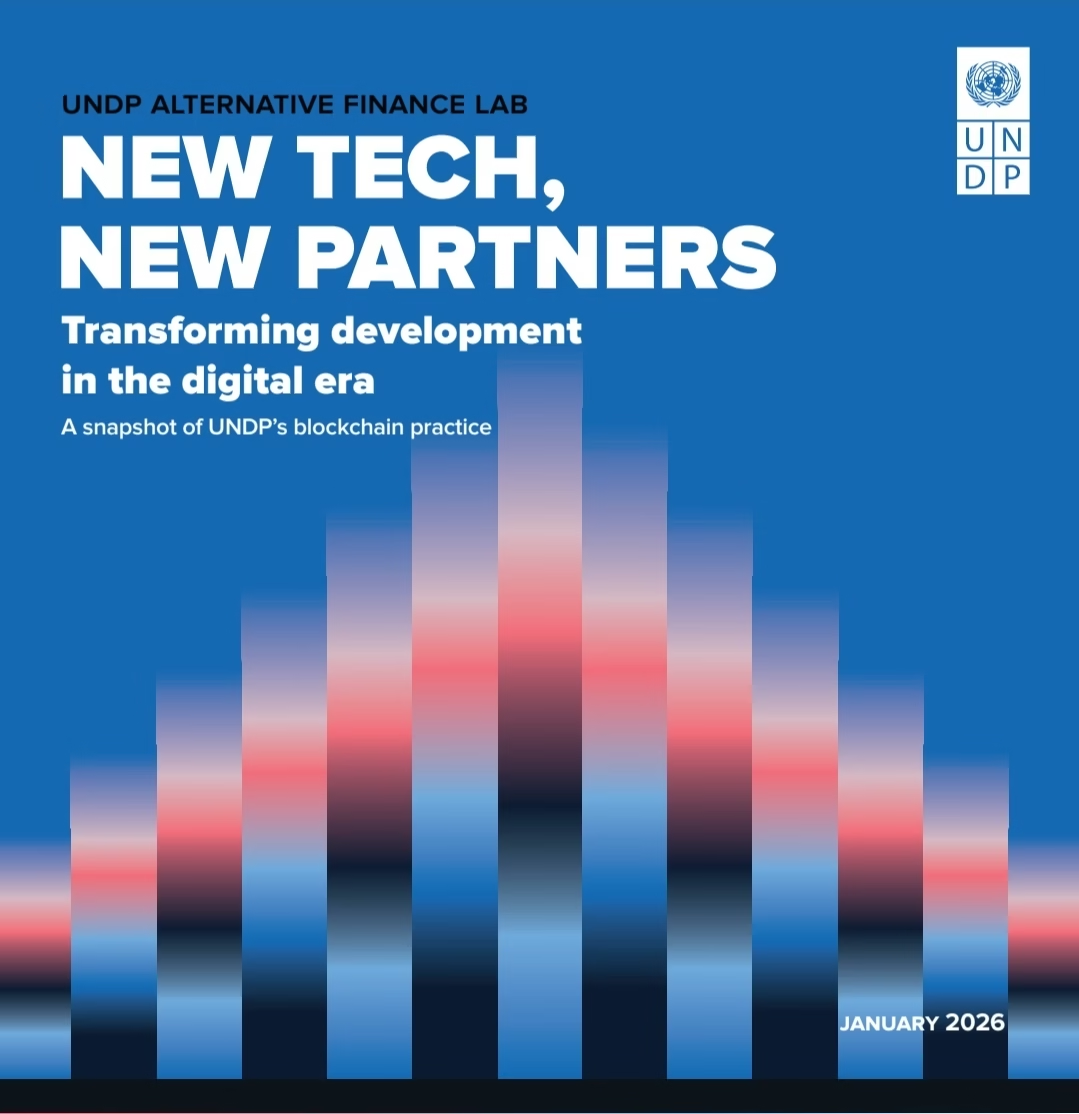
Titled “New Tech, New Partners: Transforming development in the digital era,” the study focuses on how UNDP blockchain infrastructure is being tested across developing economies in Africa, Latin America, Asia, and Eastern Europe. The findings suggest a gradual but structured approach to adopting distributed ledger technologies within governance frameworks.
At the core of the report is the role of UNDP blockchain infrastructure as a foundational layer for improving public sector operations. According to the analysis, many governments face persistent issues such as fragmented data systems, weak institutional coordination, and limited transparency in financial processes.
The research identifies 42 real-world use cases where blockchain is being applied, including digital payments, financial inclusion, climate finance tracking, and data governance. Seven of these cases specifically address digital identity systems, a critical component of national infrastructure.
“New Tech, New Partners: Transforming development in the digital era,” — UNDP report, cited by Cointelegraph Research.
In these applications, blockchain functions primarily as a shared ledger, enabling multiple institutions to access and verify information securely. This approach strengthens audit trails, improves accountability in public spending, and facilitates more reliable data exchange.
Rather than treating blockchain as a standalone solution, the report emphasizes that UNDP blockchain infrastructure is embedded within broader digital ecosystems designed to evolve alongside national development strategies.
A key insight from the research is UNDP’s “pipeline” model, which guides how UNDP blockchain infrastructure is introduced into public systems. Instead of immediate large-scale implementation, projects begin as targeted pilot programs developed in collaboration with governments, developers, and local stakeholders.
These pilots are designed to address specific operational challenges. Examples include inefficient payment systems for micro-entrepreneurs, fragmented tracking of climate finance, and weak accountability mechanisms in supply chains.
“Projects typically begin with targeted pilots developed jointly with governments,” — Cointelegraph Research analysis.
This incremental approach allows institutions to test solutions in controlled environments before scaling. It also reduces risk and provides flexibility, enabling governments to experiment with different technologies without committing to a single platform.
Importantly, the report notes that UNDP blockchain infrastructure follows a platform-agnostic design. This ensures interoperability and prevents vendor lock-in, a common concern in large-scale digital infrastructure projects.
While the benefits of blockchain are clear, the report underscores that UNDP blockchain infrastructure also introduces technical and institutional risks. These include vulnerabilities related to data privacy, poorly designed smart contracts, and potential misuse of financial systems.
To address these concerns, UNDP integrates governance standards and safeguards into every stage of project development. This includes regulatory considerations, privacy protections, and robust system design principles.
“Blockchain adoption in public infrastructure introduces technical and institutional risks,” — Cointelegraph Research.
The emphasis on governance reflects a broader understanding that technology alone cannot solve systemic issues. Instead, UNDP blockchain infrastructure must be supported by strong institutional frameworks to ensure long-term sustainability and trust.
The findings from Cointelegraph Research point to a growing shift in how blockchain is perceived within development systems. Rather than being limited to cryptocurrency applications, UNDP blockchain infrastructure is increasingly viewed as a tool for strengthening public institutions.
By documenting practical implementations, the report provides policymakers and development practitioners with clearer insights into where blockchain can deliver measurable impact. It also highlights the importance of partnerships between governments, technology providers, and local communities.
As digital transformation accelerates globally, UNDP blockchain infrastructure may play a critical role in bridging gaps between institutions, improving transparency, and enabling more inclusive economic systems.
The full Cointelegraph Research summary and the complete UNDP report are available through official publication channels.



Copyright © 2025 - The Bit Gazette.