







- Trending
- Comments
- Latest


A Wisconsin school district is at the centre of a costly phishing scams investigation after paying $67,636 in fraudulent invoices that appeared to come from its superintendent. Prosecutors allege the money was deposited into an Ohio woman’s bank account before being transferred through Cash App and Crypto.com and converted into Bitcoin.
The accused, Laura Griffin of Pickerington, Ohio, failed to appear for her initial court hearing on July 27, prompting a Door County judge to issue a warrant for her arrest.
The alleged phishing scams incident began in September 2025 when employees at the Southern Door County School District received emails impersonating Superintendent Kevin Krutzik.
The fraudulent messages instructed an accounting employee to process payments for educational materials and professional development services that had never been ordered. Authorities later charged Griffin with two felony counts of theft by false representation, while investigators continue tracing the movement of the stolen funds.
According to the amended criminal complaint, the fraudsters used an email address designed to resemble that of Superintendent Kevin Krutzik, making the requests appear legitimate. The email account was not connected to the school district but successfully convinced an employee to process invoices without detecting the deception.
The first invoice requested $38,718 for digital curriculum platforms, robotics kits, online tutoring, teacher workshops and testing software. A second invoice sought $28,918 for professional development workshops, coaching sessions, curriculum resources and certification management.
Both invoices instructed that payment be made to Laura Griffin using identical banking and mailing information. Investigators determined that the real superintendent had no involvement in the correspondence and had not authorised the purchases.
The district subsequently mailed the first cheque on September 23, 2025, followed by a second cheque on October 23. Banking records showed that both payments cleared successfully, bringing the total loss from the phishing scams operation to $67,636 before the fraud was discovered.
Investigators allege the stolen money moved quickly after reaching Griffin’s U.S. Bank account. Court documents state that the account balance dropped to just $17.18 shortly after the deposits were made.
Authorities traced approximately $40,000 to a Cash App account registered in Griffin’s name, while another $28,000 was reportedly transferred to her Crypto.com account. Investigators believe the funds were converted into Bitcoin before being distributed across multiple cryptocurrency wallets.
The complaint further alleges that some of the digital assets eventually reached virtual asset platforms based outside the United States, including services operating in the United Kingdom and Seychelles. Those international transfers, combined with peer-to-peer cryptocurrency transactions, reportedly made it significantly more difficult for investigators to identify the ultimate recipients of the money linked to the phishing scams.
When questioned by investigators in Ohio in March 2026, Griffin reportedly claimed that an online man she believed to be her boyfriend instructed her to move the money. According to the complaint, she said the individual claimed to work for the U.S. Army and told her the funds originated from an Army account.
Griffin also reportedly told investigators she had previously sent the man about $120,000 over five years using bank transfers, credit cards and other payment methods. She said she had never used cryptocurrency before being instructed to convert the school district’s funds into Bitcoin and maintained that she had only communicated with the man through online messages despite several failed attempts to meet in person.
The legal case escalated on July 27 when Griffin failed to attend her scheduled initial appearance in Door County Circuit Court. Although her attorney appeared before the court, Griffin’s absence prompted the judge to issue an arrest warrant.
She now faces two Class G felony counts of theft by false representation involving amounts between $10,000 and $100,000. If convicted, each count carries a maximum penalty of 10 years in prison and a fine of up to $25,000.
The case remains pending, and prosecutors have not indicated that Griffin has entered a plea.
Although the financial loss was substantial, the Southern Door County School District said its insurance provider reimbursed nearly all of the stolen funds except for the policy deductible.
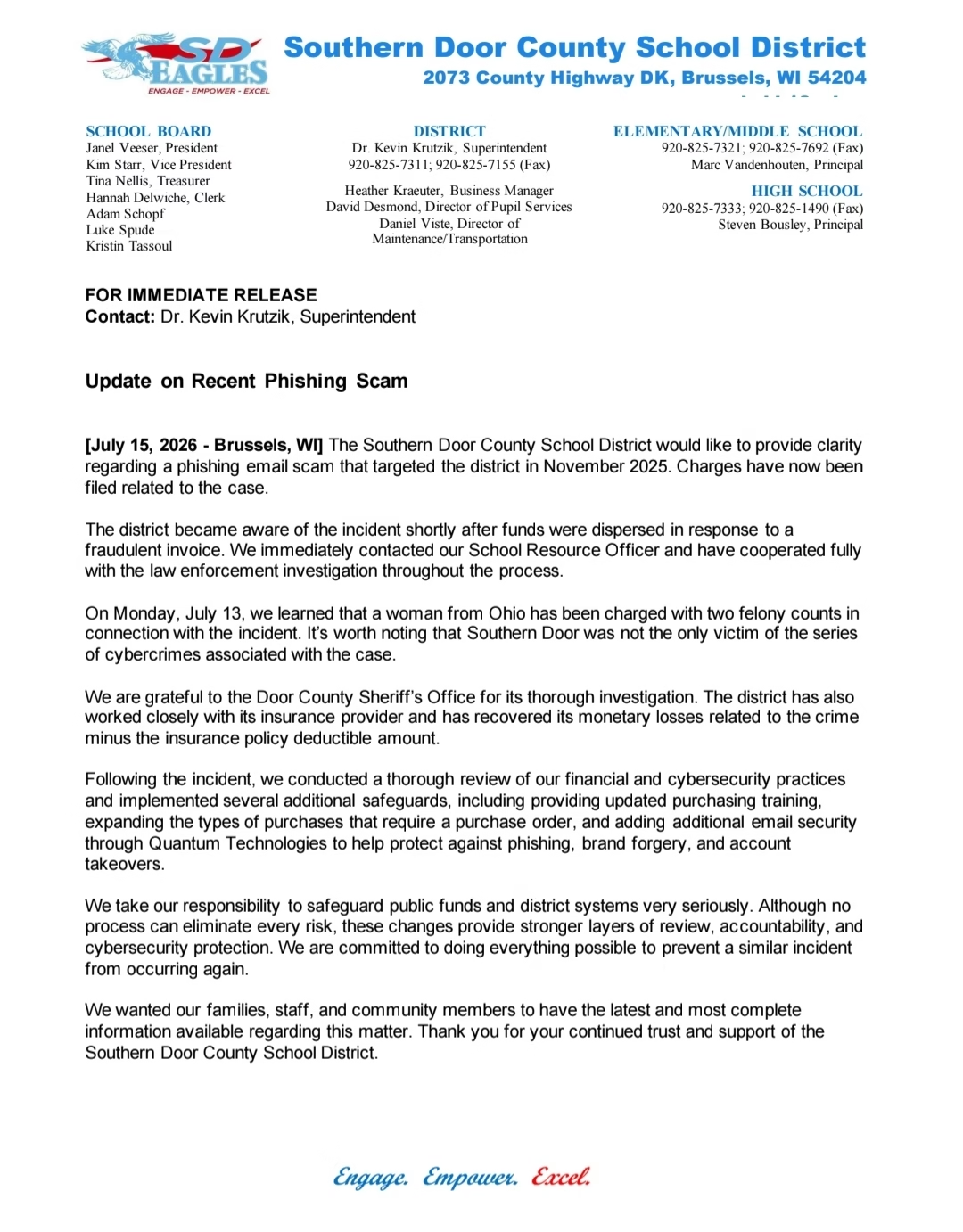
Following the incident, the district reviewed its purchasing and cybersecurity procedures to reduce the risk of similar phishing scams in the future. Officials expanded the range of transactions requiring purchase orders, updated purchasing procedures for employees and introduced stronger email protections designed to detect phishing attempts, brand impersonation and account takeovers.



Copyright © 2025 - The Bit Gazette.

