




- Trending
- Comments
- Latest

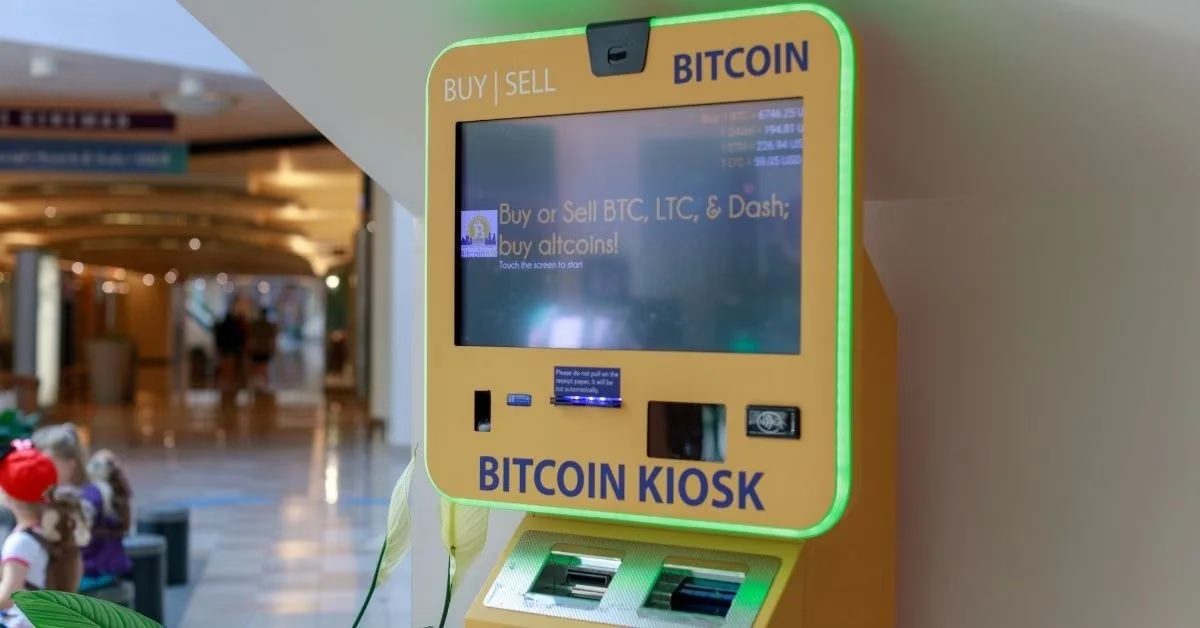
Albuquerque’s city council voted Wednesday to ban cryptocurrency ATMs and cashier-facilitated crypto transactions across the city, targeting a growing channel for scams that officials say disproportionately harm older adults and other vulnerable residents.
The ordinance, sponsored by District 1 Councilor Stephanie W. Telles and District 7 Councilor Tammy Fiebelkorn, targets physical crypto kiosks that city officials say are increasingly being used in scams and other criminal activity.
The Virtual Currency Ordinance, formally designated O-26-49, prohibits the installation, operation, hosting and facilitation of virtual currency ATMs and publicly accessible cryptocurrency kiosks. It also covers retail transactions in which a cashier, clerk or other intermediary accepts payment in person on behalf of a virtual currency provider.
The council said the action is aimed at the physical infrastructure used to facilitate fraudulent transactions rather than cryptocurrency itself.
“Let’s be honest about what these cryptocurrency kiosks really are: A conduit for exploitation and crime,” — Stephanie W. Telles, Albuquerque City Councilor.
The Virtual Currency Ordinance comes as law enforcement agencies have reported substantial consumer losses linked to cryptocurrency kiosk scams. According to the Federal Bureau of Investigation’s Internet Crime Complaint Center, fraud involving virtual currency kiosks has generated hundreds of millions of dollars in losses among consumers nationwide.
The machines are often located in convenience stores and other public spaces. According to the city, criminals can direct victims to these kiosks and instruct them to convert cash into digital assets such as Bitcoin, Ethereum or Litecoin.
Such transactions can be particularly damaging in impersonation scams and coercive payment schemes, where victims may be pressured into sending money under the belief that they are paying a government agency, law enforcement officer, financial institution or another trusted party.
Albuquerque officials said older adults and other vulnerable groups are disproportionately exposed to these schemes.
The Virtual Currency Ordinance therefore takes aim at the point where physical cash can be rapidly converted into cryptocurrency, rather than attempting to regulate residents’ legitimate use of digital assets.
Telles said the city’s decision was driven by the scale of reported fraud associated with the machines.
“No one who legitimately exchanges or transmits virtual currency uses these kiosks, because the high fees make them a ripoff,” Telles said.
She added that the city had to act because residents were already being targeted in their communities.
Under the Virtual Currency Ordinance, the prohibition extends beyond kiosk operators. Businesses, property owners, landlords and retailers that host the machines will also be prohibited from allowing them to operate.
Violations can result in cumulative daily fines, possible revocation of business licenses and injunctive action by the city.
The measure also establishes a removal requirement for existing machines. Virtual currency ATMs currently operating in Albuquerque must stop operating and be physically removed no later than 45 days after the ordinance becomes effective.
The council said the broader approach is intended to prevent cryptocurrency kiosks from simply shifting responsibility between operators and the businesses where the machines are located.



Copyright © 2025 - The Bit Gazette.