
- Trending
- Comments
- Latest

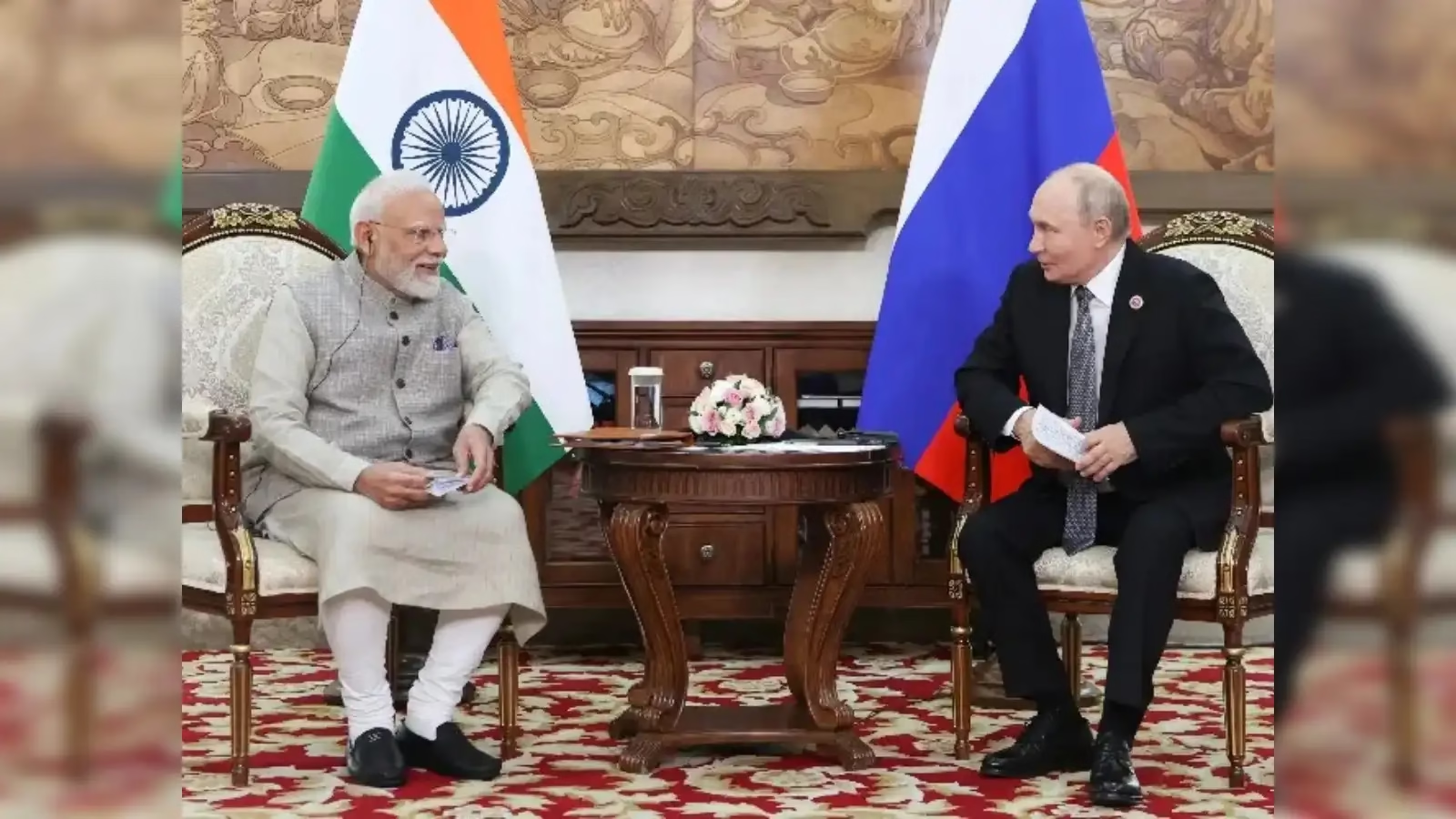
India and Russia are exploring a joint central bank digital currency (CBDC) system to settle bilateral trade nearing $60 billion, Sberbank CEO Herman Gref said in New Delhi, where India is hosting the 2026 BRICS summit, as both countries look for alternatives to traditional cross-border payment channels.
“Now it’s only beginning, but we see huge opportunity for digital currency for all settlements between the countries,”
Gref told reporters in New Delhi, where India is hosting the BRICS summit.
The proposal would bring India’s digital rupee and Russia’s digital ruble closer to an international use case, although neither central bank has announced a finished bilateral payment system.
India-Russia goods trade increased from about $13 billion in fiscal 2022 to nearly $60 billion in fiscal 2026, according to Indian officials. But the growth has been heavily tilted toward Russia, with the trade deficit exceeding $50 billion.
India became a major buyer of Russian oil after Moscow’s invasion of Ukraine in 2022, causing bilateral trade to surge even as Western sanctions complicated Russia’s access to parts of the international financial system.
The two countries are targeting $100 billion in bilateral trade by 2030.But increasing trade also created a payment problem.
Russia accumulated large rupee balances from Indian imports because Indian exports to Russia were not enough to offset the value of Russian goods, particularly energy. Some of those funds were held in vostro accounts used for rupee-based trade settlements.
Gref said that issue is no longer a major obstacle because Russian companies have found ways to use the accumulated rupees. He also said some of the funds had been invested in Indian government securities, although he did not give a figure.
The proposed CBDC mechanism could therefore become another way for both countries to handle the growing volume of trade.
India has been testing its digital rupee since 2022.
The Reserve Bank of India launched wholesale and retail CBDC pilots in November and December 2022 respectively. The central bank has also been exploring cross-border applications for the digital rupee, including bilateral and multilateral arrangements aimed at improving the speed, efficiency and transparency of international payments.
The digital rupee is not a cryptocurrency.
It is a digital form of India’s sovereign currency issued by the Reserve Bank of India. Unlike Bitcoin or other privately issued digital assets, its value and issuance are tied directly to the central bank.
India would not need to create a new cryptocurrency for Russia. Instead, the two countries could potentially build a system that allows their existing CBDCs to interact and settle eligible trade transactions.
The technical details, however, have not been publicly finalized.
Russia is further ahead in moving its CBDC from testing toward wider use.
The Bank of Russia began the wider rollout of the digital ruble on September 1, 2026. Major banks and qualifying large retailers were required to make infrastructure available for digital-ruble transactions from that date, while further phases are scheduled for later years.
The digital ruble operates alongside Russia’s existing cash and bank-account money.
Users can access digital-ruble wallets through participating banks, while the currency itself is issued on the Bank of Russia’s digital-ruble platform.
That gives Moscow something India does not yet have at the same scale: a national CBDC infrastructure already moving into broader real-world use.
For a potential India-Russia settlement system, that could make Russia a natural testing ground for one of the digital ruble’s first major international applications.
The India-Russia discussions are also part of a much bigger payment debate inside BRICS.
India, which is chairing BRICS in 2026, has been pushing for stronger cross-border payment links between member countries. Reuters reported this week that New Delhi is advocating integration of CBDCs among BRICS members to make international payments easier.
The idea is not necessarily to create a single BRICS currency. Instead, participating countries could connect their existing payment systems and digital currencies so businesses can transact more directly across borders.
A common BRICS currency would require countries to agree on monetary policy, issuance, reserves and other major economic questions. Linking payment systems is considerably less ambitious.
India has also been careful to frame the initiative as an effort to make payments faster and more efficient rather than a direct campaign to replace the US dollar.
Reuters reported that political and technical obstacles, including currency imbalances and differences among BRICS members, could still make the project difficult to implement.
India has the digital rupee. Russia has the digital ruble. Both central banks operate their own CBDC infrastructure.
The harder question is how the two systems would communicate.
A workable cross-border CBDC network would need common technical standards, rules for foreign exchange conversion, liquidity arrangements and mechanisms for handling trade imbalances.
The trade imbalance between India and Russia makes that especially important.
If India buys far more from Russia than Russia buys from India, digital settlement does not make the imbalance disappear. It only changes how the payments move.
That is why India has also been pushing for greater Indian exports to Russia.
Gref said Russia wants more Indian goods in its market, while Indian officials have similarly identified the trade imbalance as a major issue as both countries pursue the $100 billion target.
The bigger implication is what happens if India and Russia succeed.
A bilateral CBDC settlement system could provide a practical test for the wider BRICS ambition of connecting national payment systems.
BRICS countries are already discussing ways to improve cross-border payments and increase the use of local currencies. India’s UPI and other domestic payment systems have also become part of the bloc’s wider discussion about international payment connectivity.
For Russia, the incentive is particularly strong because Western sanctions have made access to traditional international payment infrastructure more difficult.
New Delhi wants greater control over how its growing trade relationships are settled without necessarily turning the system into an explicit challenge to the dollar.
That makes the India-Russia CBDC discussions more than another digital currency experiment.
They are a test of whether central bank-issued digital money can move from domestic payment pilots into the much harder world of international trade.
For now, the project is still at an early stage. But with India-Russia trade already near $60 billion and both countries targeting $100 billion, the need for a more efficient settlement mechanism is becoming harder to ignore.



Copyright © 2025 - The Bit Gazette.