
- Trending
- Comments
- Latest

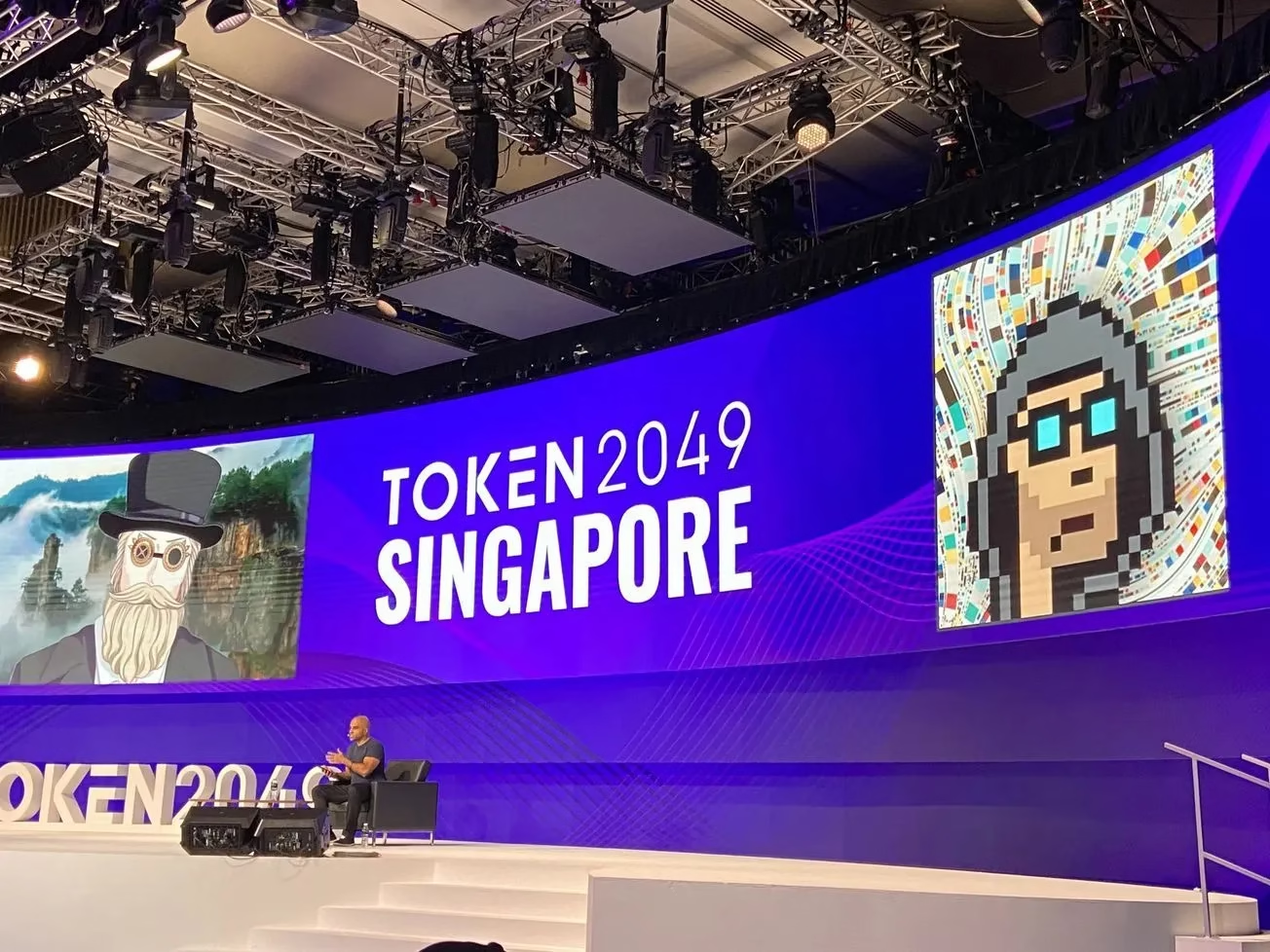
Crypto founders, investors, executives and financial institutions are gathering in Singapore this week as the conference opens against a more constructive market backdrop.
The event is scheduled for Oct. 7-8 at Marina Bay Sands, with more than 500 exhibitors and 300 speakers expected to take part. Among the prominent names on the program are Hyperliquid CEO Jeff Yan, Polymarket CEO Shayne Coplan and World Liberty Financial co-founder Eric Trump.
The gathering comes after bitcoin climbed from about US$58,000 at the end of June to roughly US$86,000 as of Oct. 6. The move has revived expectations that the prolonged crypto downturn could be giving way to another bull market, although prices and investor confidence remain below the peaks of previous cycles.
For investors and builders attending the event, Token2049 is expected to provide a snapshot of where the industry believes the next phase of growth could come from.
“I’ve been one of the few attending Token2049 since the first one in 2018; looking back highlights just how far this asset class has matured,” said Dovey Wan, founding partner of crypto investment firm Primitive Ventures.
Bitcoin’s recent performance has improved sentiment, but the market is not displaying the exuberance associated with previous bull cycles.
Bitcoin gained 43% in the three months through September, marking its strongest quarterly advance since the final quarter of 2024, when crypto-friendly US President Donald Trump won reelection. The cryptocurrency has nevertheless struggled to move decisively above US$87,000 as higher Treasury yields continue to pressure speculative assets.
One of the conference’s opening keynote sessions, titled “Crypto Spring Turning Into Full Blown Bull Market,” will be delivered by BitMine chairman Tom Lee, reflecting the growing debate over whether the recovery represents the beginning of a broader market expansion.
Haseeb Qureshi, managing partner at crypto-focused venture capital firm Dragonfly, said conditions have improved since June but cautioned against interpreting the recovery as a return to full market exuberance.
“The mood is better than it was in June, but it’s definitely not euphoria,” Qureshi said.
The market has also absorbed setbacks, including the US Senate’s failure to advance the Clarity Act. At the same time, Qureshi pointed to growing institutional participation and the expanding use of stablecoins as factors supporting confidence in the sector.
Beyond bitcoin prices, the conference is expected to focus heavily on the growing overlap between crypto infrastructure and traditional financial markets.
Tokenised real-world assets, stablecoins and round-the-clock trading are increasingly connecting conventional finance with blockchain networks. The value of tokenised assets such as bonds, commodities and equities surpassed US$38 billion at the end of September, according to RWA.xyz, excluding stablecoins.
The speaker lineup reflects that shift. Crypto-native executives will appear alongside traditional financial leaders, including Nasdaq chair and CEO Adena Friedman and Franklin Templeton CEO Jenny Johnson.
Eric Trump, executive vice president of the Trump Organization and the US president’s second son, is scheduled to speak on “The Future of Finance, Built in America.” Other speakers include Ethereum co-founder Joseph Lubin, Binance co-CEO Richard Teng and crypto billionaire Justin Sun.
Formula One champion Lando Norris is also due to appear in a session titled “The Drive to Win” while in Singapore for this week’s Grand Prix.
However, some notable figures from the previous conference are missing from this year’s lineup. Tether CEO Paolo Ardoino and Robinhood CEO Vlad Tenev, both key speakers in 2025, are not scheduled to participate.
Artificial intelligence is another major theme, particularly as developers explore how digital currencies and blockchain networks could support transactions between autonomous AI systems.
Qureshi said he is closely watching “agentic payments,” in which AI agents can make payments for users or transact directly with other agents.
“It’s early, but it’s where I see the smartest founders trying out new ideas,” Qureshi said.
Cybersecurity is also expected to feature prominently following a series of attacks across the crypto industry, including the US$388 million heist at crypto exchange Bitget two weeks ago.
Bitget CEO Gracy Chen said the conference’s value extends beyond its formal sessions, with informal discussions providing an opportunity to compare individual companies’ priorities with broader industry trends.
“It is a useful opportunity to compare what we are seeing at Bitget with what the broader market is prioritising,” Chen said.
Chen also argued that regulators and policymakers should have a stronger presence as the industry works through questions surrounding stablecoins, tokenised assets and crypto platforms.
Some of the most consequential questions, she said, “cannot be answered by the industry alone”.
Singapore’s position as a digital-asset hub adds further significance to the gathering. Chainalysis data showed US$284 billion in crypto activity in the city-state between July 2025 and June 2026, representing a 55.4% increase from the previous year.
Hundreds of side events are also scheduled around the conference, extending the gathering beyond its main venue and bringing investors, companies, policymakers and developers together across Singapore.
“Token2049 is one of the key points on the industry calendar,” said conference co-founder Alex Fiskum.
“It’s an opportunity to take stock of where the industry stands, build new partnerships and set the agenda for the year ahead.”
As the event begins, the central question for participants is whether bitcoin’s recovery can develop into a sustained market cycle or whether the latest rally will remain another rebound within a volatile industry.


Copyright © 2025 - The Bit Gazette.