

- Trending
- Comments
- Latest

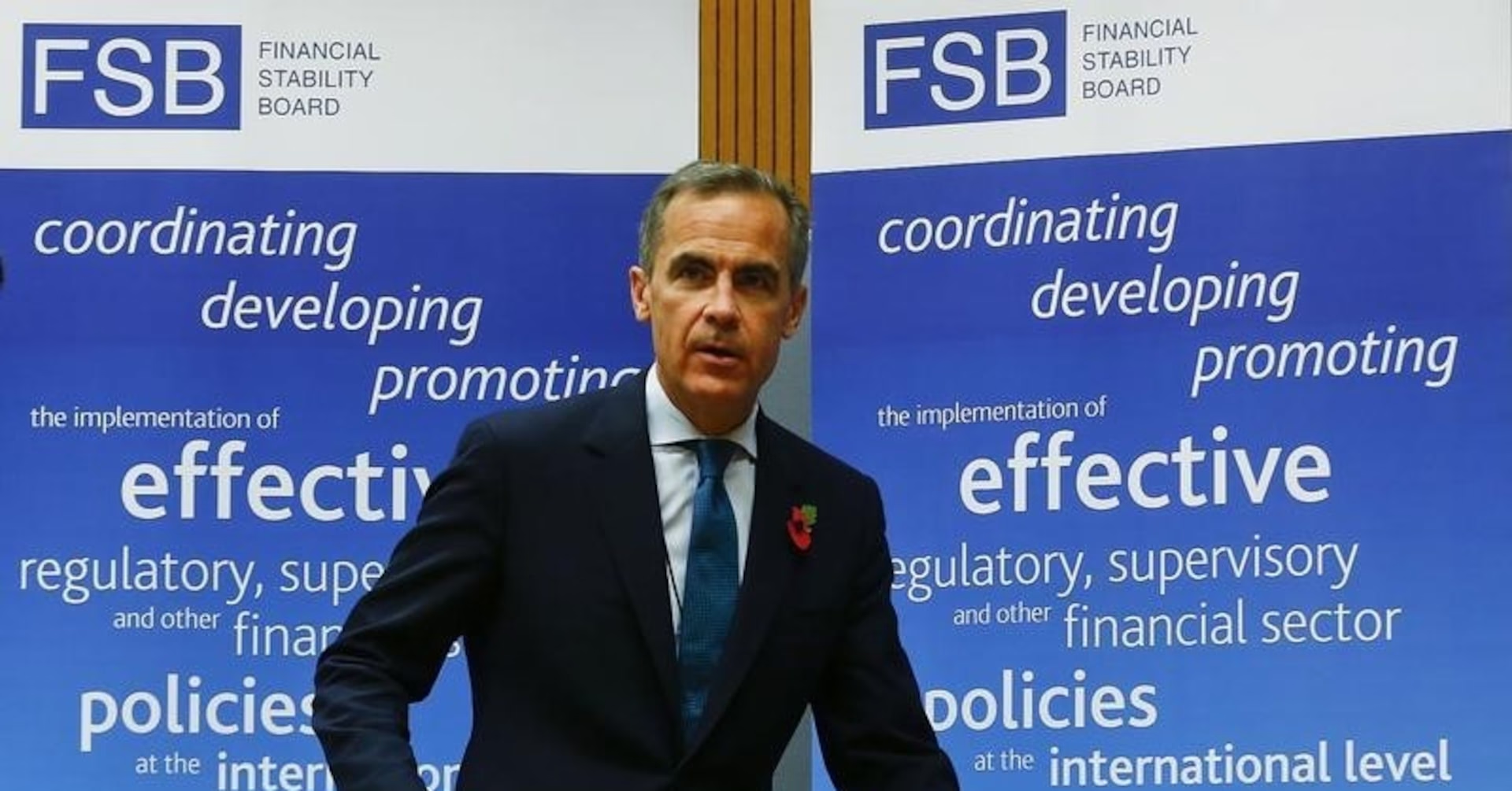
The Financial Stability Board has warned G20 finance chiefs that the tools to manage a cross-border stablecoin crisis are still immature, in a letter published on October 12 ahead of their October 15 meeting. FSB Chair Andrew Bailey also flagged advanced AI as a rising cybersecurity threat to banks and payment networks.
A central issue for the G20 finance meeting is whether existing regulatory arrangements are sufficient to manage stablecoins that operate across multiple countries.
Unlike conventional cryptocurrencies such as Bitcoin, stablecoins are designed to maintain a relatively stable value, often by referencing fiat currencies such as the US dollar.
Their role in crypto trading makes them particularly important to investors. Traders frequently use stablecoins to move between digital assets without converting funds back into traditional bank deposits.
However, their stability depends on the reliability of reserve assets, redemption arrangements and the institutions responsible for managing those reserves.
If a large number of holders attempt to redeem their tokens simultaneously, an issuer could face pressure to sell assets quickly to meet withdrawals.
According to Cointelegraph’s report on the FSB findings, such a rush could transmit stress into traditional markets through forced reserve-asset sales and withdrawals of bank deposits. The danger may be greater when a stablecoin has several issuers operating across jurisdictions with different regulatory requirements.
The report noted that cross-border supervisory and crisis-management mechanisms “remain immature or are not yet developed.” Andrew Bailey, Chair of the Financial Stability Board, as reported by Cointelegraph.
The findings point to a gap between the global reach of stablecoin businesses and the ability of national authorities to coordinate their responses during periods of financial stress.
The G20 finance meeting could therefore prove important in determining how policymakers approach cross-border supervision, reserve transparency and redemption risks.
Any subsequent regulatory changes could affect the operating costs, compliance obligations and market access of stablecoin issuers.
The FSB’s concerns should not be interpreted as evidence that a major stablecoin is about to fail. They identify vulnerabilities that authorities want to monitor and address before they develop into broader financial problems.
Stablecoins are only part of the agenda. The G20 finance meeting will also take place against growing concern about how advanced artificial intelligence could change the cybersecurity risks facing banks, payment networks and financial-market infrastructure.
AI tools can support fraud detection, transaction monitoring and operational efficiency. At the same time, increasingly capable systems could help malicious actors identify software vulnerabilities, automate attacks or develop more sophisticated methods of bypassing security controls.
The concern extends beyond individual companies. Financial institutions often depend on shared cloud services, technology vendors and other third-party providers. A serious vulnerability affecting one widely used service could consequently disrupt several organizations at once.
In the material submitted to G20 policymakers, Bailey stressed the need for financial institutions to manage AI adoption carefully.
He wrote: “AI therefore requires our continued close attention alongside careful management by financial institutions.” Andrew Bailey, Chair of the Financial Stability Board, as quoted by Cointelegraph.
The FSB has finalized practices intended to guide responsible AI adoption across the financial sector. These cover organizational governance, the development and deployment of AI systems, cybersecurity and risks associated with external service providers.
A security incident at a major service provider could interrupt withdrawals, compromise sensitive information or undermine confidence in affected platforms.
During the G20 finance meeting, policymakers will have an opportunity to consider how existing supervisory frameworks can keep pace with rapid technological change. The challenge is to strengthen resilience without unnecessarily restricting useful innovation.
The immediate significance of the G20 finance meeting is the possibility of closer international coordination on digital-asset oversight and financial-sector technology risks.
Stablecoin regulation is especially important because changes to reserve requirements, redemption processes and licensing obligations could influence how issuers operate in different markets.
Businesses that struggle to meet new requirements could face higher costs or restrictions, while clearer rules may improve confidence among institutional users.
The outcome will depend on what governments and regulators ultimately agree to implement. The FSB’s reports provide recommendations and assessments, but they do not automatically create binding laws in every jurisdiction.
Crypto investors should therefore monitor official announcements rather than assume that the meeting will produce immediate regulatory changes.
Particular attention should be paid to any new commitments on cross-border cooperation, stablecoin supervision and the implementation of AI safeguards.
Although cryptocurrencies operate through different technical and economic models, their markets increasingly interact with banks, payment providers and other financial institutions.
Investors assessing stablecoin-related businesses should continue examining reserve disclosures, redemption terms, jurisdictional exposure and the quality of risk controls. Those factors remain relevant regardless of the outcome of international policy discussions.
The message from the FSB is that innovation and financial stability must be managed together. The G20 finance meeting may help clarify the direction of international policy, but the practical impact will depend on how authorities translate recommendations into consistent supervision and enforceable standards.



Copyright © 2025 - The Bit Gazette.